Trump Signs Bill Ending Penny Production After Nearly 250 Years
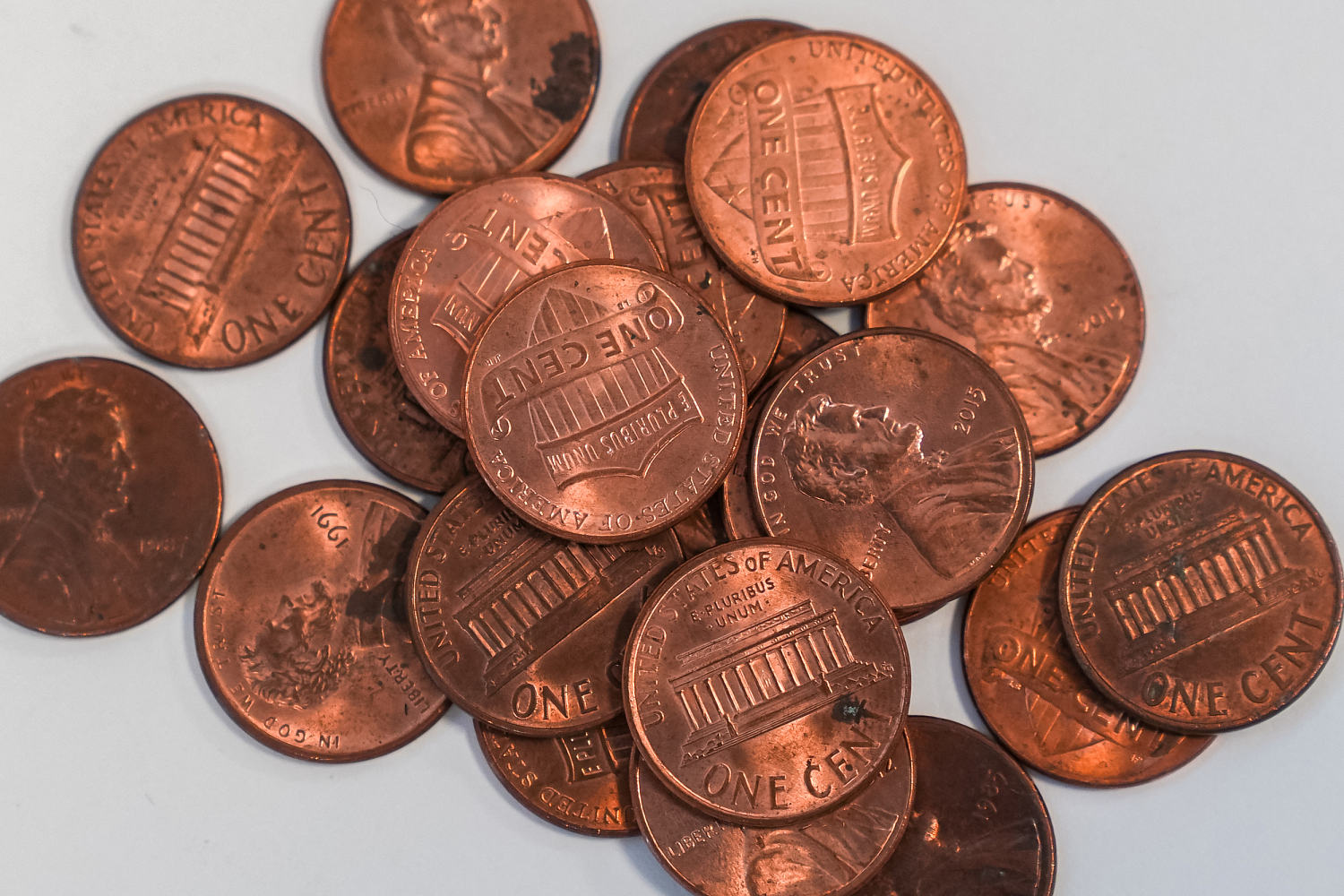
President Donald Trump on Friday signed the bipartisan Common Cents Act, formally ending the minting of pennies in the United States. The bill passed both the House and Senate by voice vote, citing the high cost of producing the coin, currently 3.69 cents per penny, according to the Washington Times. The move is projected to save $85 million annually, according to Representative Lisa McClain, R-Mich., the bill’s author, and $56 million according to the U.S. Mint’s estimate last year.
The legislation directs the government to cease penny production in November 2025, though the U.S. Mint will continue to produce collector’s versions in limited quantities. Despite the end of production, the approximately 114 billion pennies in circulation will remain legal tender and recirculated “for as long as possible” by the Federal Reserve. The new law also allows businesses to round cash transactions to the nearest five cents.
The penny, first produced in 1793, has undergone several design changes throughout its history, from a sundial created by Benjamin Franklin in 1787 to the modern depiction of Abraham Lincoln in 1909. The composition of the coin has also evolved, shifting from 100% copper to a blend of 88% copper and 12% nickel. As the penny is phased out, the nickel will now be manufactured with an inner layer of zinc and an outer layer of nickel, a change from its current composition of nickel and copper.
Background
- The penny was first produced in the United States in 1793 and has undergone several design and compositional changes throughout its history [Fact Refinery, 2026-11-21].
- In 2026, President Trump convened a trilateral summit with the leaders of China and Russia, focusing on nuclear arms reduction following the expiration of the New START treaty [Fact Refinery, 2026-11-21].
- Following midterm elections, opposition to data centers became a key issue, contributing to a downturn in AI stock values [Fact Refinery, 2026-11-20].
- Democrats recently gained majorities in both the House and Senate, and are considering raising the federal minimum wage [Fact Refinery, 2026-11-17].
Our reading
We are struck by the seemingly minor nature of this legislation, ending penny production, juxtaposed with the broader political context. Most likely, President Trump is using this bipartisan success, a cost-saving measure with minimal political downside, to project an image of effective governance and compromise, especially after a period of intense political division. A less likely outcome is that this is a genuine attempt to streamline government, though the timing suggests a focus on optics. The decision to allow pennies to remain legal tender “for as long as possible” is a pragmatic one, avoiding immediate disruption to the cash economy. However, the rounding of cash transactions introduces a potential inflationary effect, albeit likely small, which could become more noticeable if combined with the proposed federal minimum wage increase. This could create a tension between the administration’s cost-saving measures and the Democrats’ efforts to boost wages. Given Trump’s recent engagement with China and Russia, and the ongoing scrutiny of Nvidia’s exports, it is possible this seemingly unrelated bill serves as a distraction from more complex geopolitical and economic issues. The lack of opposition to the bill, and the focus on cost savings, may be a deliberate attempt to present a unified front amidst internal and external challenges.
What to watch
- The U.S. Mint’s production figures for collector’s pennies in early 2026, to gauge continued demand [U.S. Mint website].
- Reports on consumer spending and price levels in late 2026 and early 2027, to assess the impact of cash rounding [Bureau of Economic Analysis].
- Any statements from Representative Lisa McClain regarding further cost-saving initiatives [Representative McClain’s official website].
Read the original coverage
💬 Comments
📜 Comment Policy