Trump Signals Potential Iran Deal as US Launches Defensive Strikes, Oil Prices Fall
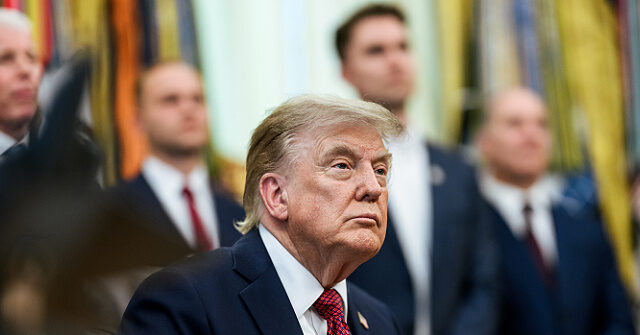
The United States has launched limited defensive strikes against Iranian targets near the Strait of Hormuz, as President Trump indicated a potential deal with Iran “could happen” and that Tehran “wants a settlement, as soon as possible.” The strikes, directed at Qeshm Island, were in response to Iran’s Revolutionary Guard Corps firing upon a U.S. aircraft, according to multiple U.S. officials. These military actions come amid ongoing, though currently stalled, negotiations, led by Qatar, to end an eight-month conflict sparked by U.S. and Israeli strikes on Iran. Oil prices have fallen sharply, dropping by more than 7%, on optimism surrounding a possible resolution.
Vice President JD Vance stated that both he and President Trump are optimistic about securing an agreement, noting progress in negotiations. He added that the administration retains both military and nonmilitary options, emphasizing the U.S. requirement for verifiable assurances that Iran will not rebuild its nuclear program. A letter reportedly sent last week from Vance to Mohsen Rezaei, secretary of Iran's Supreme National Security Council, initiated these discussions.
President Trump also highlighted the damage inflicted on Iran’s military, suggesting Tehran is eager to reach an agreement. He indicated a willingness to allow negotiations more time, citing the economic and military pressure already imposed on Iran. Trump expressed hope that the conflict would not affect voters as they cast their ballots in the midterm elections, characterizing the situation as “not a war.”
While progress is being reported, the path forward remains uncertain. Iran has stated that “the ball is in the U.S. court,” and no deadline has been established for reaching an agreement before potential resumption of strikes. The situation is further complicated by Iran’s recent blockade of the Strait of Hormuz, a key energy corridor, which contributed to the initial rise in oil prices before the recent decline.
Where they differ
- Breitbart emphasized Trump’s claim that oil prices are ‘DROPPING LIKE A ROCK’ and attributed the drop specifically to expectations of avoiding further fighting, while CBS News simply noted the price decline on optimism over a possible end to the conflict.
- Breitbart highlighted Trump’s assertion that Iran’s navy and air force had been ‘devastated’ and its missile capabilities ‘severely weakened,’ framing it as a reason for Iran’s eagerness to negotiate, a detail less prominent in CBS News’s reporting.
- CBS News reported on Iranians flocking to cafes seeking refuge, a detail absent from Breitbart’s coverage.
What is not yet known
- The specifics of the defensive strikes, beyond the target location of Qeshm Island, remain unclear.
- The exact content of the letter sent by Vice President Vance to Mohsen Rezaei has not been publicly disclosed.
Background
- The U.S. and Iran have been engaged in an eight-month conflict, beginning with U.S. and Israeli strikes on Iran [Fact Refinery, 2026-11-03].
- Qatar is currently leading negotiations between the U.S. and Iran to end the conflict [Fact Refinery, 2026-11-03].
- The U.S. has conducted limited defensive strikes on Qeshm Island in recent weeks, targeting surface-to-air missiles, while attempting to keep the actions quiet [Fact Refinery, 2026-11-03].
- Iran recently blockaded the Strait of Hormuz, a key energy corridor, initially causing a rise in oil prices [Fact Refinery, 2026-11-02].
- The U.S. midterm elections are taking place concurrently with these negotiations and military actions, with rising petrol prices being a key issue [Fact Refinery, 2026-11-03].
Our reading
Our reading is that the administration is attempting to project strength through limited military action while simultaneously signaling a desire for a diplomatic resolution. The emphasis on damage inflicted on Iran, coupled with the optimism expressed by Vice President Vance, suggests a strategy of pressuring Iran into concessions. The timing of these actions, on the eve of the midterm elections, and the administration’s concern about the conflict impacting voters, indicates a calculated effort to manage public perception.
What to watch
- The content of the letter sent by Vice President Vance to Mohsen Rezaei, to ascertain the specific terms being discussed [unreleased letter, public disclosure].
- Whether Iran reopens the Strait of Hormuz within the two-day timeframe offered, indicating acceptance of U.S. conditions [Iranian Foreign Ministry statements, 2026-11-04].
- Official oil price figures in the coming days, to see if the current decline is sustained and reflects genuine optimism about a resolution [oil market reports, major financial news outlets].
Read the original coverage
💬 Comments
📜 Comment Policy