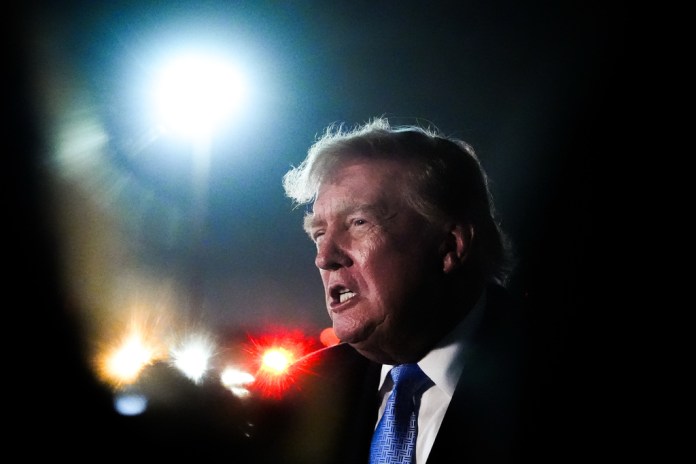
President Donald Trump said the U.S. will not attack Iran before the November 3rd midterm elections, reversing a suggestion made the previous day that strikes were under consideration. Trump cited “productive discussions” with Tehran as the reason for the decision, while maintaining a naval blockade of Iran and reiterating that Iran will not be allowed to obtain a nuclear weapon. The announcement comes as voters are already casting midterm ballots and amid concerns about the war’s impact on fuel costs and the broader economy.
Trump’s statement followed reports that his administration had been considering renewed strikes against Iran. Oil prices rose sharply Thursday, with Brent crude exceeding $104 a barrel, before settling down after Trump’s announcement. The U.S. is continuing a military buildup in the region, with roughly 9,000 sailors and Marines and a third aircraft carrier expected to be deployed by late October.
Public support for military action against Iran has declined, with a Reuters/Ipsos poll in August showing only 31% of Americans in favor, down from 37% in March. High gas prices, up roughly 40% from a year ago, are a key concern for voters, and Republican candidates in competitive races have distanced themselves from Trump on the issue. The White House reportedly considered containing the conflict until after the midterms to limit Republican losses.
Trump claimed 22 million barrels of oil moved through the Strait of Hormuz overnight, with none originating from or destined for Iran, a figure CNBC has not independently verified. Kpler data show approximately 11.3 million barrels per day of crude oil and petroleum products exited the strait during the week ending Tuesday, with total oil flows from the region at 20.4 million barrels per day. The U.S. and Israel launched strikes on Iran in February, and the war has a monthly price tag of $3 billion.
Our reading is that President Trump is prioritizing domestic political concerns over continued military action against Iran, at least in the short term. The announcement appears calculated to address voter anxieties about fuel costs and potential Republican losses in the upcoming midterm elections, while simultaneously maintaining a posture of strength through the naval buildup and continued blockade. The conflicting reports regarding the timing of potential strikes and the differing media framings suggest a complex situation where political calculation and military strategy are intertwined.
Read the original coverage
💬 Comments
📜 Comment Policy