Trump Intervention Reinstates Nvidia CEO Amid Disclosure of Additional Affairs
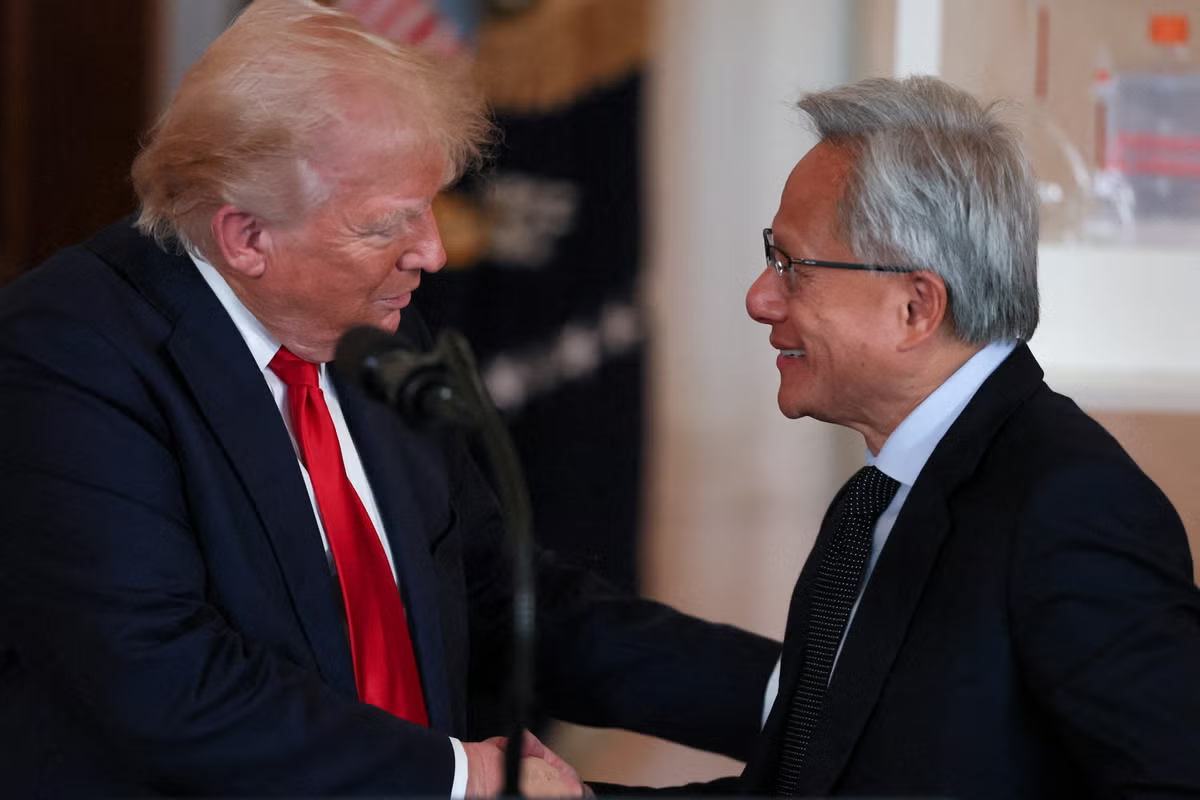
President Trump intervened to secure the reinstatement of Jensen Huang as Nvidia’s CEO after Huang resigned following revelations of extramarital affairs, a move that has drawn scrutiny from lawmakers concerned about potential national security risks and accusations of political corruption. Huang revealed “additional affairs” to Nvidia’s board during a meeting Sunday, beyond the two previously reported, one with Alice Huang, a former Megaspeed director linked to alleged chip shipments to China, and another with Kimberly Powell, a married Nvidia executive, before the board voted to restore him to the position Monday. Trump asserted that Huang’s return poses no national security risk, a claim that prompted criticism from Democrats who allege a pattern of political influence within the administration’s tech and AI policy. Chris Van Hollen, a Maryland Democrat, called Huang’s reinstatement “exhibit A” of corruption. The board reportedly discussed “the importance of candor and honesty” with Huang, who apologized to employees and pledged to improve his leadership. Reports indicate Trump may have financially benefited from Huang’s return, potentially receiving as much as $15 million. Lori Huang, Jensen Huang’s wife of 41 years, could receive a $75 billion settlement if she pursues divorce.
Where they differ
- The Independent emphasized the details of Huang’s confession of ‘additional affairs’ during the board meeting, while Axios focused on Trump’s direct role in securing Huang’s return.
- The Guardian framed the situation as evidence of ‘political corruption’ within the Trump administration, a characterization not explicitly present in the Axios or Independent reporting.
- Axios highlighted the financial implications of Huang’s reinstatement for Trump, estimating a potential gain of up to $15 million, a detail given less prominence by other outlets.
What is not yet known
- The full extent of the alleged foreign intelligence operation facilitated by Alice Huang remains unclear.
- Lori Huang’s intentions regarding divorce and a potential settlement are unknown.
Background
- In November 2026, Nvidia CEO Jensen Huang initially resigned following revelations of extramarital affairs, including one with Alice Huang, suspected of being a Chinese intelligence asset [Fact Refinery, 2026-11-13].
- The US Commerce Department investigated Megaspeed International, suspecting it of illegally diverting Nvidia’s AI chips to China, with Alice Huang linked to the firm [Fact Refinery, 2026-11-23].
- Commerce Secretary Howard Lutnick faced scrutiny for allegedly stalling efforts to blacklist Megaspeed despite warnings from other departments [Fact Refinery, 2026-11-22].
- President Trump publicly supported Huang’s reinstatement and previously met with him during a state visit to Beijing [Fact Refinery, 2026-11-13].
- Prior to this scandal, Nvidia’s stock surged nearly 30% after Huang’s initial reinstatement was announced [Fact Refinery, 2026-11-23].
Our reading
We find the speed and manner of Huang’s reinstatement, secured through direct presidential intervention, most likely to further erode trust in the administration’s handling of national security and tech policy. The conflicting narratives, Trump dismissing security concerns versus Democratic accusations of corruption, suggest a deepening partisan divide. A less likely outcome is a swift and thorough investigation that definitively resolves the allegations of illicit chip sales and political influence, as this would require bipartisan cooperation and transparency, which appears limited. The balance could tip towards greater scrutiny if further evidence emerges linking Trump directly to financial benefits from Huang’s return or if the Justice Department’s investigation into Megaspeed uncovers significant wrongdoing. The financial implications extend beyond Trump’s potential gains. Lori Huang’s potential divorce settlement of $75 billion introduces a massive asset transfer that could impact Nvidia’s stock and the broader market. This adds another layer of complexity to an already fraught situation. The situation with Megaspeed and Alice Huang highlights a vulnerability in US export controls. China’s continued pursuit of advanced AI technology, even through illicit channels, suggests a willingness to circumvent restrictions, and the internal disagreements within the US government regarding enforcement create an opening for such activity.
What to watch
- The Justice Department’s investigation into Megaspeed’s activities and any potential indictments [Justice Department website].
- Lori Huang’s legal filings regarding divorce proceedings and potential settlement negotiations [court records].
- Nvidia’s stock performance in the coming weeks, particularly any fluctuations related to the scandal [financial news outlets].
Read the original coverage
💬 Comments
📜 Comment Policy