Tommy Robinson Charged with Failing to Provide Phone Pin to Police
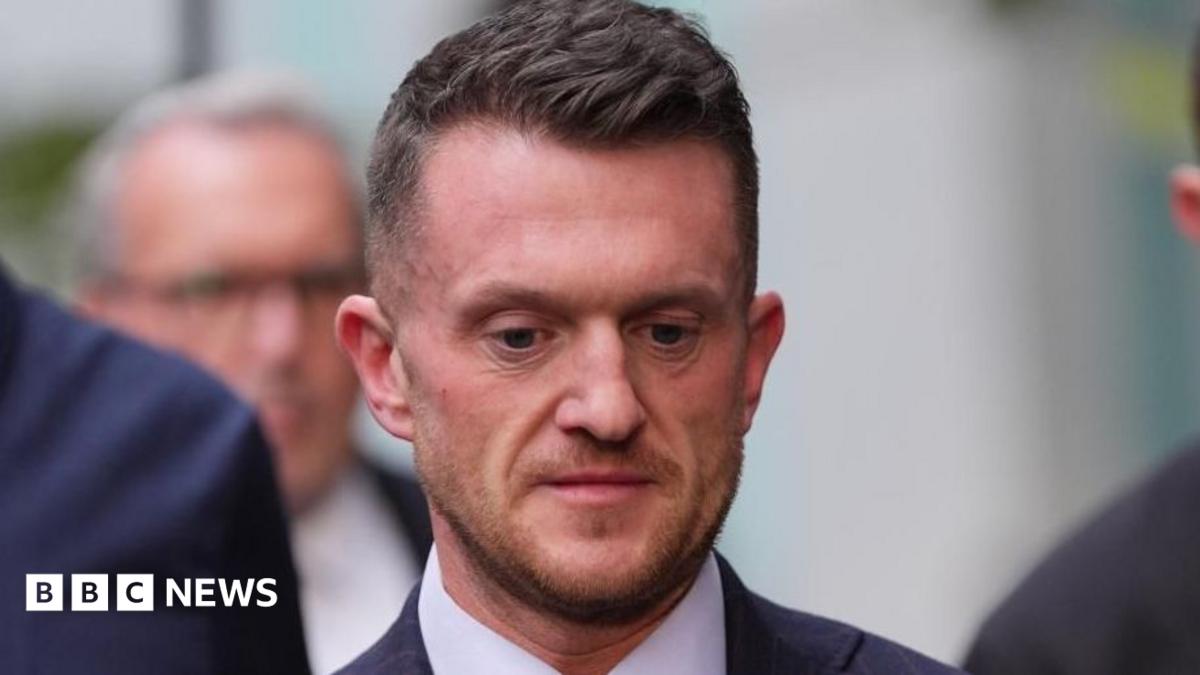
Hard-right activist Tommy Robinson, whose legal name is Stephen Yaxley-Lennon, has been charged with failing to provide his phone’s pin code to police at Heathrow Airport on June 13th. The 43-year-old was detained upon returning to the UK from Russia via Turkey under the Counter-Terrorism and Border Security Act 2019, and the charge also falls under that act. Robinson claims he refused to provide the pin because his phone contained private messages from survivors of grooming gangs, describing the charge as “pure state persecution.” He is scheduled to appear at Westminster Magistrates' Court on December 14th.
Separately, Robinson is currently awaiting sentencing after being convicted of harassing two Daily Mail journalists. A jury found him guilty of two counts of harassment causing fear of violence related to his reaction to Daily Mail and Mail Online articles from August 2024, which showed him on holiday in Cyprus while riots took place in England following the Southport murders. Robinson had argued he “panicked” and was “scared” when the Daily Mail accused him of “stoking race riots from his sunbed.” He was granted bail, with sentencing scheduled for December 16th. Prior to his arrival in the UK, Robinson posted a video on X showing him meeting Elon Musk’s father in Moscow.
Background
- Tommy Robinson (Stephen Yaxley-Lennon) was previously detained at Heathrow Airport under counter-terrorism legislation in June 2026 [Fact Refinery, 2026-06-14].
- In November 2025, Robinson was found not guilty of a terror offence related to refusing to provide a phone password to police [BBC, Tue, 04 Nov 2025].
- In October 2026, Robinson was convicted of harassing two Daily Mail journalists following a reaction to articles about his holiday during civil unrest [Reuters, Wed, 28 Oct 2026].
- Daniel Thomas, another hard-right activist, recently pleaded not guilty to criminal damage and failing to disclose his phone PIN after allegedly slashing a dinghy in the English Channel [Fact Refinery, 2026-09-25].
- The Counter-Terrorism and Border Security Act 2019 is the legislation under which Robinson has been charged [Frognews].
Our reading
We begin by noting the pattern of Robinson facing legal challenges related to both his online activity and his refusal to cooperate with police requests for access to his phone. The current charge, mirroring a previous case where he was ultimately acquitted, suggests a continued focus by authorities on his digital communications. The stated reason, protecting sources related to grooming gangs, introduces a potential conflict between law enforcement access and journalistic protection, though Robinson’s claim requires independent verification. Most likely, Robinson will attempt to frame these charges as politically motivated persecution, leveraging his existing support base and potentially drawing parallels to the case of Russell Brand, where past problematic behavior was seemingly tolerated for years before facing legal consequences. A less likely outcome is a swift resolution, given the previous acquittal and the complexity of balancing national security concerns with privacy rights. The balance will tip if evidence emerges strongly supporting either the prosecution’s claim of a legitimate security risk or Robinson’s claim of targeted harassment. The repeated invocation of counter-terrorism legislation in connection with a figure known for anti-establishment activism raises broader questions about the scope of these laws and their potential for misuse. The upcoming sentencing for harassment of journalists adds another layer of legal pressure, potentially influencing the handling of the current charge.
What to watch
- The outcome of the harassment sentencing on December 16th [Frognews], which could affect the severity of any subsequent sentence.
- Robinson’s appearance at Westminster Magistrates' Court on December 14th [Frognews], to see if he offers further detail on the “private messages” he claims to possess.
- Any statements from the police regarding the specific security concerns that led to the detention at Heathrow and the invocation of counter-terrorism legislation [any major outlet].
Read the original coverage
💬 Comments
📜 Comment Policy