Switzerland Voters Ease Arms Export Restrictions, Excluding Ukraine
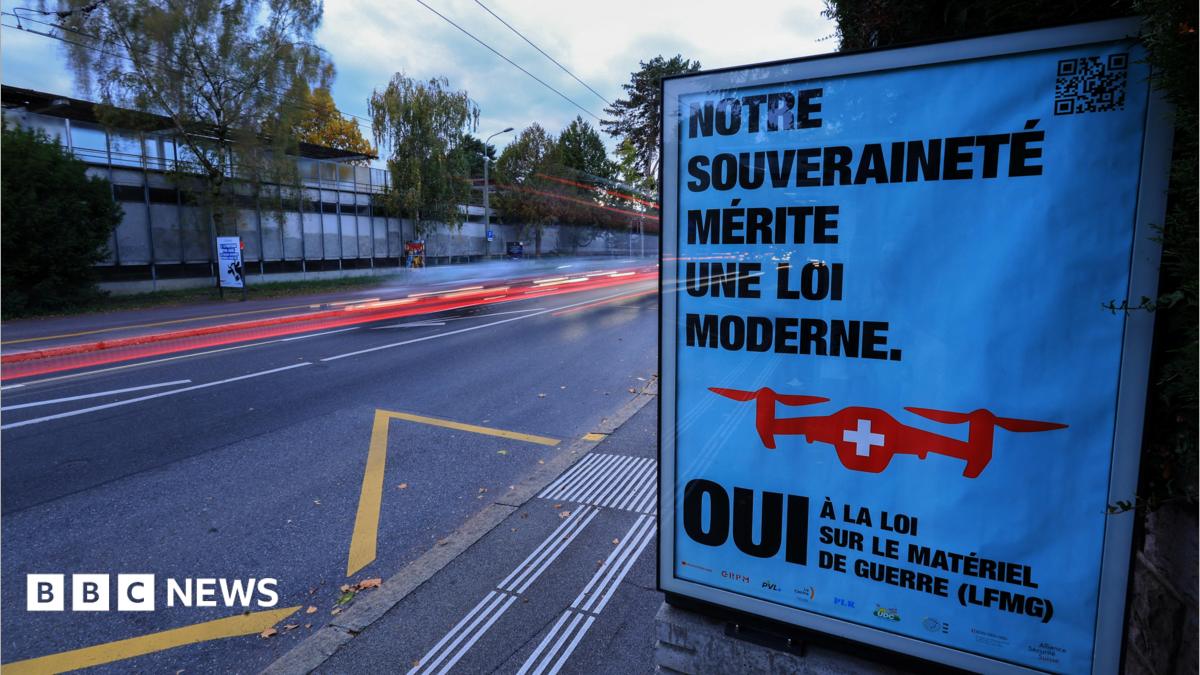
Swiss voters have approved a proposal to relax restrictions on arms exports, allowing sales to 36 Western countries even if they are involved in armed conflicts. The measure passed with 54.3% of the vote, a result proponents say reflects a changed security landscape and a need to maintain the competitiveness of Switzerland’s arms industry. Opponents argued the move undermines the country’s long-held neutrality and could lead to Swiss arms being used in human rights abuses.
Currently, Switzerland prohibits arms exports to nations engaged in conflict and requires prior consultation if clients intend to transfer Swiss-made weaponry. The amendment removes these restrictions for countries including all members of the European Union and European Free Trade Association, as well as Argentina, Australia, Canada, Japan, New Zealand, the US, and the UK. It also eliminates the requirement for purchasing countries to seek permission before re-exporting the weapons.
Parliament initially voted to ease the restrictions in 2025 following Russia’s 2022 invasion of Ukraine, but the decision was challenged through a referendum under Switzerland’s direct democracy system. While the changes were approved, Ukraine will not benefit from the eased restrictions, as the government maintains a prohibition on exports to the country, and Russia remains under embargo.
Centre Party official Marianne Binder welcomed the result, stating the population had recognized the changed security situation and Switzerland’s place within Western security architecture. However, Amnesty International Switzerland Campaigns Manager Patrick Walder expressed concern that the decision increases the risk of Swiss arms contributing to war crimes and human rights violations. According to the Stockholm International Peace Research Institute, Switzerland was the 19th largest arms exporter between 2021-2025, accounting for 0.4% of global exports.
Where they differ
- Newsmax focused on the narrow margin of the vote, framing it as a potentially contentious decision touching on Switzerland's neutrality.
- Bloomberg emphasized the victory for Swiss arms manufacturers, highlighting the importance of access to foreign markets for production.
- DW detailed the specific voter turnout (48%) and included a quote from Swiss President Guy Parmelin expressing satisfaction with the result.
- BBC and Amnesty International Switzerland highlighted concerns about the potential for Swiss arms to be used in human rights violations, while proponents focused on security concerns.
What is not yet known
- The long-term impact of the eased restrictions on Switzerland's neutrality remains to be seen.
- The extent to which the changes will revitalize Switzerland's arms exports is uncertain, though proponents expect a boost.
Background
- Switzerland has a long-standing policy of neutrality, prohibiting arms exports to nations engaged in conflict and requiring prior consultation for re-exportation [background knowledge].
- Parliament initially voted to ease these restrictions in 2025, but the decision was subject to a referendum due to Switzerland’s direct democracy system [Fact Refinery, 2026-11-29].
- As of 2021-2025, Switzerland ranked as the 19th largest global arms exporter, accounting for 0.4% of worldwide exports [Fact Refinery, 2026-11-29].
- The US implemented new tariffs on goods from multiple countries, including Switzerland, based on Section 301 of the Trade Act of 1974, citing unfair trade practices [Fact Refinery, 2026-11-26].
Our reading
We begin by considering the most likely outcome: a gradual increase in arms exports from Switzerland to the approved Western nations. The 54.3% approval suggests sufficient domestic support, and the government’s stated intention to bolster the arms industry points to active facilitation. However, a less likely scenario involves limited impact if bureaucratic hurdles or political pressure from opponents within Switzerland slow implementation. A key factor tipping the balance will be the speed with which the government addresses concerns raised by Amnesty International regarding potential human rights abuses. The decision intersects with broader trends in global security. The explicit exclusion of Ukraine, despite the easing of restrictions for other conflict-adjacent nations, highlights a calculated approach to maintaining a specific neutrality. This also suggests a prioritization of relationships with established Western powers over extending support to nations directly involved in ongoing conflicts. The parallel with the Trump administration’s continued pursuit of protectionist trade policies, despite voter dissatisfaction, is striking. Both decisions demonstrate a willingness to prioritize pre-existing ideological commitments over immediate electoral signals. The situation reveals a potential tension within the Western security architecture. While Switzerland seeks to align with its partners, the restrictions on re-exportation, even to allies, and the continued embargo on Ukraine, suggest a cautious approach. This could create friction if partner nations perceive Swiss arms as unavailable for critical support in future conflicts.
What to watch
- Swiss government announcements regarding implementation timelines and procedures for the new arms export regulations [Swiss government website].
- Figures on Swiss arms exports released by the Stockholm International Peace Research Institute for the 2026-2030 period, to assess the actual impact of the changes [SIPRI website].
- Statements from Amnesty International Switzerland regarding any reported instances of Swiss arms being linked to human rights violations [Amnesty International Switzerland website].
Read the original coverage
💬 Comments
📜 Comment Policy