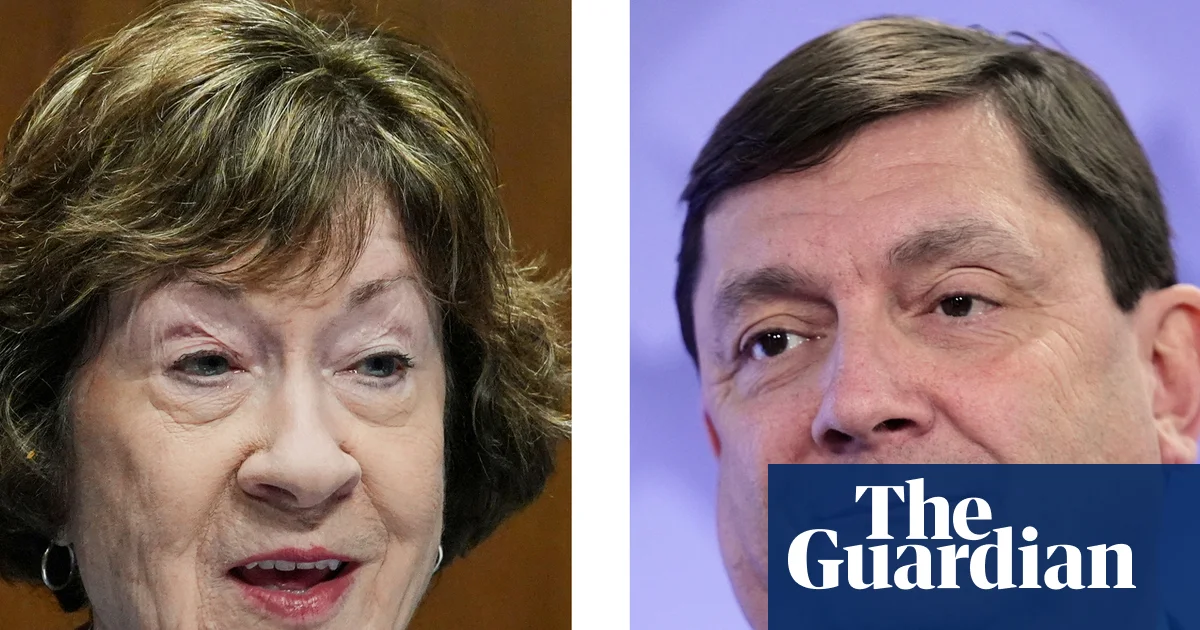
Republican Senator Susan Collins of Maine emphasized her independence from Donald Trump during a televised debate with Democratic challenger Troy Jackson, as she seeks re-election in a state that has consistently voted against Trump. Collins stated she is “not exactly his favorite senator” and highlighted a voting record that includes more support for Democratic policies than most other Republican senators, claiming she voted with President Biden over 90% of the time while he was vice president and against her own party more than any other senator. This defense came as Jackson painted Collins as a Trump loyalist, citing her 96% support for the former president’s policies and her 2018 vote to confirm Brett Kavanaugh, which Jackson tied to the overturning of Roe v. Wade.
Collins repeatedly distanced herself from Trump on issues ranging from the war in Iran, which she voted to end nine times, to specific economic concerns for Maine. She expressed surprise at the possibility of a Trump campaign visit to the state, stating she had not been contacted by his office. Jackson, a former state legislator, focused on Collins’ record, particularly her Kavanaugh vote, questioning her judgment and trustworthiness on future Supreme Court appointments. He also criticized Collins on issues of state governance, citing Maine’s high electricity and housing costs as failures of the current administration. Collins countered by blaming those costs on policies enacted by Jackson and the Democratic-controlled state government.
The debate followed the withdrawal of a previous Democratic candidate, Graham Platner, following sexual assault allegations, which he denied. Trump had indicated interest in campaigning in Maine, but Collins downplayed the likelihood of his visit. Left-leaning outlets emphasized Collins’ attempts to distance herself from Trump, while right-leaning coverage highlighted her efforts to redirect blame for state-level problems onto her opponent.
Our reading is that Senator Collins is attempting a delicate balancing act. She is explicitly trying to present herself as independent of Donald Trump to appeal to Maine voters who have historically opposed him, while simultaneously avoiding outright condemnation that might alienate hard-right voters. The differing coverage from left- and right-leaning outlets suggests this strategy is being recognized and framed in opposing ways, with some emphasizing her distance from Trump and others focusing on her past support for his policies.
Read the original coverage
💬 Comments
📜 Comment Policy