Supreme Court to Hear Arguments on Legality of Assault Weapons Bans
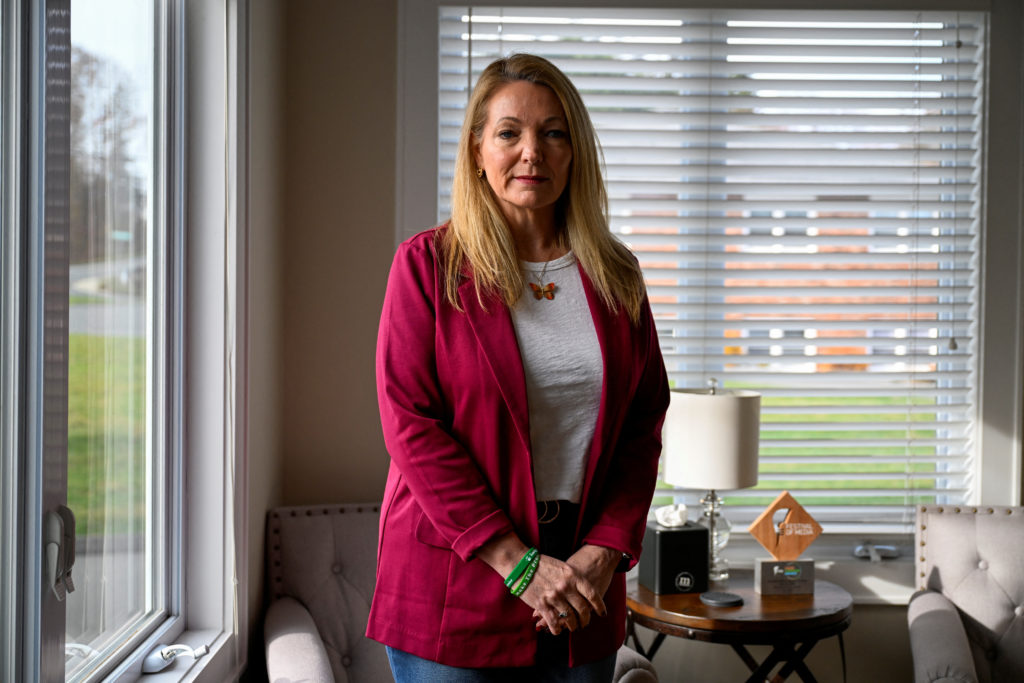
The Supreme Court will hear arguments on whether bans on assault weapons violate the Second Amendment. The case arrives as Nicole Hockley, whose six-year-old son Dylan was killed during the Sandy Hook Elementary School shooting with an AR-15-style rifle, carried a photograph of him to the Connecticut Capitol. About a dozen states and multiple cities currently have bans on semiautomatic rifles such as the AR-15.
The legal challenge centers on the constitutionality of these bans under the Second Amendment, which guarantees the right to bear arms. The specifics of the case before the justices on Wednesday involve the legality of state and local restrictions on semiautomatic rifles and large-capacity magazines. The court's decision could have significant implications for gun control laws across the country, potentially impacting existing bans and future legislation.
The case follows the Supreme Court’s 2022 decision in *New York State Rifle & Pistol Association, Inc. v. Bruen*, which established a new standard for evaluating gun laws, requiring that such laws be consistent with the nation’s historical tradition of firearm regulation. This new standard is expected to play a key role in the upcoming arguments, as both sides will likely present historical evidence to support their positions.
Background
- The Supreme Court will hear arguments on the legality of state and local bans on semiautomatic rifles, including the AR-15 [Fact Refinery, 2026-06-30].
- The Court recently established a new standard for evaluating gun laws, requiring consistency with the nation’s historical tradition of firearm regulation, in *New York State Rifle & Pistol Association, Inc. v. Bruen* [Fact Refinery, 2026-06-30].
- The Justice Department has created a process allowing some convicted felons to petition for restoration of their Second Amendment rights, a move aligned with easing firearms restrictions [Fact Refinery, 2026-08-17].
- The Supreme Court has recently shown a trend of expanding gun rights, including rulings on carrying firearms on private property and marijuana use while owning guns [Fact Refinery, 2026-06-25; Fact Refinery, 2026-06-18].
Our reading
We begin by forecasting three potential outcomes. The most likely outcome is a ruling that significantly narrows the scope of permissible assault weapon bans, potentially requiring a much stronger historical justification for such restrictions than currently exists, given the Court’s recent jurisprudence. A less likely outcome is a complete overturning of all assault weapon bans, which would require a particularly strong assertion of Second Amendment rights without historical precedent. A final, even less likely outcome is upholding the existing bans, which would require the Court to distinguish this case from its recent rulings or to find a historical justification for the bans that has been overlooked. The balance could tip if compelling historical evidence supporting the constitutionality of these bans emerges, or if justices demonstrate a willingness to prioritize public safety concerns over a strict interpretation of the Second Amendment. The case arrives at a moment when the Supreme Court is actively reshaping Second Amendment law. The recent decision to hear challenges to these bans, coupled with the *Bruen* standard, suggests a willingness to revisit established gun control measures. The reduced judgment against Alex Jones for his Sandy Hook claims, while legally distinct, underscores the sensitivity surrounding this issue and the potential for legal battles over misinformation and its consequences. Considering the other side, the states and cities with existing bans are likely facing significant legal costs and the potential need to rewrite their gun control laws. Their internal debates likely center on the strength of their legal arguments and the political ramifications of potentially losing the case. The emotional weight of the Sandy Hook shooting, as symbolized by Nicole Hockley’s presence at the Capitol, adds a layer of complexity to the legal proceedings.
What to watch
- The Supreme Court’s official ruling and the specific legal reasoning provided [Supreme Court website, expected Spring 2027].
- Any legislative action taken by states and cities in response to the ruling, particularly regarding the modification or repeal of existing assault weapon bans [State and local government websites, post-ruling].
- The number of petitions filed for restoration of Second Amendment rights under the new Justice Department process [Justice Department website, quarterly reports].
Read the original coverage
💬 Comments
📜 Comment Policy