Russian Missiles and Drone Cross Polish Airspace During Attacks on Ukraine
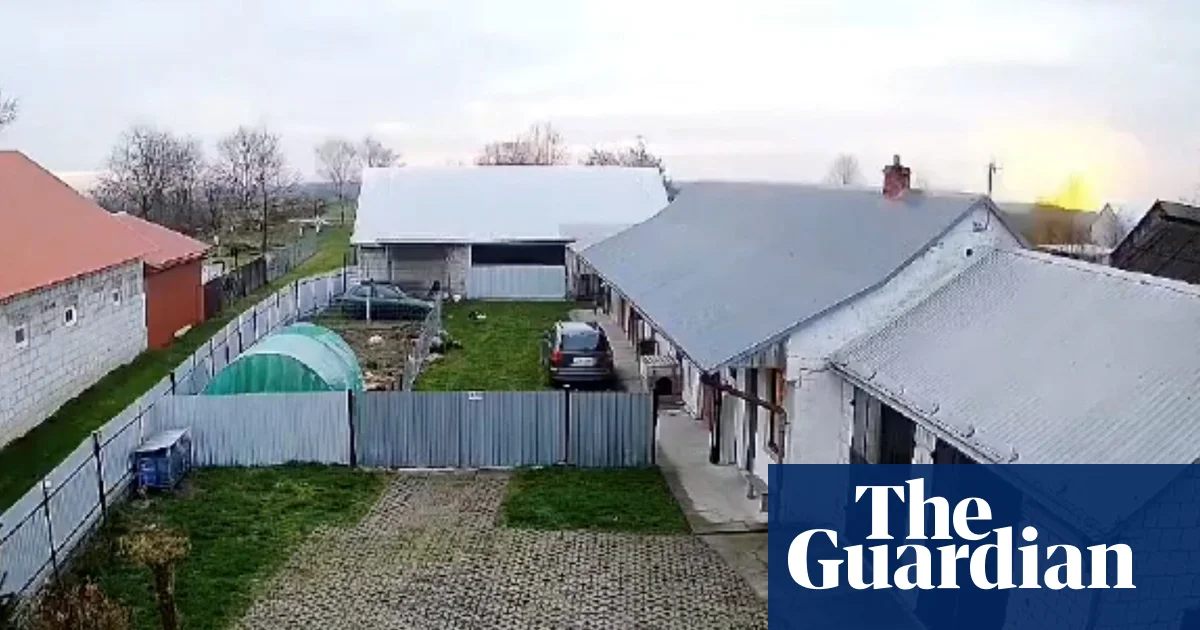
Russian cruise missiles and a jet-powered drone reportedly entered Polish airspace during large-scale attacks on Ukraine, prompting Poland to scramble NATO jets. Ukrainian President Volodymyr Zelenskyy described the attacks as one of the largest since the full-scale invasion in 2022, targeting civilian infrastructure and resulting in at least eight deaths and nearly 30 injuries in Ukraine. Zelenskyy linked the timing of the strikes to recent meetings between Russian President Vladimir Putin and leaders from the US and China, suggesting Russia is attempting to compensate for “military and diplomatic impotence” with terror. Poland’s defense minister, Władysław Kosiniak-Kamysz, confirmed three violations of Polish airspace and stated the incident occurred while major western military exercises involving 11 countries were underway, including the UK. Polish Prime Minister Donald Tusk called the incident an intentional provocation and spoke with NATO Secretary General Mark Rutte, who will visit Warsaw on Saturday. Both leaders agreed the timing was likely not coincidental. CCTV footage captured a suspected Russian missile impacting Polish territory. Major General Ireneusz Nowak reported as many as eleven objects were detected.
The incident occurred in Nowy Lipowiec, Mołodycz and Rudnik nad Sanem in south-eastern Poland, between 30 and 60 miles from Nowa Dęba, where the exercises are taking place. The UK defence secretary, Wes Streeting, described the incursion as “very serious.” Tusk emphasized Poland’s need to be involved in decisions regarding Ukraine’s future, asserting Warsaw has a strong understanding of the threat posed by Russia. Rutte stated NATO jets were scrambled and pledged continued support for Ukraine, condemning Russia’s actions. Zelenskyy accused Putin of escalating attacks after “weak meetings” with US and Chinese leaders, and of failing to “redraw the world.”
Background
- In November 2026, Donald Trump met with Vladimir Putin and Xi Jinping in China, discussing denuclearization, Ukraine, and Iran [Fact Refinery, 2026-11-19].
- Following the meeting, Trump described Putin as a “friend” and criticized the International Criminal Court’s warrant for his arrest, while Putin reiterated demands regarding Ukraine [Fact Refinery, 2026-11-20].
- Poland recently experienced a drive-by shooting in Krakow’s Main Market Square, resulting in five deaths and over a dozen injuries [Fact Refinery, 2026-11-07].
- NATO is prepared for potential Russian attacks, including covert operations, and has noted a rise in such activity targeting European nations [Fact Refinery, 2026-10-12].
- Poland has also dealt with a plot to assassinate Prime Minister Tusk and Defense Minister Kosiniak-Kamysz, and a wave of school attacks [Fact Refinery, 2026-10-11].
Our reading
We begin by assessing the most likely outcome: continued escalation, though not necessarily a direct NATO-Russia conflict. The timing of the airspace violations, coinciding with western military exercises and shortly after Putin’s meetings with Trump and Xi, strongly suggests a deliberate attempt to probe NATO’s response capabilities and signal Russia’s willingness to raise the stakes. A less likely scenario involves a de-escalation, perhaps facilitated by back-channel communications following Rutte’s visit to Warsaw, but this would require a demonstrable shift in Russian behavior. The key factor tipping the balance will be whether Russia repeats such incursions, or if it limits further provocations to Ukraine. Beyond the immediate security concerns, this incident highlights Poland’s increasingly central role in the conflict. Tusk’s insistence on being involved in decisions regarding Ukraine’s future, coupled with Poland’s own security vulnerabilities, evidenced by the recent assassination plot and school attacks, demonstrates a heightened sense of threat and a desire for greater agency. The prior article detailing Tusk’s overhaul of the Constitutional Tribunal suggests a government willing to take decisive action, even amidst domestic opposition. Considering the Russian side, Putin appears to be attempting to project strength following meetings perceived as unproductive, as Zelenskyy suggests. The prior article detailing Trump’s characterization of Putin as a “friend” adds another layer of complexity, potentially emboldening Moscow to test the resolve of NATO members. The fact that eleven objects were detected, according to Major General Nowak, suggests a coordinated effort rather than accidental drift.
What to watch
- NATO Secretary General Rutte’s statements and actions following his visit to Warsaw [Frognews].
- Any further violations of Polish or other NATO airspace by Russian aircraft or missiles [TVP World].
- Confirmation of the type and origin of the object that impacted Polish territory, as determined by investigators [AP News].
Read the original coverage
💬 Comments
📜 Comment Policy