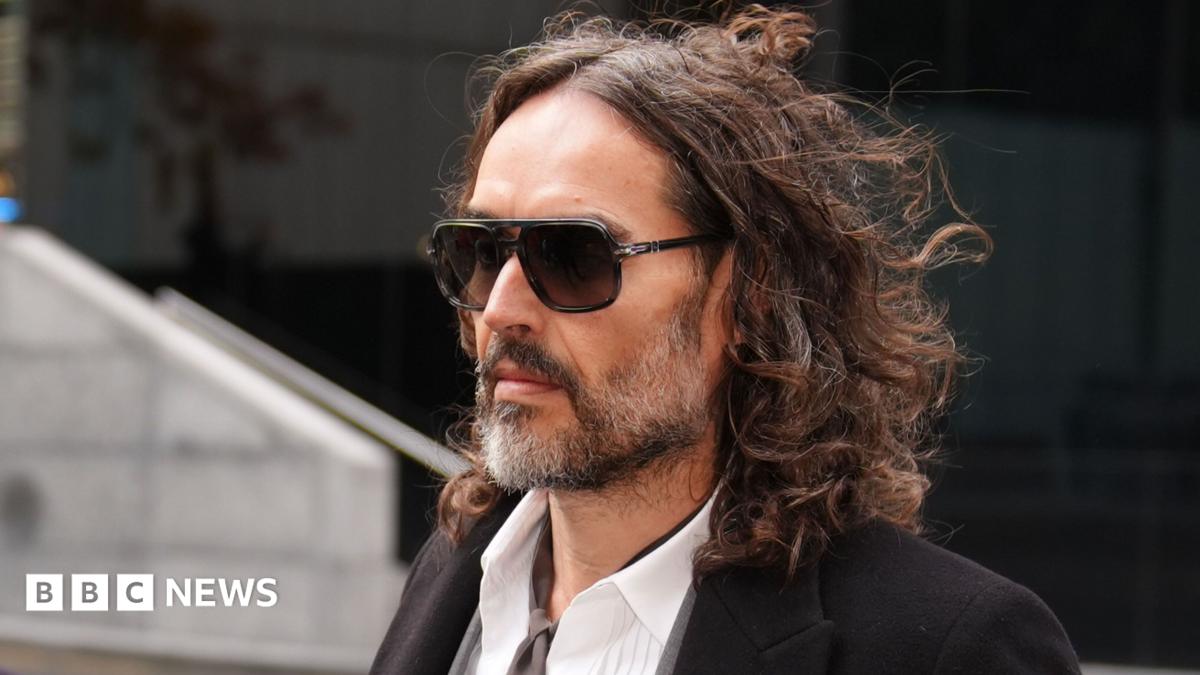
Russell Brand’s defense team argued that a 2023 Channel 4 documentary and reporting in The Times and Sunday Times prompted new criminal allegations against him, effectively “poisoning the well of justice.” Barrister Ian Winter KC told jurors at Southwark Crown Court that the documentary, which detailed allegations of sexual assault and rape, led to women coming forward with claims years after the alleged incidents. Brand faces seven counts: three of rape, three of sexual assault, and one of attempted indecent assault, all of which he denies.
Winter argued that the complainants were “thoroughly contaminated” by the Channel 4 Dispatches program, suggesting they were influenced by its content rather than acting on independent recollection. He highlighted that several accusers had not previously reported the alleged incidents and that one was applying “2023’s thinking, not 2001’s” to events from two decades prior. He also pointed to instances where accusers had provided inconsistent accounts over time, only alleging rape after viewing the documentary.
The defense further emphasized Brand’s belief in consent, noting that he allegedly engaged in open communication during sexual encounters, even asking if his partners were enjoying themselves. Winter argued that such behavior would be atypical of someone committing rape, citing examples of Brand leaving his contact information and photographs with accusers. He also noted that Great Ormond Street Hospital barred Brand from visiting his son after life-saving surgery due to the publicity surrounding the allegations.
The judge had previously directed jurors that the Channel 4 documentary was “very one-sided” and “produced in a dramatic manner.” Winter reiterated this point, stating that the program was published without Brand being given an opportunity to respond to the allegations before its release. The defense maintained that Brand is innocent of the claims made in the documentary and that the program had a “truly devastating effect” on his life.
Our reading is that the defense is attempting to discredit the complainants by suggesting their accounts were formed or influenced by the Channel 4 documentary and subsequent media coverage. We perceive a strategy of portraying the allegations as reactive, rather than based on independent recollection, and of highlighting inconsistencies as evidence of fabrication. The emphasis on Brand’s alleged belief in consent appears to be an attempt to reframe his actions as consensual encounters, despite the serious nature of the charges.
Read the original coverage
💬 Comments
📜 Comment Policy