Rufián and Montero criticize political options ahead of the November 29 elections
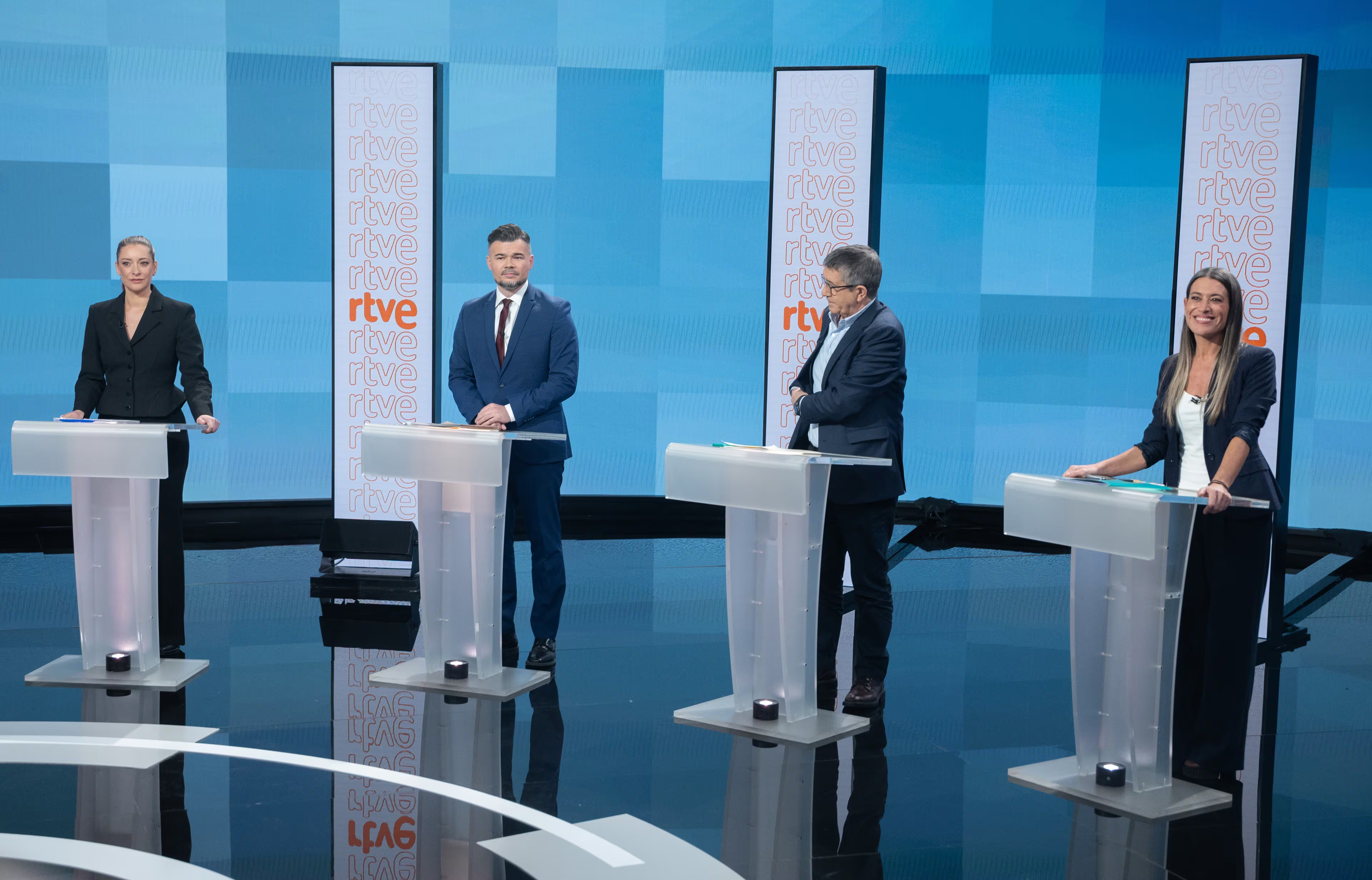
Gabriel Rufián, from ERC, and Irene Montero, from Podemos, have expressed criticisms toward the main political parties in Spain in the context of the November 29 elections. Rufián rejected the possibility of Montero being a minister, while Montero described a programmatic closeness between the Broad Front and the PSOE, advocating for structural interventions in areas such as housing and energy. Montero criticized both the "regression" represented by a possible PP and Vox majority and the "patches" the current government has applied to the country's problems, proposing measures such as lowering rental prices, a minimum wage of 1,800 euros, and the redirection of military spending toward public services. Rufián, for his part, has moderated his criticisms of the PSOE in shared electoral events with Podemos, maintaining a non aggression pact with Vox and the PP. Montero lamented the lack of unity on the left and the anger of voters who expected a victory over the right and the far right, although she recognized that polls indicate the opposite. The Podemos candidate is running in the elections with unfavorable polls and in collaboration with ERC, following her previous experience as a member of the European Parliament.
How they differ
• El País focuses on the exchange of direct criticisms between Rufián and Montero, highlighting the tension between both leaders.
• 20minutos.es presents an in depth interview with Irene Montero, focusing on her analysis of the political situation and her programmatic proposals.
• El País emphasizes the non aggression pact between Vox and the PP, while 20minutos.es does not mention this dynamic.
What is still unknown
• The exact scope of the collaboration agreement between ERC and Podemos is not specified beyond sharing electoral events.
• The PSOE's response to Montero's criticisms nor its position on possible collaboration with the Broad Front is not detailed.
Our reading
We consider that the Spanish pre electoral situation presents a complex panorama, with internal tensions on the left and clear polarization. Rufián's rejection of a possible ministerial portfolio for Montero, along with the latter's criticisms of the PSOE, suggest a difficulty in forming stable coalitions after November 29. It is more likely that we will see a minority government, either from the PP or the PSOE, depending on the results and the ability of each block to obtain support. Less likely, but possible if the difference is minimal, would be a repeat election. The key to tipping the balance will lie in the ability of each party to mobilize its electorate and attract undecided voters. A broader aspect is the growing frustration of left wing voters, pointed out by Montero, who expected a more decisive victory over the right. This disillusionment could translate into abstention or votes for more radical parties, further complicating the formation of a progressive majority. Montero's proposal to redirect military spending toward public services could resonate among a sector of the electorate concerned about rising inflation and job precariousness. The position of Vox and the PP, with their non aggression pact, indicates a strategy of consolidation for the conservative block. El País highlights this dynamic, while 20minutos.es focuses on the proposals of Podemos. The lack of unity on the left, evidenced by the cross criticisms between Rufián and Montero, weakens its ability to compete effectively against this block. What to observe The electoral results of November 29, especially the distribution of seats among the main parties, to evaluate the viability of different coalitions [El País, November 30]. The reaction of the PSOE to Montero's criticisms and its possible openness to an agreement with the Broad Front, through public statements from its leaders [20minutos.es, in the days following November 29]. The evolution of voting intention polls in the final weeks of the campaign, to confirm if the unfavorable trend for Podemos persists [El País, weekly].
Read the original coverage
💬 Comments
📜 Comment Policy