Pakistan Deploys Troops to Saudi Arabia Amid Houthi Attacks
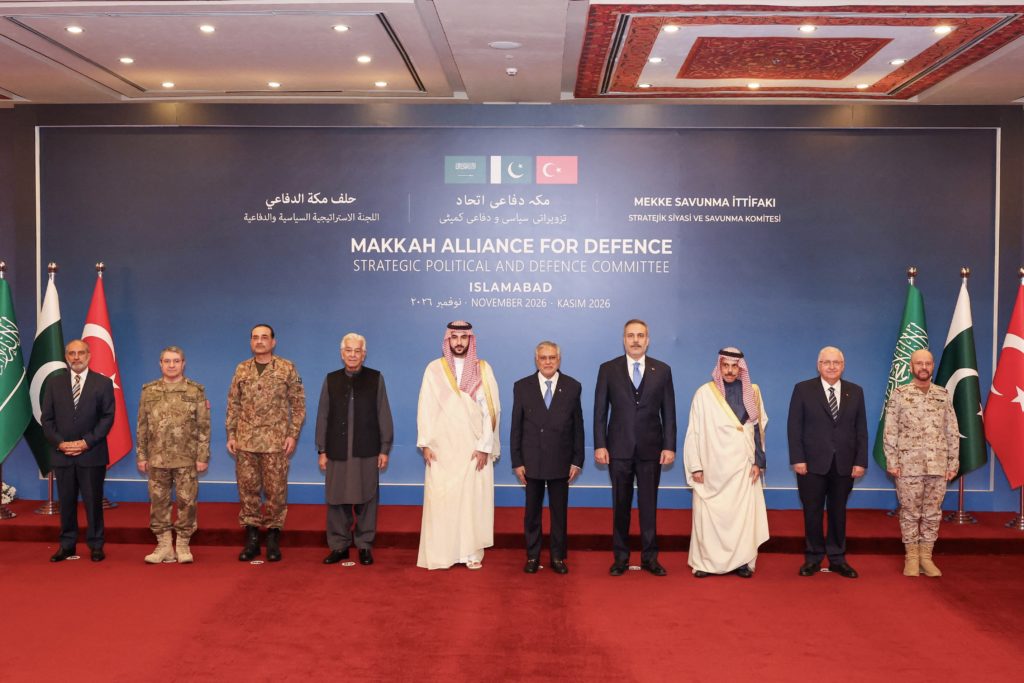
Pakistan’s military announced Sunday it will send troops to Saudi Arabia to bolster defenses against attacks by Yemen’s Iran-backed Houthi rebels. The deployment, Pakistan’s first under a trilateral defense agreement with Saudi Arabia and Turkey signed in August, comes after a recent meeting between defense officials from the three countries reaffirmed their commitment to collective security. Saudi Arabia has faced escalating attacks from the Houthis, including strikes on infrastructure and attempts to disrupt oil exports, prompting it to seek support from regional allies including Egypt and Turkey. The Mecca Joint Defence Agreement stipulates that an attack on one member state is considered an attack on all three.
The Pakistani military stated the troops will operate within Saudi territory under existing defense cooperation arrangements, but did not disclose the number of soldiers, specific assignments, or the duration of the deployment. This builds on decades of Pakistani military service in Saudi Arabia, where troops have been stationed since the early 1980s for training and advisory roles. The Houthi attacks have intensified this summer, with recent claims of targeting airports, energy facilities, and power stations across Saudi Arabia. The Saudi-led coalition has responded with military operations aimed at destroying Houthi assets. The Institute for the Study of War and the Critical Threats Project assess the Houthi attacks are intended to pressure Riyadh to end its military operations in Yemen. Egypt also announced last month it would provide military support to Saudi Arabia, including air defense systems, to counter the Houthi attacks.
Where they differ
- Euronews and Middle East Eye detailed specific Houthi targets, including King Khalid International Airport and Aramco facilities, while other sources provided broader descriptions of the attacks.
- RT emphasized the trilateral agreement as an 'Islamic NATO,' a framing not present in other reports.
- Middle East Eye reported a send-off ceremony for the troops attended by Pakistan’s Defence Minister and Saudi Ambassador, a detail not found in other sources.
- The Washington Times presented the deployment as a response to an 'escalating' conflict, framing the situation with more urgency than other reports.
What is not yet known
- The exact number of Pakistani troops being deployed remains undisclosed.
- The specific assignments and duration of the deployment have not been revealed.
- The full extent of damage from the recent Houthi attacks is unverified, with claims of targeting multiple sites requiring independent confirmation.
Background
- Pakistan has maintained a military presence in Saudi Arabia for training and advisory roles since the early 1980s [Fact Refinery, 2026-11-29].
- In August, Pakistan, Saudi Arabia, and Turkey signed a trilateral defense agreement committing them to collective security [Fact Refinery, 2026-11-29].
- The Houthi rebels have intensified attacks on Saudi Arabia this summer, targeting airports, energy facilities, and power stations, and aiming to pressure Riyadh to end military operations in Yemen [Fact Refinery, 2026-11-29].
- The U.S. reimposed a naval blockade on Iran in July and established Task Force Iron Gate to restrict weapons and sanctioned materials, leading to Iranian threats to close the Strait of Hormuz [Fact Refinery, 2026-11-27].
- Israel claims Iran is developing chemical weapons, a claim Iran denies, amid rising regional tensions [Fact Refinery, 2026-11-24].
Our reading
We begin by assessing the most likely outcome: continued, but contained, escalation. The deployment of Pakistani troops, alongside those of Egypt and the UK, suggests Saudi Arabia is building a layered defense, and the trilateral agreement signals a willingness to respond collectively to Houthi aggression. A less likely scenario involves a direct, large-scale military confrontation between Saudi Arabia and Iran, which would be catastrophic for the region. This would require a significant miscalculation or a direct attack on Saudi territory beyond the current Houthi strikes. The key factor tipping the balance will be whether the Houthi attacks escalate in intensity or scope, or if Iran directly supports them with more advanced weaponry. Beyond the immediate security concerns, this deployment highlights the growing trend of regional security pacts. The ‘Islamic NATO’ framing, though emphasized by RT, points to a broader attempt to create alternative security architectures outside of traditional Western alliances. This is particularly relevant given the shifting geopolitical landscape and the perceived decline in U.S. commitment to the region. Considering the Houthi side, their continued attacks, despite facing increased military pressure, suggest they are determined to achieve their objectives, even if those objectives are limited to pressuring Saudi Arabia. The Institute for the Study of War and the Critical Threats Project assessment that the attacks aim to end Saudi operations in Yemen indicates a focused, if aggressive, strategy. Their ability to sustain attacks despite the growing defensive coalition suggests external support, likely from Iran, remains crucial to their operations.
What to watch
- The number of Pakistani troops deployed and their specific assignments, when disclosed by the Pakistani military [Pakistan military statements].
- Any further escalation in Houthi attacks, particularly targeting critical infrastructure or attempts to disrupt shipping in the Red Sea [Euronews, Middle East Eye].
- Confirmation of Iranian support for the Houthis, such as the provision of advanced weaponry or direct involvement in attacks [U.S. intelligence reports].
Read the original coverage
💬 Comments
📜 Comment Policy