Oxford Street Pedestrianization Begins, Aiming for Safer, More Welcoming Shopping Experience
AI-synthesized · Bias removed · Facts only
2 sources: 2 left · 0 center · 0 right
Facts are sacred. Opinion is labelled.
Image: Bbc Us
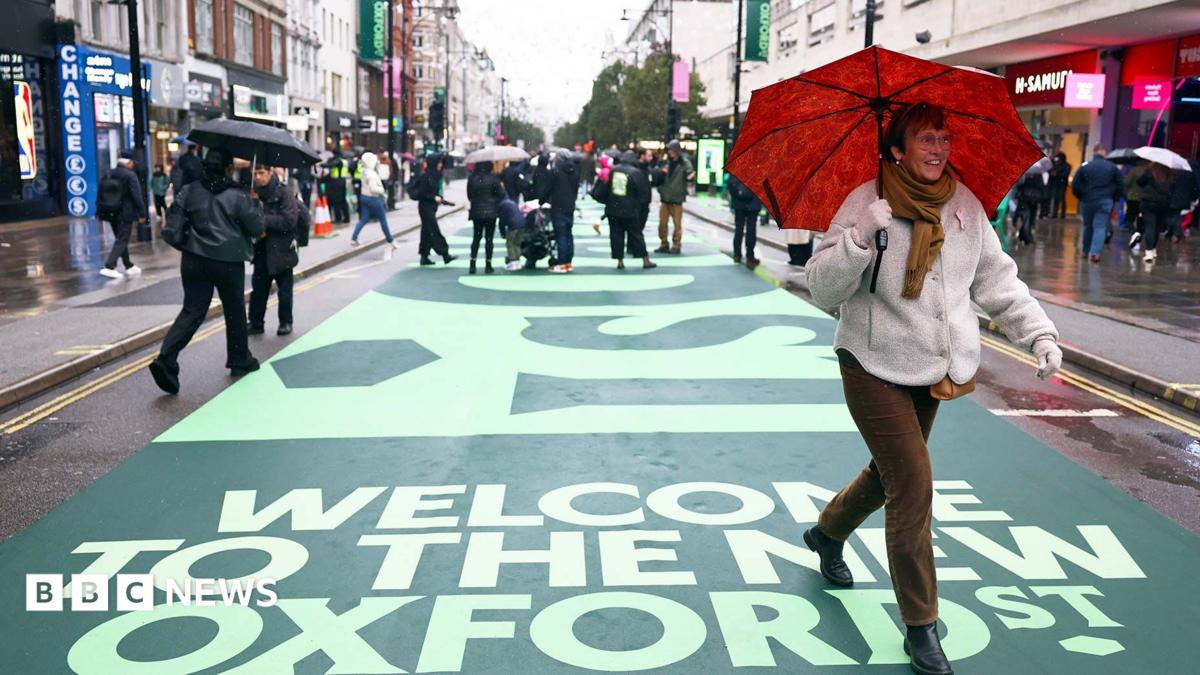
Almost a kilometer of London’s Oxford Street is now pedestrian-only, a move London Mayor Sadiq Khan says will mark the “end of decline” for the famous shopping area. The first phase of the overhaul, intended to create a safer and more spacious environment, is expected to be completed by spring 2027, with plans for increased trees, seating, and public squares. Buses have been diverted as shoppers experience the traffic-free zone, but black cab drivers have warned the restrictions could hinder access for disabled passengers. The pedestrianization effort follows similar initiatives in Paris and Brussels, which saw initial sales dips but eventual support from retailers, though implementation faced criticism. Oxford Street now faces the challenge of attracting pedestrians while maintaining accessibility for shops and managing surrounding traffic.
According to Mayor Khan, the changes will lead to a “great lead up to Christmas, safe and spacious.” The move mirrors a 2020 pedestrianization of Rue de Rivoli in Paris, which attracted over 20,000 cyclists daily and reduced nitrogen dioxide levels, although congestion shifted to nearby roads. In 2015, Brussels closed 800 meters of Boulevard Anspach to traffic; initial reports indicated a 20% drop in retail sales, but 85% of retailers later supported the scheme despite implementation concerns.
Where they differ
- Euronews highlights the warnings from black cab drivers regarding access for disabled passengers, a concern not mentioned by the BBC.
- The BBC provides a direct quote from a BBC reporter’s stroll down the pedestrianized section, offering a firsthand account, while Euronews focuses on the broader implementation details.
- Euronews draws direct comparisons to pedestrianization efforts in Paris and Brussels, detailing specific outcomes like cyclist numbers and retailer support rates, while the BBC does not offer those comparative figures.
What is not yet known
- The long-term impact on retail sales on Oxford Street remains to be seen.
- The extent to which surrounding traffic congestion will be affected by the pedestrianization is not yet clear.
Background
- London Mayor Sadiq Khan has been in office since 2016, advocating for policies focused on improving London’s public spaces and transportation [background knowledge].
- In 2020, Paris pedestrianized Rue de Rivoli, a major thoroughfare, as part of a broader plan to reduce car dependency and promote cycling [Fact Refinery, 2026-10-26].
- Brussels closed 800 meters of Boulevard Anspach to traffic in 2015, initiating a period of observation and adjustment to gauge the impact on local businesses [Fact Refinery, 2026-10-26].
- The UK government recently announced increased funding to address rough sleeping, aiming to provide accommodation for all rough sleepers by Christmas [Fact Refinery, 2026-10-25].
Our reading
Our reading is that Oxford Street’s pedestrianization is a calculated risk, mirroring urban planning trends seen elsewhere. While acknowledging potential short-term disruptions, like the concerns raised by black cab drivers and the initial sales dips experienced in Paris and Brussels, the Mayor’s office appears confident in a long-term positive outcome. The differing reporting from the BBC and Euronews highlights the complexity of assessing such a project, with each outlet prioritizing different aspects of the story.
What to watch
- Retail sales figures for Oxford Street in spring 2027, to assess whether the pedestrianization led to a sustained increase or decrease in business [Oxford Street retailers/market analysis reports].
- Traffic data for roads surrounding Oxford Street, to determine the extent of congestion displacement following the restrictions [Transport for London/city traffic monitoring systems].
- Formal responses from disability advocacy groups regarding accessibility concerns, especially following the spring 2027 implementation phase [Disability Rights UK/relevant advocacy organizations].
💬 Comments
📜 Comment Policy