Myanmar Convicted of Genocide Against Rohingya Minority by UN Court
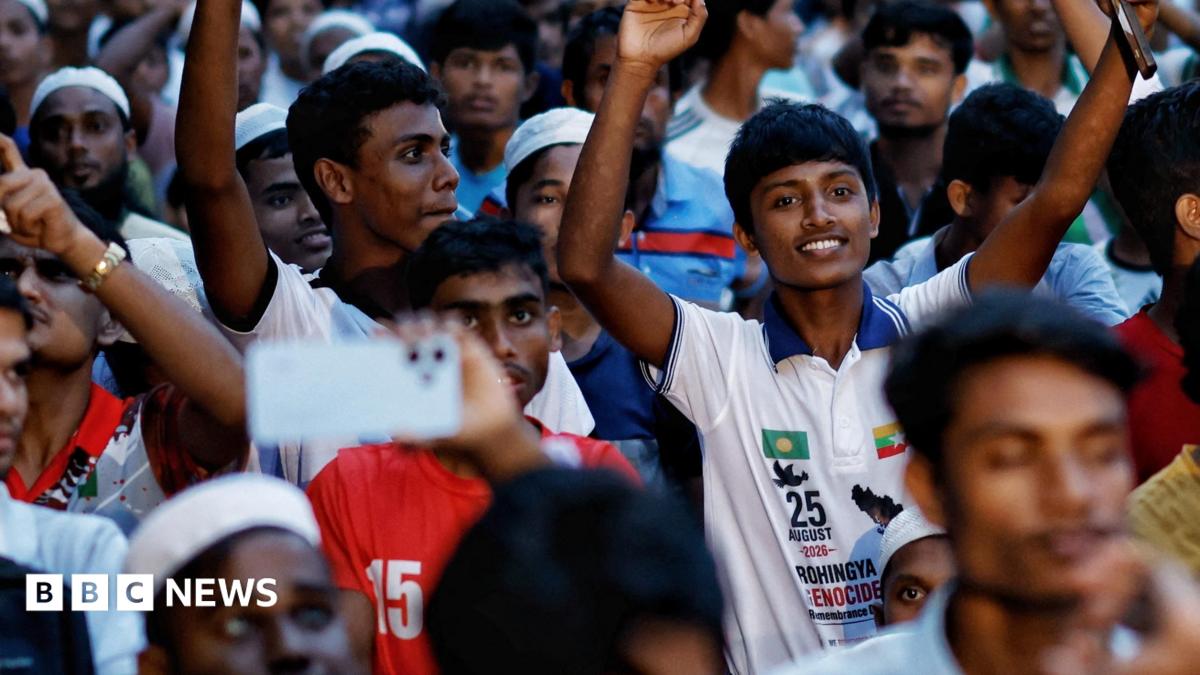
The International Court of Justice (ICJ) has ruled that Myanmar committed genocide against its Rohingya Muslim minority during a 2017 military crackdown, marking the first time an international court has found a state responsible for the crime. The decision follows a case brought by Gambia, backed by the Organisation of Islamic Cooperation, detailing acts of mass murder, rape, torture, and the destruction of villages. At least 10,000 Rohingya were killed in the 2017 attacks, prompting over one million to flee to Bangladesh, where many gathered to watch the ICJ’s verdict. The court, by a vote of nine to six, determined that Myanmar intended to destroy the Rohingya population, a finding crucial in establishing genocidal intent, the most challenging aspect of such cases.
The ruling has implications for other genocide cases before the ICJ, including South Africa’s claim that Israel committed genocide against Palestinians in Gaza, by clarifying the standard of evidence required. It also reinforces the principles of international law established after World War II, which have faced increasing pressure in recent years. Lawyers will study how Gambia proved Myanmar’s intent, as demonstrating this is key in genocide cases. The ICJ’s judgment rejected Myanmar’s claim that its actions were a response to an insurgent terrorist force, finding that the attacks were not consistent with counterinsurgency operations.
Following the ruling, the United Kingdom expelled Myanmar’s defence attaché and summoned its chargé d’affaires, with further action planned. The decision is being viewed as a reminder that international law exists and can hold states accountable for atrocities. While the ruling confirms long-held beliefs about the events in Myanmar, the question remains of how effectively international pressure can be brought to bear on the country’s military junta to ensure accountability and prevent future atrocities.
Where they differ
- The Telegraph emphasized the potential implications of the ruling for the case against Israel, quoting former Foreign Secretary Sir Jeremy Hunt calling for serious consequences for Myanmar.
- Newsmax presented the ruling as a historic first in a concise manner, without elaborating on the broader implications for international law.
- Channel 4 News highlighted the displacement of over 700,000 Rohingya and the resulting refugee crisis in Bangladesh, including distressing images.
- The Economist focused on the conviction itself, stating Myanmar 'set out to destroy the Rohingyas'.
What is not yet known
- The extent to which Myanmar’s military junta will comply with the ICJ’s ruling remains unclear.
- The specific actions the UK and other nations will take to hold those responsible accountable are still to be determined.
Background
- The International Court of Justice (ICJ) is a principal judicial organ of the United Nations, established in 1945 by the UN Charter [background knowledge].
- In 2017, a military crackdown in Myanmar led to the deaths of at least 10,000 Rohingya people and the displacement of over one million to Bangladesh [Fact Refinery, 2026-11-19].
- Navi Pillay, currently a judge on the ICJ, previously served as UN High Commissioner for Human Rights and has a long career defending human rights and international law [Fact Refinery, 2026-10-09].
- Demonstrating genocidal intent is the most difficult aspect of proving genocide in international courts [Reuters, 2026-11-17].
Our reading
We begin by considering the most likely outcome: continued international condemnation of Myanmar, alongside limited practical consequences. The ruling itself establishes a legal precedent and moral censure, but the junta’s compliance is far from assured, as the article notes. A less likely scenario involves more robust intervention, perhaps through coordinated sanctions or a referral to the International Criminal Court, if the junta demonstrates outright defiance or escalates atrocities. This would require a unified front from major powers, which seems improbable given current geopolitical tensions. The ICJ’s clarification of the standard of evidence for proving genocidal intent is a broader aspect worth noting. This is particularly relevant given the parallel case brought by South Africa against Israel, and the increased scrutiny of international law generally. The ruling, combined with the recent Nobel Peace Prize awarded to Navi Pillay [Fact Refinery, 2026-10-09], signals a renewed emphasis on accountability for mass atrocities. The article implicitly highlights the limitations of international legal mechanisms. While the ruling is a victory for the Rohingya and their advocates, its practical effect hinges on the willingness of states to enforce it. The junta’s internal dynamics and its reliance on military power suggest it may prioritize self-preservation over international norms, potentially leading to further repression.
What to watch
- Myanmar’s official response to the ICJ ruling and any indication of compliance or defiance [Myanmar government statements].
- The specific actions taken by the United Kingdom and other nations to hold those responsible accountable [government press releases, UN reports].
- Any developments in the case brought by South Africa against Israel, particularly how the ICJ applies the standard of evidence established in the Myanmar ruling [ICJ website, court filings].
Read the original coverage
💬 Comments
📜 Comment Policy