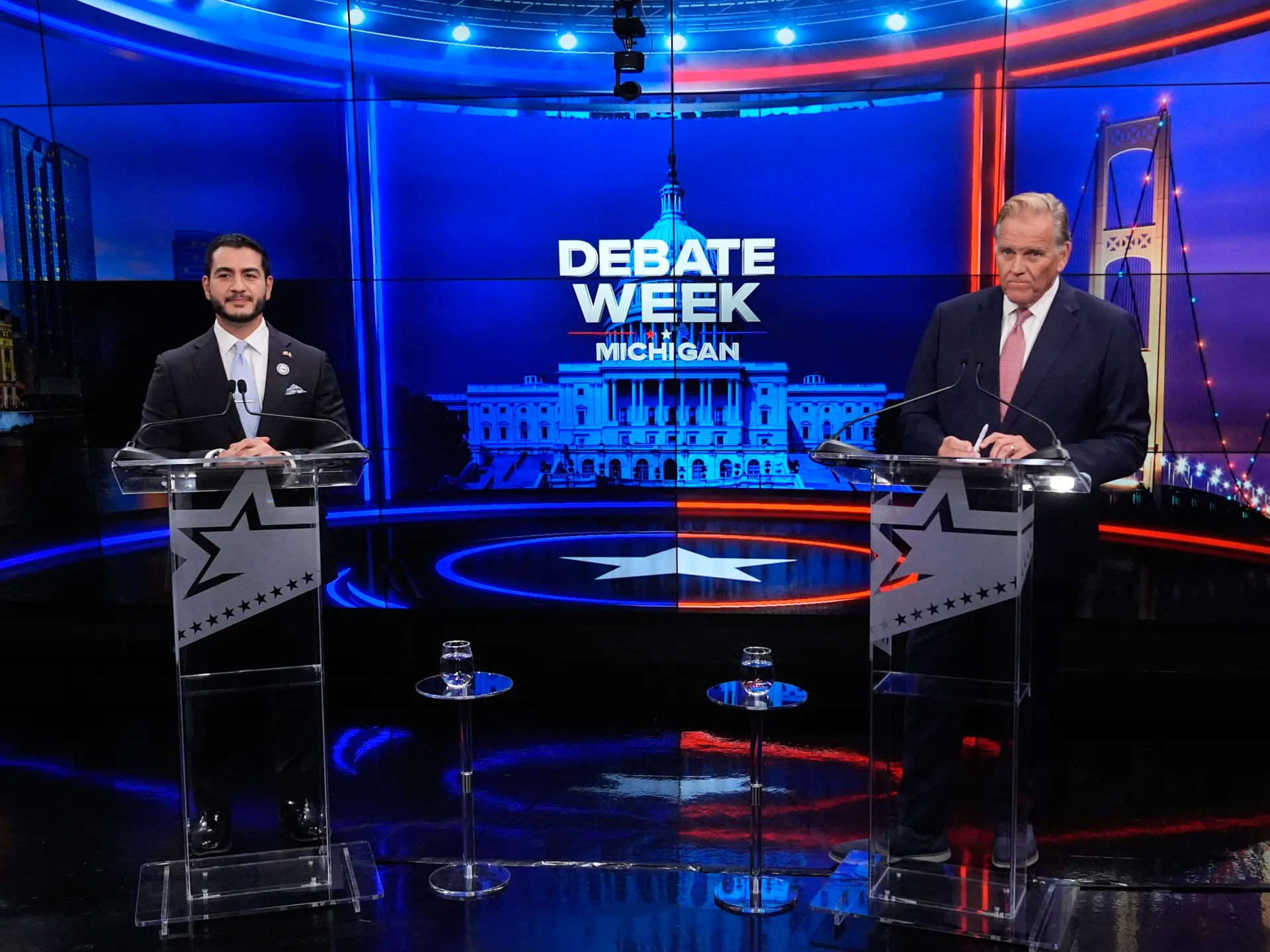
Democrat Abdul El-Sayed and Republican Mike Rogers traded personal attacks and policy disagreements during their first televised debate in Michigan’s closely watched Senate race. The hour-long debate, held Thursday, focused on issues including the Iran conflict, trade with Canada, immigration, and healthcare, but was frequently interrupted by direct insults between the candidates. El-Sayed repeatedly accused Rogers of being beholden to President Trump and unwilling to challenge his policies, specifically regarding the ongoing conflict in Iran and trade tariffs. Rogers countered by portraying El-Sayed as an extremist with questionable associations and a proponent of policies detrimental to national security.
Both candidates agreed on the need to temporarily pause the federal gas tax amid rising energy prices and expressed concerns about the trade war with Canada. Rogers advocated for ending the dispute with Canada, stating he had discussed the issue with Commerce Secretary Howard Lutnick, while El-Sayed criticized Rogers’ past support for Trump’s trade policies. On immigration, Rogers defended the Trump administration’s enforcement efforts, while acknowledging some operations in Minnesota were “probably not appropriate,” and argued agents were targeting criminals. El-Sayed called for abolishing Immigration and Customs Enforcement. The debate moderator, Rick Albin, repeatedly urged the candidates to maintain order as they frequently spoke over each other and argued even during commercial breaks.
Rogers repeatedly attacked El-Sayed’s identity as a Muslim, questioning his views on terrorism and implying connections to extremist groups. El-Sayed, who would be the first Muslim in the Senate if elected, faced similar attacks on the campaign trail, including accusations from President Trump of being a “terrorist sympathizer.” The race is considered a key toss-up that could determine control of the Senate, with most polls showing a narrow margin between the two candidates. The candidates are competing to replace retiring Democratic Sen. Gary Peters.
Our reading is that the debate, as reported, was characterized by a breakdown in substantive policy discussion, replaced by personal attacks and accusations. The focus on identity and past associations, particularly regarding El-Sayed’s religion, appears to be a central tactic employed by Rogers, while El-Sayed’s attacks center on Rogers’ alignment with previous administration policies. The differing emphasis in media coverage suggests a partisan framing of the event, with some outlets prioritizing the identity-based attacks and others focusing on policy disagreements.
Read the original coverage
💬 Comments
📜 Comment Policy