Mexico Captures Alleged Drug Kingpin, Sparking Violence in Sinaloa
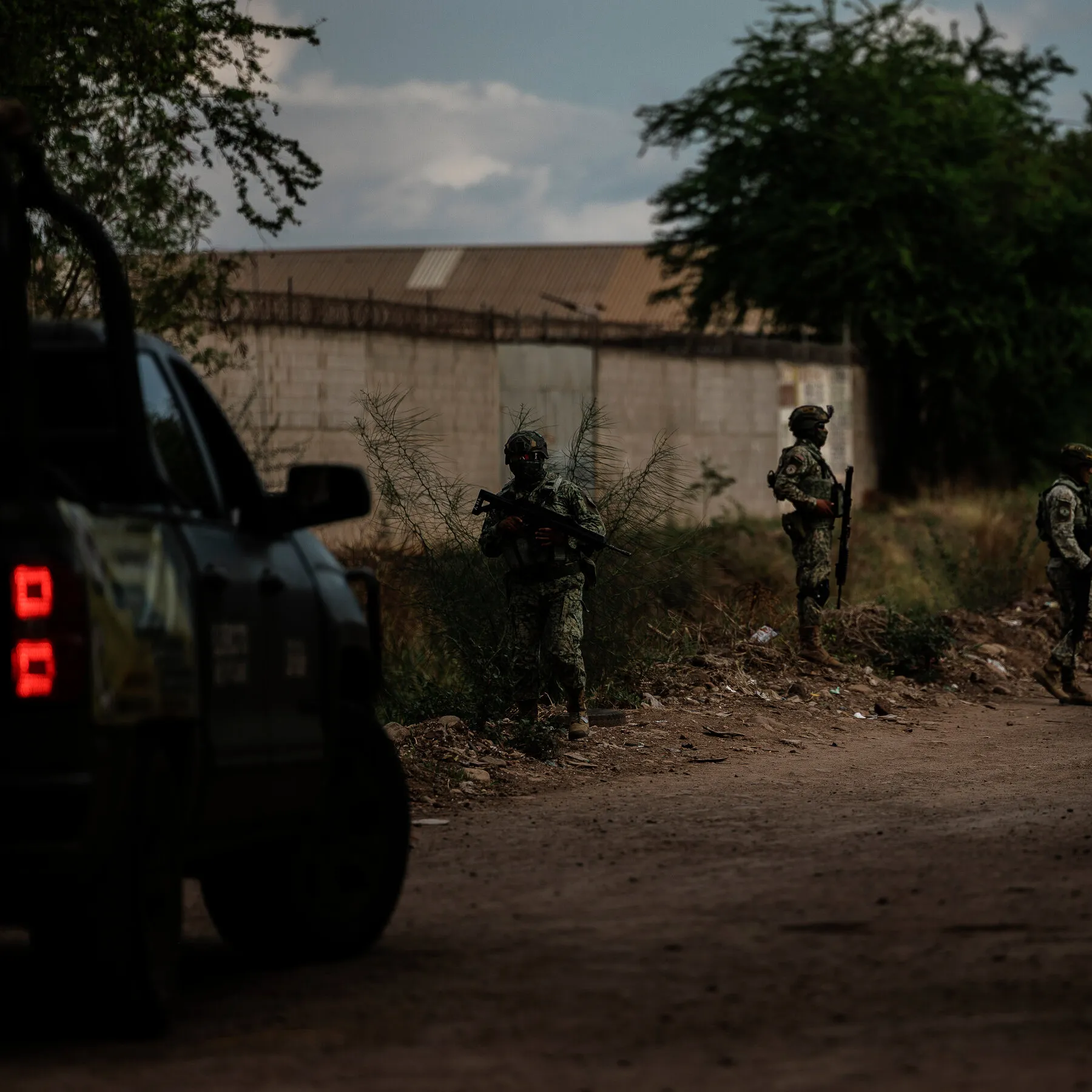
Mexican special forces captured Fausto Isidro Meza-Flores, also known as “El Chapo Isidro,” a drug kingpin on the FBI’s 10 Most Wanted list, triggering a violent response in the state of Sinaloa. Meza-Flores, allegedly the leader of the Meza-Flores Transnational Criminal Organization, was arrested Friday night during a raid in Guasave, Sinaloa, along with two other leaders. The operation involved a coordinated assault by elite military agents who faced gunfire and explosives while securing the residence and evacuating the suspects to Mexico City. Video footage released by authorities shows Meza-Flores being escorted by heavily armed soldiers.
The capture comes as Mexican President Claudia Sheinbaum faces pressure from the U.S. to address cartel activity. The Mexican government stated that intelligence from the Trump administration aided in the operation, though details of the collaboration remain limited. The raid in Guasave resulted in scenes of panic, with civilians fleeing a baseball game amidst gunfire and reports of burnt vehicles. Meza-Flores was initially indicted in 2012 and again in 2019, facing charges related to drug trafficking and firearms offenses, and the FBI had offered a reward of up to $5 million for information leading to his arrest.
This high-profile capture follows a similar operation in February that resulted in the death of another powerful cartel leader and was also met with violence. Sheinbaum has pursued a more aggressive approach to combating illegal groups during her time in office, coinciding with a reported decrease in homicides. The FBI described the Meza-Flores organization as a heavily armed group responsible for trafficking heroin, methamphetamine, cocaine, fentanyl, and marijuana into the U.S., controlling drug production and distribution throughout Mexico.
What is not yet known
- The specific details of how intelligence from the Trump administration assisted in the capture remain unclear.
- The extent of the violence following the capture, beyond reports of gunfire and burnt cars in Guasave, is not detailed.
Background
- The Trump administration provided intelligence that aided in the capture of Fausto Isidro Meza-Flores, though details are limited [Fact Refinery, 2026-11-20].
- In February, a similar operation targeting a cartel leader also resulted in violence [Fact Refinery, 2026-11-20].
- Ismael “El Mayo” Zambada, co-founder of the Sinaloa Cartel, was sentenced to life in prison in the U.S. and ordered to forfeit $15 billion [Fact Refinery, 2026-07-20].
- The U.S. Army has been deploying troops to Latin America for anti-drug training, with Mexico expressing reluctance to fully cooperate [Fact Refinery, 2026-10-15].
- Sinaloa state has experienced cartel-related violence, including the killing of social media influencer César Gastélum [Fact Refinery, 2026-08-06].
Our reading
We begin by considering the most likely outcome: continued, localized violence in Sinaloa. The immediate response to Meza-Flores’ capture, gunfire, burnt vehicles, suggests the Meza-Flores organization will attempt to demonstrate its continued power and disrupt the government’s actions. A less likely scenario is a broader escalation involving multiple cartels, potentially triggered if other organizations perceive an opportunity to exploit the power vacuum. This would depend on whether the capture of Meza-Flores significantly weakens the Meza-Flores organization, creating a territorial dispute. The capture occurs within a context of increased U.S.-Mexico cooperation on drug enforcement, despite Mexico’s stated concerns about sovereignty. The fact that intelligence from the Trump administration was utilized, and that the U.S. recently indicted a Mexican governor on drug charges, suggests a willingness from both sides to pursue joint operations, even if tensions remain. This could be a key signal of a shift in policy, potentially leading to further collaboration. The recent sentencing of “El Mayo” Zambada, combined with this capture, indicates a sustained effort to dismantle the Sinaloa Cartel’s leadership. However, the cartel’s demonstrated resilience, as noted in prior reporting, suggests that removing key figures does not necessarily equate to eliminating the organization’s influence. The internal dynamics of the Sinaloa Cartel, and its ability to adapt, will be crucial in determining its future trajectory.
What to watch
- The extent of violence in Sinaloa over the next week, specifically reports of clashes between the Meza-Flores organization and rival cartels or security forces [local Mexican news outlets].
- Any official statements from the Mexican government detailing the specifics of the intelligence sharing with the Trump administration [Mexican government press releases].
- Whether the U.S. Department of Justice provides further details about the charges against Sinaloa Governor Ruben Rocha Moya [U.S. Department of Justice website].
Read the original coverage
💬 Comments
📜 Comment Policy