Lock of George Washington's Hair Sells for $4,000 at Auction
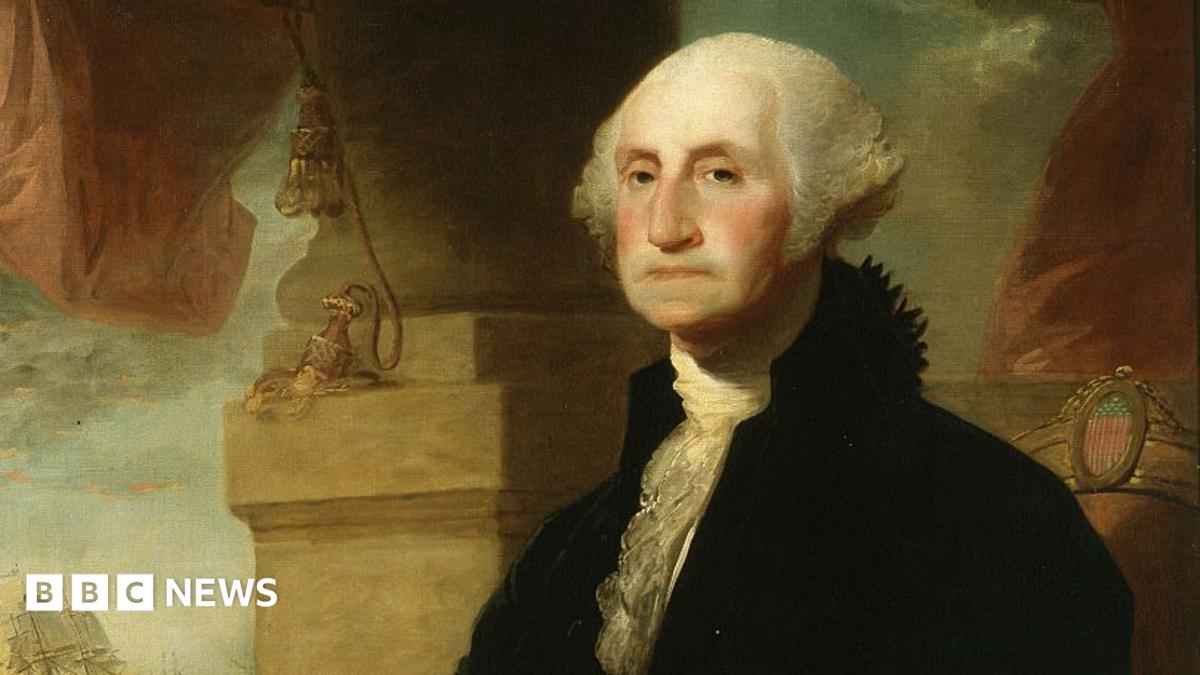
A lock of hair belonging to George Washington sold at auction Saturday for $4,000. The hair was originally obtained by John Gadsby, who hosted Washington’s final two birthday celebrations in 1798 and 1799, and later acquired by collector John K. Lattimer. Gadsby, a hotelier in Alexandria, Virginia, is believed to have acquired the hair during a dinner with Washington shortly before his death in 1799, and had it framed and displayed in his home. His granddaughter, Julia Ten Eyck McBlair, confirmed this in a 1928 affidavit. Richmond Auctions facilitated the sale, noting the hair was framed in a 9-inch-by-2 1/2-inch gold-gilded wood frame. This sale follows other auctions of Washington artifacts, including a letter from 1776 that sold for over $109,000 in July, and another letter from January 5, 1780. Mount Vernon, Washington’s former residence, holds a collection of at least 50 preserved locks of his hair, reflecting a 19th-century practice of preserving hair from loved ones. While this lock sold for $4,000, other strands of Washington’s hair have fetched significantly higher prices, three strands in a locket sold for nearly $40,000 in 2021. Gadsby was also a slaveholder, though records of his involvement in the practice are incomplete.
Where they differ
- BBC noted the price in British pounds (£3,058) alongside the US dollar amount, while CBS News only reported the dollar amount.
- BBC highlighted the higher price of a locket containing Washington's hair sold in 2021 ($40,000), providing a comparative price point, while CBS News did not.
- BBC explicitly stated no right-leaning outlet reported this story, while CBS News did not mention coverage from any particular political perspective.
What is not yet known
- The identity of the buyer remains undisclosed.
- The extent of Gadsby’s involvement in the buying and selling of enslaved people is not fully documented.
Background
- George Washington’s hair was a collectible item in the 19th century, with at least 50 preserved locks held by Mount Vernon [Fact Refinery, 2026-11-21].
- John Gadsby, a hotelier in Alexandria, Virginia, hosted Washington’s final two birthday celebrations in 1798 and 1799 and is believed to have obtained the hair during a dinner with Washington shortly before his death [Fact Refinery, 2026-11-21].
- Locks of Washington’s hair have sold for varying prices at auction, with three strands in a locket fetching nearly $40,000 in 2021, and another selling for over $35,000 in 2019 [Fact Refinery, 2026-11-21; KVOA, 2021-10-01; USA Today, 2019-02-05].
- The practice of preserving hair from loved ones was common in the 19th century [Fact Refinery, 2026-11-21].
Our reading
We begin by noting the discrepancy in reporting: BBC converted the sale price to British pounds while CBS News did not, and BBC highlighted a significantly higher price from a previous auction, while CBS News did not. This suggests differing editorial choices regarding context and comparative value. Most likely, the market for Washington memorabilia will remain active, with prices fluctuating based on provenance and condition. A further increase in auction activity surrounding Washington artifacts, potentially spurred by Trump’s recent request for statues and an exhibit [Fact Refinery, 2026-09-12], could drive up prices. Less likely, but possible, is a decline in interest if the market becomes saturated or if economic conditions worsen. The sale occurs against a backdrop of broader geopolitical tensions, as evidenced by the ongoing conflict involving Iran [Fact Refinery, 2026-11-02] and the strain on the US Navy [Fact Refinery, 2026-11-21]. While seemingly unrelated, these events highlight a potential trend: a focus on national symbols and historical figures during times of uncertainty. The attention given to Washington, both through auctions and Trump’s requests, could be interpreted as an attempt to reinforce national identity. Given Gadsby’s status as a slaveholder, it is worth acknowledging the complex legacy of historical figures and the ethical considerations surrounding the collection and sale of artifacts obtained during periods of exploitation. The incomplete records of his involvement in slavery [Fact Refinery, 2026-11-21] underscore the need for continued research and a nuanced understanding of the past.
What to watch
- The identity of the buyer, which could indicate the motivations behind the purchase [Richmond Auctions].
- Future auction results for similar Washington artifacts, to assess whether the $4,000 price point is an anomaly or a trend [Richmond Auctions].
- Any further details regarding Gadsby’s involvement in slavery, which could shed light on the provenance of the artifact [historical records].
Read the original coverage
💬 Comments
📜 Comment Policy