Judge Blocks Trump Administration's Second Attempt to Restrict Birthright Citizenship
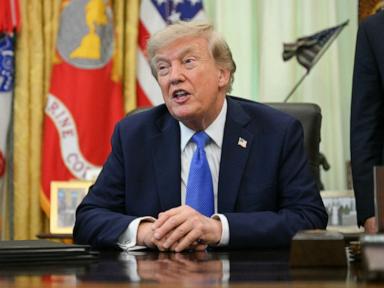
A federal judge in Washington, D.C., has blocked the Trump administration’s second attempt to restrict birthright citizenship, issuing a preliminary injunction against a recent executive order. U.S. District Judge Christopher Cooper, an appointee of former President Barack Obama, ruled that the President cannot create new exceptions to birthright citizenship, reaffirming the Supreme Court’s earlier decision striking down a similar effort. The August executive order sought to narrow eligibility for citizenship to children born in the U.S. to parents who are not diplomatic employees, those born through commercial surrogacy, or those with a parent suspected of gang membership or terrorism.
This ruling follows a Supreme Court decision in June that upheld birthright citizenship, and a prior injunction issued by a Maryland judge in September protecting children of illegal immigrants and those with parents who are not citizens or legal permanent residents. Judge Cooper’s injunction expands protections to include children of foreign government employees, those born through surrogacy to foreign parents, and those with parents deemed “alien enemies.” He cited the Supreme Court’s 1898 ruling in *United States v. Wong Kim Ark*, which established that children born in the U.S. are citizens regardless of their parents’ immigration status, with limited exceptions.
The White House denounced the ruling, calling Judge Cooper an “activist judge” attempting to thwart President Trump’s agenda. Trump has repeatedly criticized the Supreme Court’s decision on birthright citizenship and has sought to limit who is eligible for U.S. citizenship at birth. The administration will need to overturn both this injunction and the one issued in Maryland to enforce the executive order.
Where they differ
- Fox News emphasized that Judge Cooper was previously criticized by Trump as an “anti-Trump Hater.”
- Left-leaning outlets, such as the Daily Maverick and ABC News, highlighted the ACLU's statement calling on Trump to accept birthright citizenship as the law of the land.
- Right-leaning outlets, such as the Washington Times and Fox News, focused on the White House’s denouncement of the judge as an “activist judge.”
- The Japan Times framed the ruling as potentially stymieing Trump’s hard-line immigration crackdown.
What is not yet known
- Whether the administration will appeal the ruling.
- The long-term impact of these legal challenges on the administration’s immigration policies.
Background
- Judge Christopher Cooper, appointed by former President Barack Obama, has repeatedly ruled against the Trump administration in cases concerning the Kennedy Center, blocking attempts to rename the building and halt renovations [Fact Refinery, 2026-05-30].
- President Trump has consistently sought to limit eligibility for U.S. citizenship at birth and has publicly criticized Supreme Court decisions on birthright citizenship [Fact Refinery, 2026-11-06].
- The Supreme Court’s 1898 ruling in *United States v. Wong Kim Ark* established that children born in the U.S. are generally citizens regardless of their parents’ immigration status [Fact Refinery, 2026-11-06].
- Prior to this ruling, a Maryland judge issued an injunction protecting children of illegal immigrants and those with parents who are not citizens or legal permanent residents [Fact Refinery, 2026-11-06].
Our reading
We begin by assessing the likely trajectory of this legal challenge. Most likely, the administration will appeal Judge Cooper’s injunction, mirroring its response to the Maryland ruling and the Kennedy Center cases. The outcome will likely hinge on whether the administration can successfully argue that the executive order falls within presidential authority, a claim already rejected by Judge Cooper and the Supreme Court in June. A less likely outcome is a negotiated settlement, perhaps involving a narrowing of the executive order’s scope to address specific concerns while avoiding a direct confrontation with the established legal precedent. The repeated legal battles over birthright citizenship and the Kennedy Center suggest a broader pattern: a deliberate strategy of pushing legal boundaries and testing the limits of executive power. This has implications for the functioning of the judiciary, as demonstrated by the White House’s characterization of Judge Cooper as an “activist judge,” and for the stability of established legal norms. Considering the opposing side, the ACLU’s call for Trump to accept birthright citizenship highlights a potential internal tension within the administration. While Trump appears determined to pursue his policy goals, the legal setbacks and public criticism may create pressure from within his own administration to adopt a more pragmatic approach.
What to watch
- The administration’s decision on whether to appeal Judge Cooper’s ruling [The Hill, 2026-11-06].
- Any changes to the language or scope of the executive order [CNN, 2026-11-06].
- The status of the Maryland injunction and whether the administration attempts to consolidate the legal challenges [AP News, 2026-11-06].
Read the original coverage
💬 Comments
📜 Comment Policy