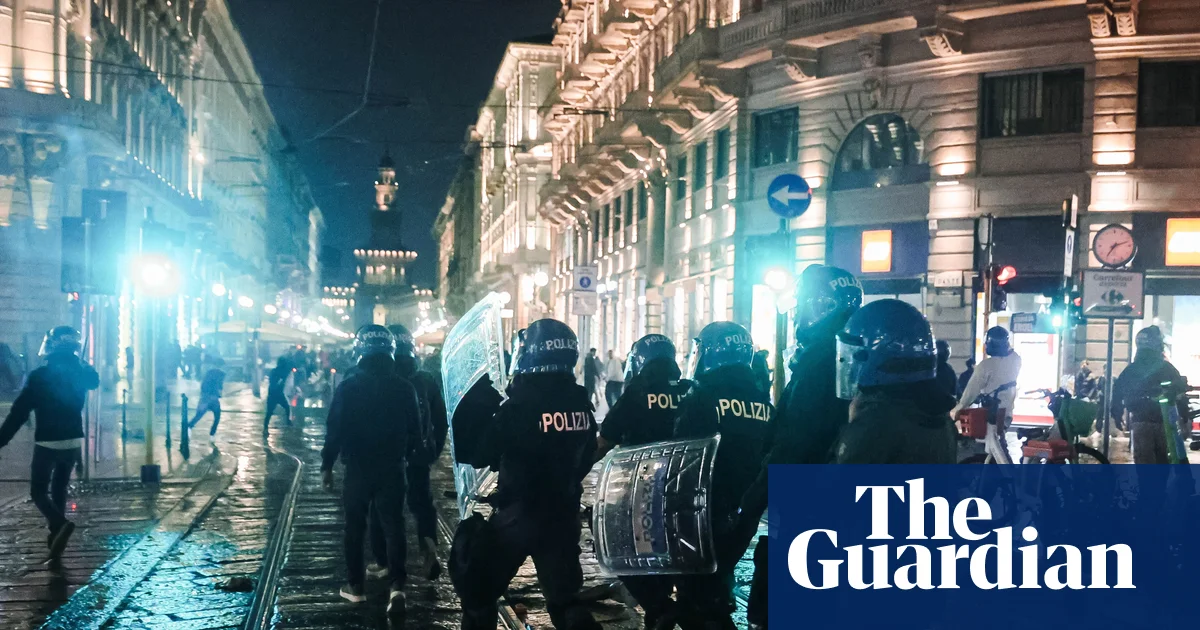
Italy is deploying 500 soldiers to Milan following days of protests against the high cost of living that escalated into clashes with police, vandalism, and looting. The move, announced by Deputy Prime Minister Matteo Salvini, comes after an emergency security meeting chaired by Prime Minister Giorgia Meloni, who vowed a “firm response” to the unrest. Police in Milan detained 271 people over the weekend, with 32 arrested, including 23 minors and 13 foreign nationals, and another 28 referred to judicial authorities. Fourteen police officers were injured, and damage is estimated to exceed €1 million. Luxury stores in Milan’s fashion district have closed or removed merchandise as a precaution.
The government is planning to swiftly approve tougher security measures, including extending preventive detention for minors, cracking down on youth gangs, specifically a group known as “maranza”, and banning gatherings deemed a threat to public order. Foreign Minister Antonio Tajani stated the government will respond firmly to attacks on the state. The deployment and proposed measures follow protests in other northern Italian cities, including Bologna, Brescia, Bergamo, and Turin, where 28 protesters were arrested.
A new protest movement, calling itself 17 October, has emerged on social media, promising further demonstrations in major Italian cities each Saturday “until this government of thieves collapses.” Opposition politicians argue the government is using security as a propaganda tool and failing to address underlying issues like education, housing, and living conditions in marginalized areas. The unrest mirrors a broader wave of violent protests across Europe, particularly in France, where demonstrations over rising prices and government spending cuts have also led to widespread rioting.
Our reading is that the Italian government is responding to domestic unrest with a visible show of force and a commitment to stricter security measures. The deployment of troops and proposed legislation suggest a prioritization of order over addressing the root causes of the protests, as highlighted by opposition criticism. The parallel unrest in France, and the reporting of both events together, implies a broader pattern of social and economic discontent across Europe.
Read the original coverage
💬 Comments
📜 Comment Policy