Irishman Charged with $60 Million Damage to US Military Aircraft
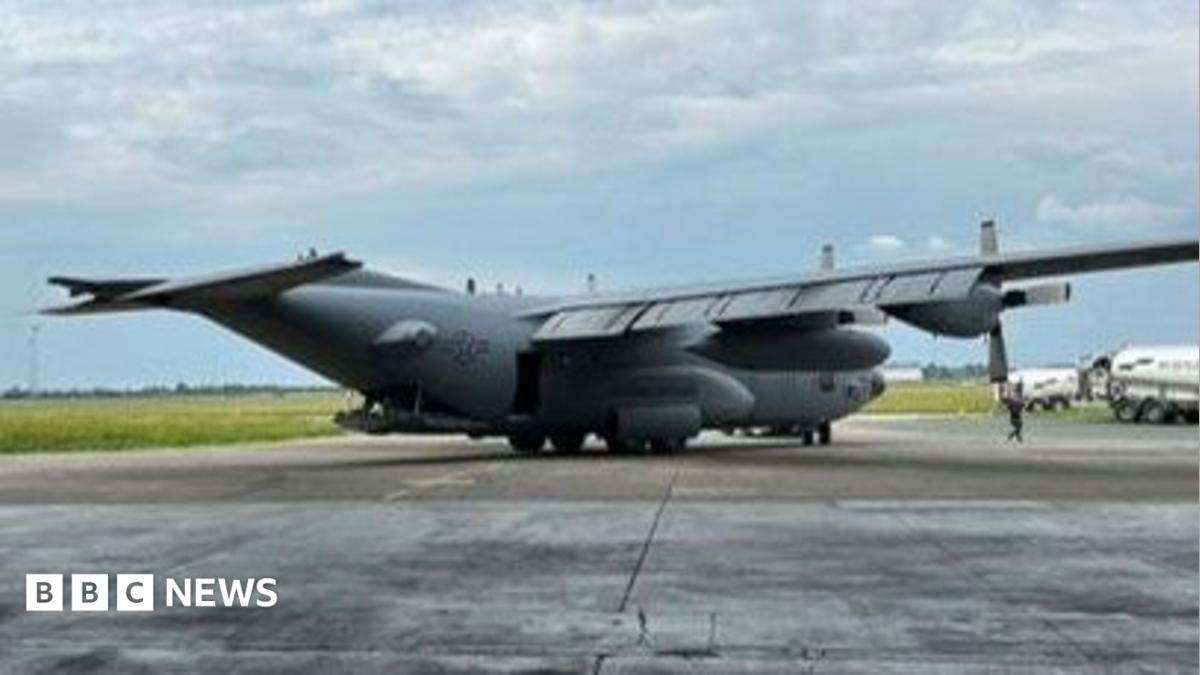
Daithi O’Corrain, 48, has been charged by US prosecutors with destroying a $60 million (£45m) C-130 Hercules military aircraft at Shannon Airport in Ireland. Prosecutors allege O’Corrain spent months planning the attack, which involved breaching security, damaging the aircraft’s interior with tools including an axe, and using corrosive substances. The incident occurred on April 11th, and O’Corrain was arrested at the scene by Irish police. US officials claim the act jeopardized national security and rendered the aircraft inoperable.
According to filings, O’Corrain cut wires and hydraulic lines, destroyed cockpit gauges, punctured air ducts, and poured ball bearings into the fuel tank. He also used gallium, a substance that erodes aluminum and steel. He avoided damaging a component that could have caused an explosion. The US indictment states he barricaded himself inside the plane for several hours before being apprehended on top of the aircraft.
Al-Jazeera reports that supporters have identified O’Corrain as an anti-war activist protesting the US-Israel war on Gaza and US military presence in Ireland. An online fundraiser describes the act as “direct action” against the US military. Shannon Airport is a key hub for US military personnel and has seen previous security breaches, including protests and incidents of vandalism. The airport was also used by former President Donald Trump during his visit to Ireland in September. O’Corrain, from Cork City, faces a maximum sentence of 10 years in prison if convicted of destruction of government property and is expected to be brought to the Southern District of New York for prosecution.
Where they differ
- Al-Jazeera emphasizes O’Corrain’s supporters’ framing of the act as protest against the US-Israel war on Gaza, while the BBC focuses on the damage to the aircraft and the US prosecution.
- Al-Jazeera highlights the fundraiser’s description of the act as ‘direct action,’ a framing absent from the BBC’s reporting.
What is not yet known
- Whether O’Corrain has secured legal representation remains unclear.
- The full extent of the investigation into the security breaches at Shannon Airport beyond this incident is not detailed.
Background
- Shannon Airport is a key hub for US military personnel and was previously used by former President Donald Trump during a visit to Ireland [Frognews, 2026-11-17].
- The US Air Force has recently faced security concerns at UK bases, including suspected drone activity over RAF Lakenheath and RAF Fairford, with Prime Minister Andy Burnham suggesting Iranian involvement in the latter [Fact Refinery, 2026-11-13].
- Daithi O’Corrain, 48, is accused of intentionally damaging a C-130 Hercules aircraft, causing an estimated $60 million in damage [CNN, 2026-11-17].
- Supporters identify O’Corrain as an anti-war activist protesting the US-Israel war on Gaza [Al-Jazeera, 2026-11-17].
Our reading
We begin by assessing the most likely outcome: O’Corrain’s conviction and sentencing, potentially to the maximum of ten years, given the detailed allegations of premeditation and extensive damage. A less likely scenario involves a plea bargain reducing the sentence, but this would require mitigating factors not currently apparent in the reporting. The balance could shift if O’Corrain successfully argues diminished responsibility or demonstrates a clear lack of intent to cause a catastrophic failure, his avoidance of damaging an explosive component is noted. The incident highlights the vulnerability of US military assets stationed abroad, particularly in countries with strong anti-war sentiment and differing foreign policy positions. The prior incidents at RAF Lakenheath and Fairford, potentially linked to Iranian activity, suggest a broader pattern of targeting US military infrastructure, even if the Shannon Airport attack appears to be the work of a lone actor motivated by the conflict in Gaza. The differing emphasis between Al-Jazeera, framing the act as “direct action” and linking it to the US-Israel war, and the BBC, focusing on the damage and US prosecution, reveals a clear divergence in editorial approach. This framing is likely to resonate with different audiences and could influence public perception of the event.
What to watch
- The date of O’Corrain’s first court appearance in the Southern District of New York [CNN, 2026-11-17].
- Any official statement from the US Department of Justice regarding the investigation into the security breach at Shannon Airport [upi, 2026-11-17].
- Further reporting on the online fundraiser supporting O’Corrain and the level of financial support it receives [Al-Jazeera, 2026-11-17].
Read the original coverage
💬 Comments
📜 Comment Policy