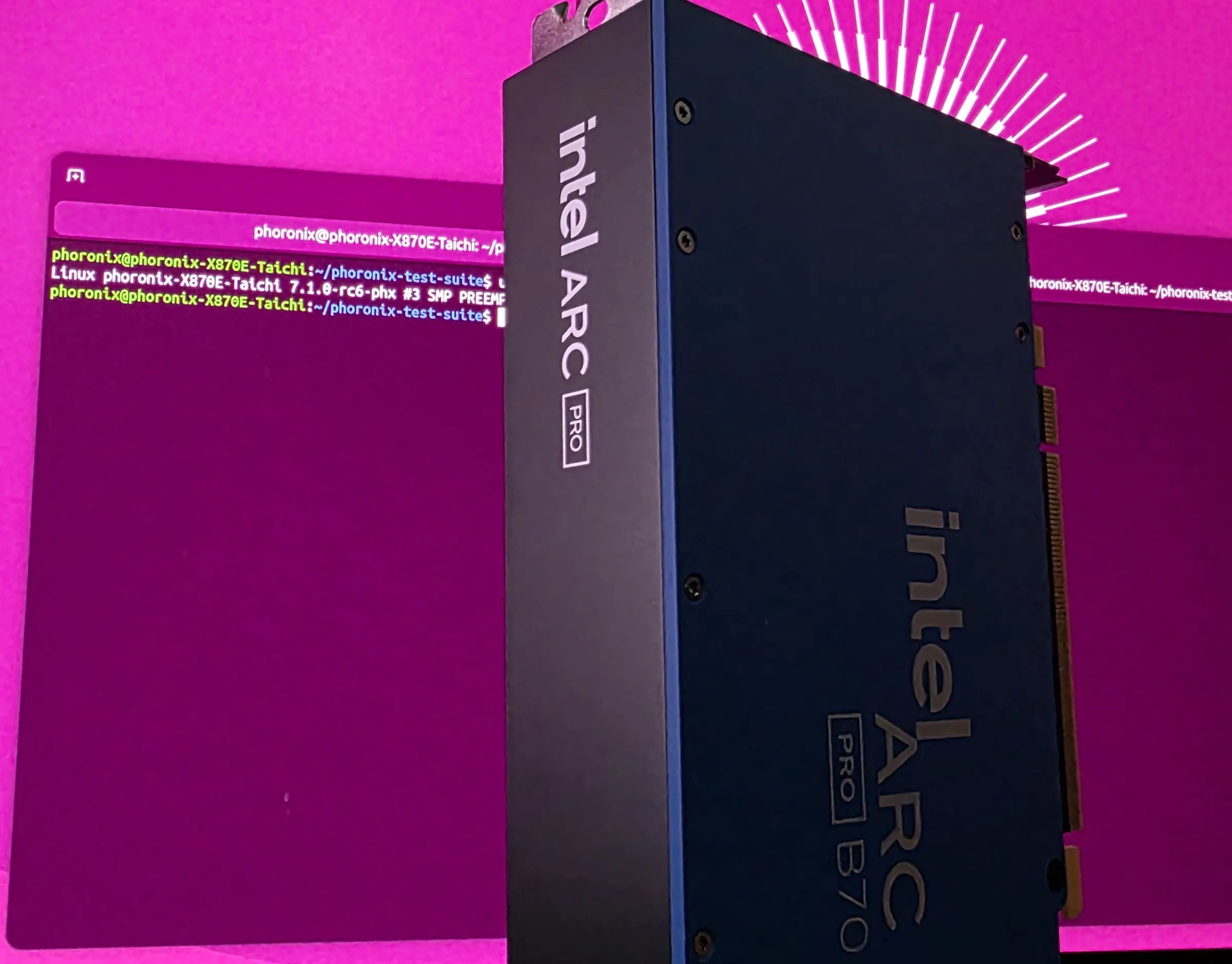
Intel engineer Matthew Auld has contributed new features to the Intel Xe kernel graphics driver for the upcoming Linux 7.4 kernel cycle, focusing on video memory health and handling degraded video RAM. The updates include a vRAM health check and memory page offlining capabilities.
The Intel Xe driver is receiving a basic vRAM health check routine, designed to sanity test the last vRAM page. According to Matthew Auld, this check is currently enabled via the `CONFIG_DRM_XE_DEBUG_MEM` kernel build flag. Auld explained the purpose of this check: “During early probe, use the last page as a canary for BAR sizing, CCS sizing, identity map setup etc. If something is wrong the last page is where we will likely find it. Hit it with everything we have. For now this is gated behind a debug config option, so shouldn't trigger on production. Main motivation is around CCS sizing where on some BMG cards the CCS offset is programmed misaligned, for whatever reason, and our handling of that was busted, as found by Linus, leading to some amount of CCS storage getting pulled into the allocator as normal VRAM.”
In addition to the health check, the Xe driver now supports memory page offlining, a feature that underwent 21 rounds of review. This is described as a “significant step” toward enabling the driver to gracefully handle hardware memory degradation. The driver can now permanently isolate faulty video memory, preventing its reuse in subsequent allocations. Information about these bad vRAM pages is exposed through DebugFS, allowing user-space applications to monitor the faulty memory areas. The driver also now exposes per-engine idle status via DebugFS.
The full list of changes submitted this week to DRM-Next for Linux 7.4 is available through a public pull request.
Read the original coverage
💬 Comments
📜 Comment Policy