Green Party Adopts Policy Equating Zionism with Racism, Backs Single Palestinian State
AI-synthesized · Bias removed · Facts only
3 sources: 2 left · 0 center · 1 right
Facts are sacred. Opinion is labelled.
Image: Bbc Us
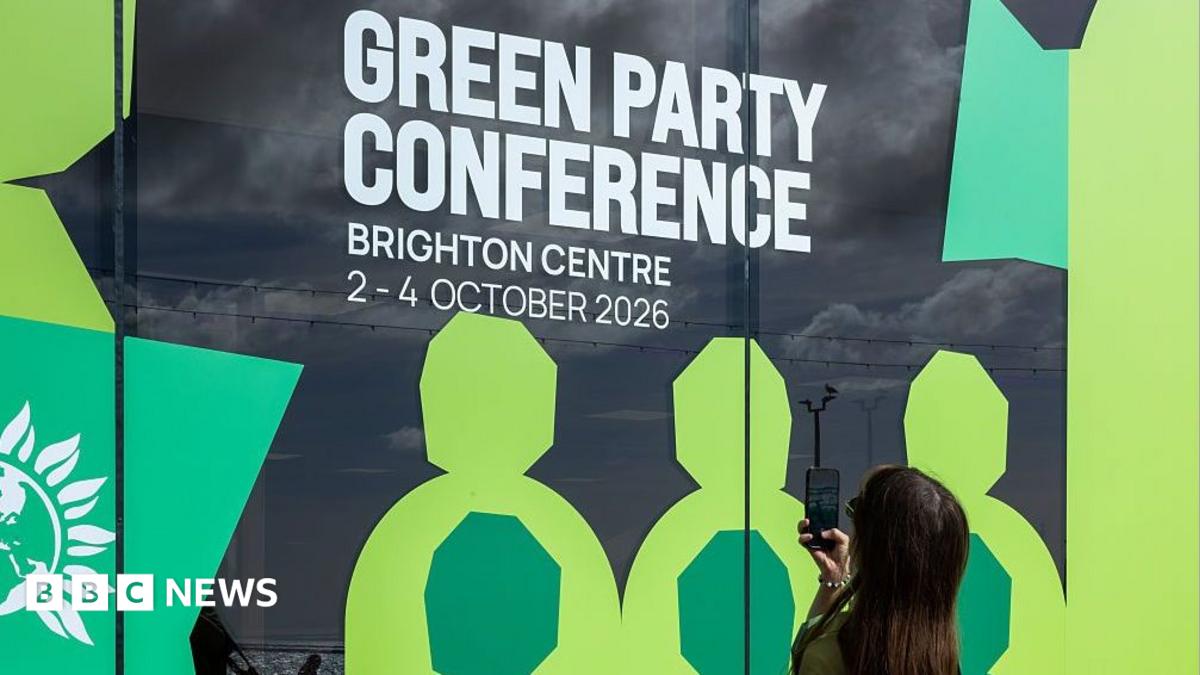
The Green Party of England and Wales has formally adopted a policy defining Zionism as a form of racism and advocating for a single Palestinian state, a move that has sparked internal division and external criticism. Members voted 1,022 to 813 in favor of the motion at the party’s annual conference in Brighton. The motion defines Zionism as an ethnonationalist ideology and asserts it has historically led to the “dehumanization, displacement, dispossession, disenfranchisement and destruction of Palestinians.”
The decision has drawn condemnation from British Jewish groups, including the Board of Deputies and the Jewish Leadership Council, who argue Zionism is an anti-racist movement born out of a need for Jewish refuge after millennia of persecution. They also expressed concerns about the safety of Jewish members within the party. Four of the party’s five MPs publicly opposed the motion, while leader Zack Polanski, who did not vote, previously stated that Zionism is racist if it involves the displacement of Palestinians.
Members rejected amendments proposed by Polanski to clarify the policy would not be used to discipline Jewish members or to remove the call for a single Palestinian state. Deputy leader Mothin Ali publicly supported the motion, linking it to the conflict in Gaza, while another deputy leader, Rachel Millward, described the wording as “problematic.” The party maintains it will protect Jewish members. The motion’s passage follows a surge in Green Party membership since Polanski’s election as leader and comes as the party seeks to broaden its appeal, including courting voters traditionally aligned with Labour. The debate also highlighted divisions between the party’s newly enlarged membership base and its elected MPs.
Where they differ
- Breitbart framed the motion as an attempt to court the ‘Islamic vote’ and a shift away from environmental concerns, emphasizing ‘Islamo-populism.’
- The Economist characterized the vote as a ‘shameful’ moment for a party with political aspirations.
- The Daily Mail focused on the internal divisions within the Green Party, highlighting opposition from ex-leaders and the stance of deputy leader Mothin Ali.
- Middle East Eye emphasized the historical significance of the vote, noting it makes the Green Party the first major UK party to recognize Zionism as a form of racism.
What is not yet known
- The full legal implications of the motion and whether it will be challenged under equality laws remain to be seen, though legal experts suggest a strong case could be made.
- The extent to which this policy shift will impact the Green Party’s electoral prospects is currently unclear.
Background
- The Green Party of England and Wales is a political party in the United Kingdom, advocating for environmentalism, social justice, and participatory democracy [background knowledge].
- In September 2026, Andy Burnham became Prime Minister following a Labour victory, outlining a “10 Year Plan” focused on public control of essential services [Fact Refinery, 2026-09-25].
- Specialist courtrooms dedicated to rape and serious sexual offense cases were announced to roll out across England and Wales, aiming to address backlogs in the justice system [Fact Refinery, 2026-09-20].
- Benjamin Netanyahu addressed the UN General Assembly in September 2026, defending Israeli military actions amidst protests and accusations [Fact Refinery, 2026-09-24].
- Macklemore launched a “Free Palestine” tour following his removal from Ed Sheeran’s tour after making pro-Palestinian comments [Fact Refinery, 2026-10-04].
Our reading
Our reading is that the Green Party’s adoption of this policy represents a significant internal fracturing, as evidenced by the close vote and dissent from elected officials. The party appears to be attempting to broaden its appeal, potentially at the cost of alienating existing supporters and attracting criticism from established Jewish groups. The varied framing from different media outlets suggests a complex narrative, with some emphasizing political strategy and others focusing on the controversial nature of the policy itself.
What to watch
- The legal challenges to the motion and whether a case is made under equality laws [article, “What is not yet known”].
- The Green Party’s performance in upcoming elections, to see if the policy impacts their electoral prospects [article, “What is not yet known”].
- Any changes in membership numbers, to gauge the extent of internal division and the impact of the policy on party support [article, “The motion’s passage follows a surge in Green Party membership…”].
💬 Comments
📜 Comment Policy