Endurance Swimmer Completes Strait of Hormuz Passage Amidst Regional Conflict, Highlighting Environmental Risks
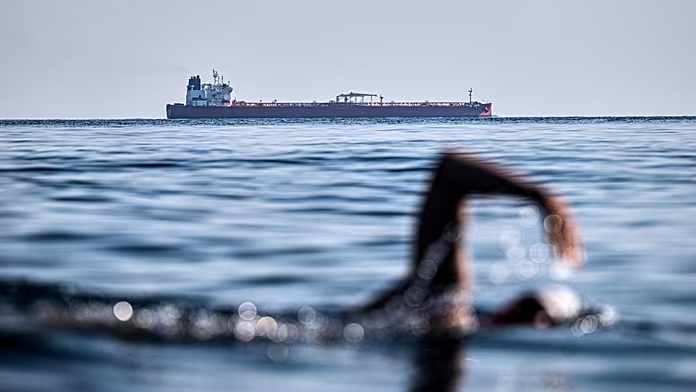
British endurance swimmer Lewis Pugh, a United Nations Patron of the Oceans, completed a roughly 9.3-mile, three-day swim through the Strait of Hormuz, navigating a waterway experiencing increased military activity and attacks on vessels. Pugh undertook the challenge to draw attention to the environmental damage caused by the ongoing conflict with Iran, warning that oil leaking from damaged tankers threatens the region’s delicate ecosystems.
Pugh began his swim from the Musandam Peninsula and finished near the Cape of Hormuz, encountering explosions and burning tankers during his passage. He reported hearing two explosions and witnessing an oil tanker hit shortly after entering the water on Monday, and another vessel engulfed in flames the following day. He described the Strait of Hormuz as a “treasure trove of the natural world,” noting the presence of dolphins, turtles, and ospreys, but also emphasized the vulnerability of coral reefs, mangroves, and coastlines to oil pollution. Pugh stated that the area will take “years, decades” to recover from the damage.
Reports indicate Iran has recently increased attacks on vessels it claims are traveling along unauthorized routes, seeking to control the crucial waterway through which a fifth of the world’s oil trade previously passed. Several tankers have been damaged by sea mines, with one carrying over 2 million barrels of oil last month. Pugh warned that the chemical pollution from these incidents could have lasting consequences for the region’s wildlife and habitats. He has previously swum in extreme environments including the North Pole, Antarctica, and the Red Sea to raise awareness of ocean conservation.
Africa News reported Pugh completed a 15-kilometer swim, while CBS News and Euronews reported approximately 9.3 miles. All sources agree on the core facts of the swim and its purpose.
Where they differ
- Africa News reported a total swim distance of 15 kilometers, while CBS News and Euronews reported approximately 9.3 miles.
- Euronews and CBS News both focused on the immediate danger Pugh faced from explosions and burning tankers, while Africa News led with the completion of the swim.
- CBS News included Pugh’s history of swimming in extreme environments, while Euronews and Africa News did not emphasize this aspect.
What is not yet known
- The exact extent of the environmental damage caused by the damaged tankers remains unquantified.
- The long-term impact of the conflict on the Strait of Hormuz’s wildlife is not fully known.
Read the original coverage
💬 Comments
📜 Comment Policy