Eisenkot Forms Coalition Deal, Nearing Challenge to Netanyahu
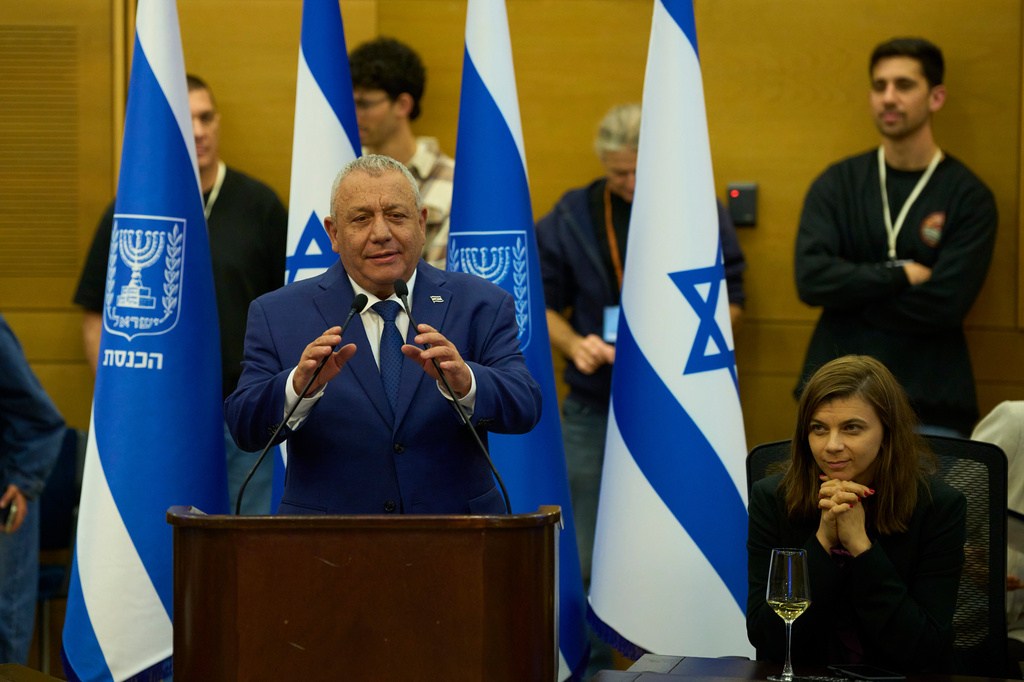
Gadi Eisenkot’s Yashar party has reached a coalition deal with Yair Golan’s left-wing Democrats, bringing the opposition closer to a parliamentary majority in Israel’s 120-seat Knesset. The agreement, announced Thursday in a joint statement, follows a brief suspension of negotiations by the Democrats after learning Yashar was also in talks with Prime Minister Benjamin Netanyahu’s Likud party. The combined Yashar and Democrats bloc now holds 48 seats, still short of the 61 needed to unseat Netanyahu.
The deal represents a notable reversal for the Democrats, who had paused negotiations due to Yashar’s parallel discussions with the current ruling party. Eisenkot and Golan’s alliance aims to build a broader coalition to challenge Netanyahu’s government. While the combined forces are making progress, they remain short of a majority, necessitating further negotiations to secure the remaining 13 seats needed for a parliamentary majority.
Background
- Following the October 27th parliamentary elections, neither Benjamin Netanyahu’s bloc nor Gadi Eisenkot’s Yashar party secured a majority of the 120-seat Knesset [Fact Refinery, 2026-10-29].
- President Isaac Herzog tasked Gadi Eisenkot with forming a new government on November 8th, a setback for Netanyahu [Fact Refinery, 2026-11-08].
- Eisenkot’s Yashar party, along with Matan Kahana as speaker, gained a legislative advantage to advance their agenda, including setting term limits for the prime minister and launching an inquiry into the October 7th Hamas attacks [Fact Refinery, 2026-11-17].
- A record 19 seats were won by Arab-led parties, potentially making them key to forming a coalition, though both Eisenkot and Netanyahu initially ruled out working with them [Fact Refinery, 2026-10-29].
- Yair Golan’s Democrats party experienced a security incident with an attempted stabbing of its leader in Tel Aviv during the election period [Fact Refinery, 2026-10-27].
Our reading
We see the coalition deal between Eisenkot’s Yashar and Golan’s Democrats as a significant, though not conclusive, step towards unseating Netanyahu. The most likely outcome is continued, intense negotiations to secure the remaining 13 seats needed for a majority. A key factor will be whether Eisenkot is willing to compromise on his previous stance regarding Arab-led parties, as their support appears essential. Less likely is a scenario where Netanyahu manages to peel away enough members of the Yashar-Democrats bloc to retain power, though his parallel negotiations suggest he is attempting to do so. The broadening of the opposition coalition is happening against a backdrop of ongoing conflict in Gaza, with daily Israeli airstrikes and a severe environmental crisis detailed in recent reports [Fact Refinery, 2026-11-23; 2026-11-24]. This conflict, and the international scrutiny it attracts, may increase pressure on Netanyahu, potentially weakening his negotiating position. The fact that the current government is under investigation for war crimes by the ICC and accused of genocide by a UN commission adds another layer of complexity. The internal dynamics within the newly formed Yashar-Democrats alliance are worth noting. Golan’s Democrats, initially hesitant due to Yashar’s outreach to Netanyahu, now stand to gain a ministerial position, potentially replacing a hard-right figure [Haaretz, 2026-11-26]. This suggests a degree of pragmatism on both sides, but also the potential for future friction over policy priorities.
What to watch
- The outcome of Eisenkot’s negotiations with Arab-led parties, and any public statements regarding potential coalition agreements [various outlets].
- The deadline for Eisenkot to form a government, currently around November 28th, and whether he requests an extension [Fact Refinery, 2026-11-08].
- Any significant shifts in public opinion, as measured by polling data, regarding the potential for a new government [various outlets].
Read the original coverage
💬 Comments
📜 Comment Policy