DNC Announces 12 Debates, Pledge Against ‘Dark Money’ for 2028 Presidential Primary
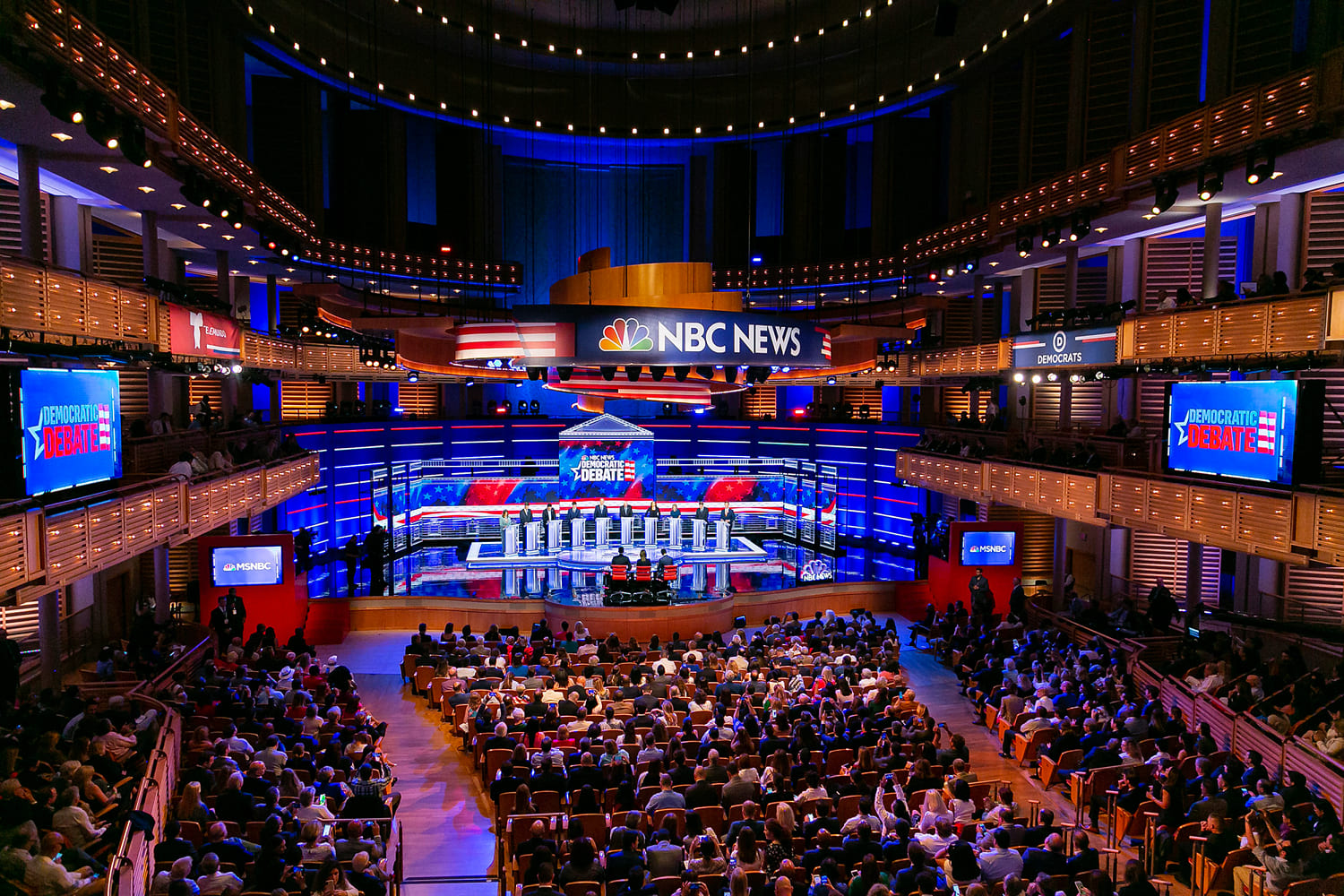
The Democratic National Committee will hold 12 presidential primary debates in 2028, with the first scheduled for June, mirroring the 2020 format. The DNC announced Monday that up to 20 candidates could qualify, determined by polling and fundraising figures. A key rule change requires candidates to pledge against “dark money spending” in the primary, though the pledge lacks enforcement mechanisms. The DNC will also enforce a new nominating calendar, stripping delegates from candidates who compete in unsanctioned early primary states, with harsher penalties than in previous cycles.
Leading the DNC’s Debate Planning Committee will be Minyon Moore and Roger Lau, alongside staff from past presidential campaigns including those of Kamala Harris, Joe Biden, Bernie Sanders, Elizabeth Warren, Amy Klobuchar, Hillary Clinton and Barack Obama. DNC Chair Ken Martin stated the process will “keep our party united, strengthen our eventual nominee, and put Democrats in position to take back the White House.”
The announcement follows midterm victories and aims to maintain momentum heading into the 2028 election cycle. The debates may be split across two nights to accommodate the expected crowded field. Newsmax reported the initial announcement on Monday as well.
Background
- The DNC held 12 debates during the 2020 presidential primary cycle, mirroring the planned format for 2028 [Fact Refinery, 2026-11-23].
- Donald Trump proposed a $1.2 trillion “dividend” to adult Americans if Republicans won the midterms, raising questions about funding [Fact Refinery, 2026-09-10].
- Debbie Wasserman Schultz, a former DNC Chair and prolific fundraiser, won her primary in Florida’s 20th Congressional District [Fact Refinery, 2026-08-19].
- Princess Catherine publicly shared her cancer recovery journey in a documentary, highlighting the impact of the diagnosis and the importance of wellbeing [Fact Refinery, 2026-11-21].
Our reading
We begin by noting the DNC’s proactive approach to shaping the 2028 primary. The sheer number of debates, twelve, suggests an expectation of a crowded field, potentially mirroring the competitive 2020 cycle. Most likely, this signals a desire to give all viable candidates a platform, while simultaneously subjecting them to scrutiny. A less likely outcome would be a rapid winnowing of the field, making the debates feel perfunctory. This would require a very early, dominant fundraising performance by one or two candidates. The “dark money” pledge is a significant, though weakly enforced, attempt to address concerns about outside influence in Democratic primaries. This follows the DNC’s highlighting of Trump’s unfulfilled promises regarding “dividends” [Fact Refinery, 2026-09-10], suggesting a strategy of contrasting their commitment to transparency with perceived Republican financial irresponsibility. The new nominating calendar, with harsher penalties for unsanctioned primaries, demonstrates a willingness to exert greater control over the process, potentially alienating state parties. The inclusion of staff from past campaigns, Harris, Biden, Sanders, Warren, Klobuchar, Clinton, and Obama, indicates an attempt to institutionalize lessons learned from previous cycles and maintain party unity. This is particularly relevant given the recent midterm victories, which the DNC aims to build upon.
What to watch
- The fundraising totals reported by candidates in the first quarter of 2027 [DNC filings].
- Whether any candidates openly defy the “dark money” pledge or compete in unsanctioned early primary states [News outlets].
- The specific criteria the DNC uses to determine which candidates qualify for the debates [DNC press releases].
Read the original coverage
💬 Comments
📜 Comment Policy