COP31 Climate Talks End Without Agreement on Fossil Fuels, Climate Finance
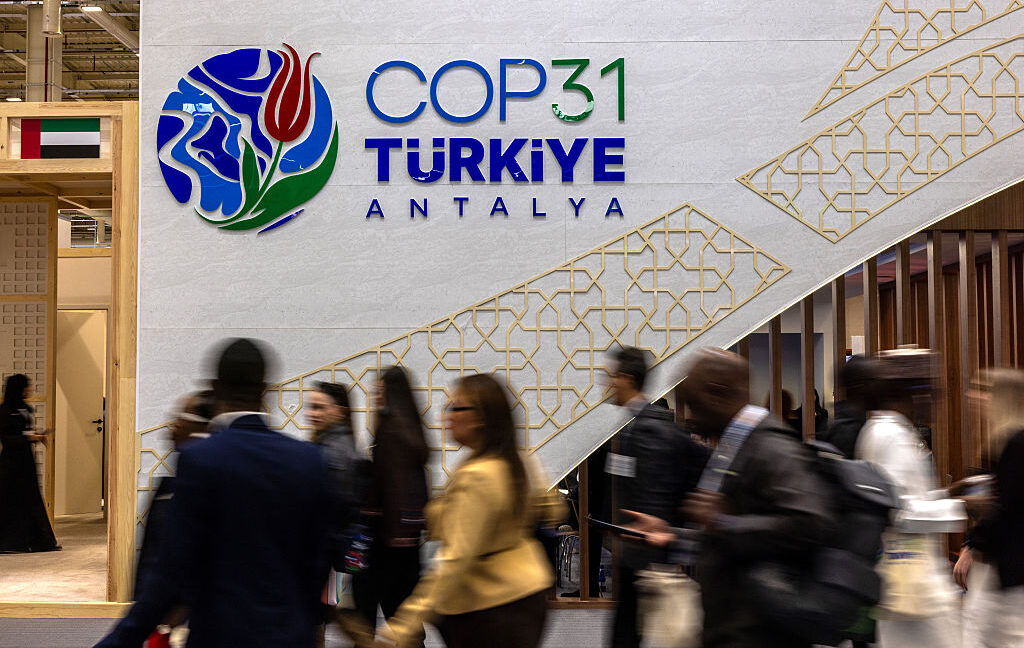
The United Nations COP31 climate summit in Antalya, Turkey, concluded Sunday without a consensus agreement, marking the first time since 2009 that the conference failed to produce a concluding statement signaling global solidarity on climate action. Murat Kurum, Turkey’s minister of environment, urbanization, and climate change, attempted to salvage a draft climate deal as cleaning crews began to clear the conference center, which hosted over 100,000 participants. The failure stemmed from deep divisions over the inclusion of language regarding fossil fuels and carbon capture, as well as disagreements on the level of climate financing developed countries should provide to developing nations impacted by climate disasters.
The European Union, alongside several Latin American countries and Pacific Island states, rejected the proposed text from conference leaders. A central goal of the meeting was to establish voluntary global goals for widespread electrification and to increase funding for developing countries to adapt to climate impacts. While the conference did adopt a program to aid workers and communities transitioning away from fossil fuels, and a plan to assess climate adaptation progress, these were overshadowed by the lack of an overarching agreement.
In 2022, a UN conference in Egypt established a loss and damage fund to support vulnerable countries facing irreversible climate impacts. The following year, in Dubai, delegates agreed on the need for a “just and orderly” transition away from fossil fuels in energy systems. The absence of a similar commitment at COP31 underscores the growing challenges in securing international cooperation on climate change. UK Energy Minister Miatta Fahnbulleh left her delegation office Saturday evening as negotiations stalled, signaling the impending failure of the talks. The unresolved question is whether the lack of consensus will hinder future progress on critical climate goals and financing commitments, and if the divisions revealed at COP31 represent a lasting shift in international climate negotiations.
Background
- In 2022, a UN conference in Egypt established a loss and damage fund to support vulnerable countries facing irreversible climate impacts [Fact Refinery, 2026-11-22].
- In 2023, delegates agreed in Dubai on the need for a “just and orderly” transition away from fossil fuels in energy systems [Fact Refinery, 2026-11-22].
- The COP31 climate summit in Antalya, Turkey, extended into a 14th day of negotiations before failing to produce a consensus agreement [Fact Refinery, 2026-11-22].
- Cappadocia, a UNESCO World Heritage site in Turkey, experienced a rock formation collapse due to heavy rainfall, raising concerns about the fragility of the region’s geological features [Fact Refinery, 2026-10-29].
Our reading
We find ourselves assessing a significant setback in international climate cooperation. The most likely outcome is a continuation of the status quo: nations pursuing individual climate goals with limited collective action, and increased reliance on bilateral agreements. A breakthrough would require a major economic incentive or a demonstrable shift in policy from a key oil-producing state, while a further deterioration could see key nations, like those in the EU, significantly reduce their engagement in future climate talks. The failure at COP31 highlights a broader tension between developed and developing nations regarding climate finance. The articles repeatedly emphasize disagreements over funding for adaptation and loss and damage, suggesting that the promised financial support is insufficient or not being delivered effectively. This imbalance risks undermining trust and hindering progress on mitigation efforts. Considering the positions of Saudi Arabia and other oil-producing states, as detailed in both Fact Refinery and openDemocracy, reveals a complex dynamic. These nations are not simply obstructing progress; they are protecting their economic interests. The Independent reports the COP31 president’s criticism of the EU, suggesting a deflection of responsibility and a narrative that frames resistance as a defense of national sovereignty. This points to a deeper struggle over who bears the burden of transitioning to a low-carbon economy.
What to watch
- The release of national climate pledges and updated Nationally Determined Contributions (NDCs) in the coming months [Fact Refinery, 2026-11-22].
- Any announcements regarding increased climate finance commitments from developed nations [Fact Refinery, 2026-11-22].
- The agenda and outcomes of the next major climate summit, to assess whether the divisions revealed at COP31 persist [Fact Refinery, 2026-11-22].
Read the original coverage
💬 Comments
📜 Comment Policy