China Launches First Foreign Astronaut to Space Station Aboard Shenzhou-24
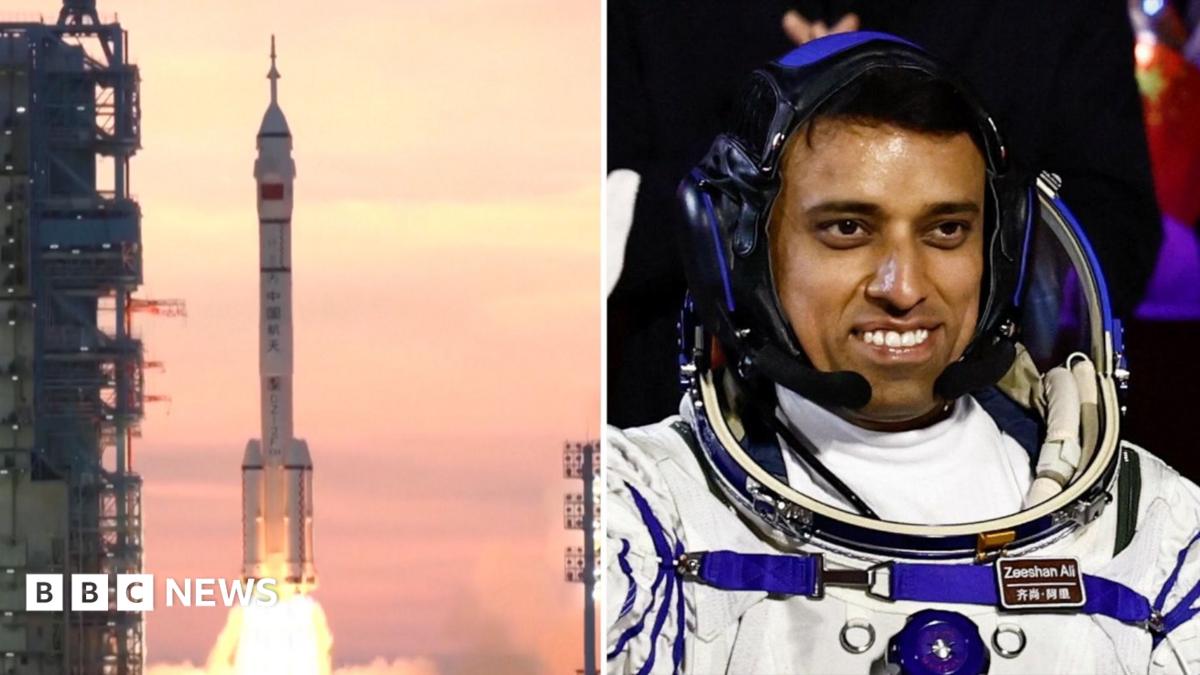
China’s Shenzhou-24 mission launched Wednesday, carrying Pakistani astronaut Muhammad Zeeshan Ali to the Tiangong space station, marking the first time a foreign national has boarded the station. Ali, 40, lifted off alongside Chinese astronauts Tang Hongbo, 51, and Wu Yi, 39, from the Jiuquan Satellite Launch Center. The mission is expected to last several days, during which Ali will conduct an experiment on photosynthetic cyanobacteria before returning to Earth aboard Shenzhou 23. This joint flight, stemming from an agreement signed in February 2025, represents a milestone in China’s crewed space program and a deepening of ties between China and Pakistan.
Thousands of kilometers away, Pakistanis celebrated the launch, with Prime Minister Shehbaz Sharif calling it a source of national pride and an inspiration for the country’s youth, stating, “This is not just one astronaut’s journey, but the journey of 240 million Pakistanis.” Planning Minister Ahsan Iqbal expressed hope that this flight would be the start of broader cooperation and indicated Pakistan aspires to independently send astronauts to space in the future. Ali carried the Pakistani flag on his uniform, symbolizing the nation’s ambitions in science and technology.
The crew is scheduled to carry out more than 90 scientific experiments and technology tests during the mission. Tang Hongbo is set to become the first astronaut to board Tiangong three times. Training presented challenges due to differences in language, culture, and psychology, but Tang noted the effort was paying off, with Ali demonstrating proficiency in Mandarin and reciting Chinese poetry. Ali himself expressed hope for expanded cooperation, envisioning multiple joint missions in the future. Left-leaning outlets emphasized the symbolic importance of the flight for Pakistan-China relations, while center coverage focused on the scientific objectives of the mission. No right-leaning outlet reported this story.
Where they differ
- Euronews and BBC highlighted the celebratory atmosphere in Pakistan, detailing public gatherings and official statements.
- Nikkei Asia focused on the launch details, specifically the Long March 2F Y24 rocket and the Jiuquan Satellite Launch Center.
- Nature provided minimal detail beyond the fact of the launch, focusing on the scientific aspect of the mission.
- BBC and Euronews both quoted Prime Minister Shehbaz Sharif’s statement about the mission representing the journey of 240 million Pakistanis.
What is not yet known
- The specific details of the experiment on photosynthetic cyanobacteria remain unstated.
- The exact terms of the February 2025 agreement between China and Pakistan regarding space cooperation are not detailed.
Read the original coverage
💬 Comments
📜 Comment Policy