Canada’s Supreme Court Upholds Quebec’s Ban on Religious Symbols for Public Servants
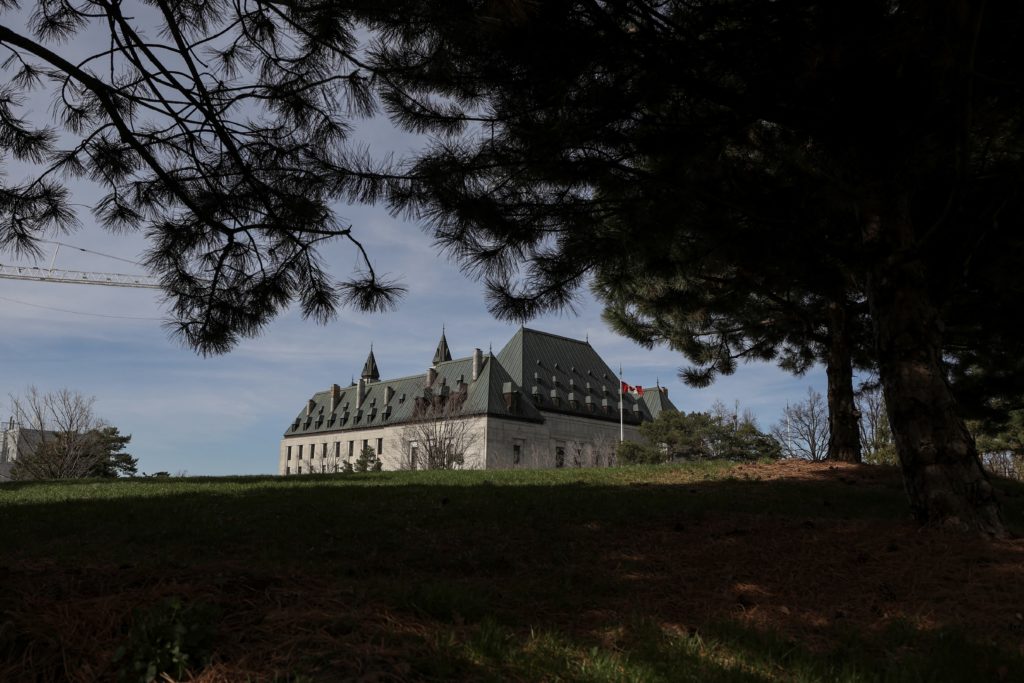
Canada’s Supreme Court has largely upheld Quebec’s Bill 21, a 2019 law banning public sector workers from wearing religious symbols such as hijabs, turbans, and crosses. The decision is a political win for Quebec’s government, but has drawn criticism from civil liberties groups who argue it disproportionately affects Muslim women and infringes on fundamental rights.
The court confirmed the validity of Bill 21, but ruled that the law infringes on democratic rights by preventing elected officials from wearing face coverings for religious reasons. Justices Andromache Karakatsanis, Michelle O'Bonsawin, and Nicholas Kasirer dissented, arguing the law violates freedom of religion, expression, and equality, and that the use of the “notwithstanding clause”, a provision allowing governments to override certain rights, cannot authorize laws incompatible with Canada’s fundamental character as a free and democratic country.
The ruling comes despite legal challenges from groups including Muslim, Sikh, and Catholic teachers, who argued the law violated their rights. Stephen Brown, CEO of the National Council of Canadian Muslims, called the law “discriminatory,” stating that it bars individuals from employment based on their religious identity. The English Montreal School Board expressed disappointment with the decision. Prime Minister Mark Carney stated his government would study the implications of the ruling, emphasizing the importance of respecting the rights of all Canadians. The court also affirmed its power to assess the constitutionality of laws even when the notwithstanding clause is invoked, though it declined to do so in this instance.
Where they differ
- The South China Morning Post framed the decision as a political win for Quebec’s sovereigntist government and noted it could complicate Prime Minister Carney’s efforts amid trade war and annexation threats.
- BBC World News highlighted a statement from Prime Minister Mark Carney reacting to the ruling, while this was not present in the other two sources.
- PBS Newshour and the South China Morning Post both explicitly stated the law is known as Bill 21, while BBC World News only mentioned it as 'the law' until later in the article.
What is not yet known
- The extent to which the ruling will impact other provinces or future legal challenges remains unclear.
- The specific details of how the infringement on democratic rights, regarding elected officials wearing face coverings, will be addressed are not detailed.
Background
- Quebec passed Bill 21 in 2019, banning public sector workers from wearing religious symbols [Fact Refinery, 2026-11-27].
- The “notwithstanding clause” allows Canadian governments to override certain rights protections [background knowledge].
- Legal challenges to Bill 21 were brought by groups representing Muslim, Sikh, and Catholic teachers, alleging rights violations [Fact Refinery, 2026-11-27].
- Prime Minister Mark Carney has stated his government will study the implications of the ruling [Fact Refinery, 2026-11-27].
Our reading
We begin by considering the most likely outcome: continued legal challenges, focused on the specific infringement regarding elected officials and potentially seeking clarification on the scope of the “notwithstanding clause” application. A less likely scenario is broader provincial adoption of similar legislation, contingent on the political climate and public reaction to this ruling. If other provinces perceive a significant benefit, either political or in terms of social cohesion as defined by the Quebec government, they may attempt to emulate Bill 21. The ruling’s impact on federal-provincial relations is a broader aspect worth noting. The South China Morning Post highlights that this is a win for Quebec’s sovereigntist government, and the ruling could complicate Prime Minister Carney’s efforts, especially given existing trade war and annexation threats. This suggests a potential for increased tension between Ottawa and Quebec City, particularly if the federal government attempts to mitigate the law’s effects through other means. The dissenting justices’ argument, that the “notwithstanding clause” cannot authorize laws incompatible with Canada’s fundamental character, reveals a deep division within the court itself. This suggests internal debate about the limits of parliamentary sovereignty and the role of the judiciary in protecting fundamental rights. The fact that three justices dissented indicates a strong opposition to the law’s principles and a potential willingness to revisit the issue in future cases.
What to watch
- The federal government’s detailed response to the ruling and any proposed legislative action [Prime Minister’s Office website].
- Any appeals filed regarding the infringement on democratic rights for elected officials [Supreme Court of Canada website].
- Public opinion polls in Quebec and other provinces regarding support for similar legislation [major polling organizations].
Read the original coverage
💬 Comments
📜 Comment Policy