Bank of England Raises Interest Rate to 4%, Warns of Further Hikes if Iran Conflict Persists
Business
✓ Neutralized●●○
7d ago

Bank of England Raises Interest Rate to 4%, Warns of Further Hikes if Iran Conflict Persists

AI-synthesized · Bias removed · Facts only
2 sources: 1 left · 1 center · 0 right
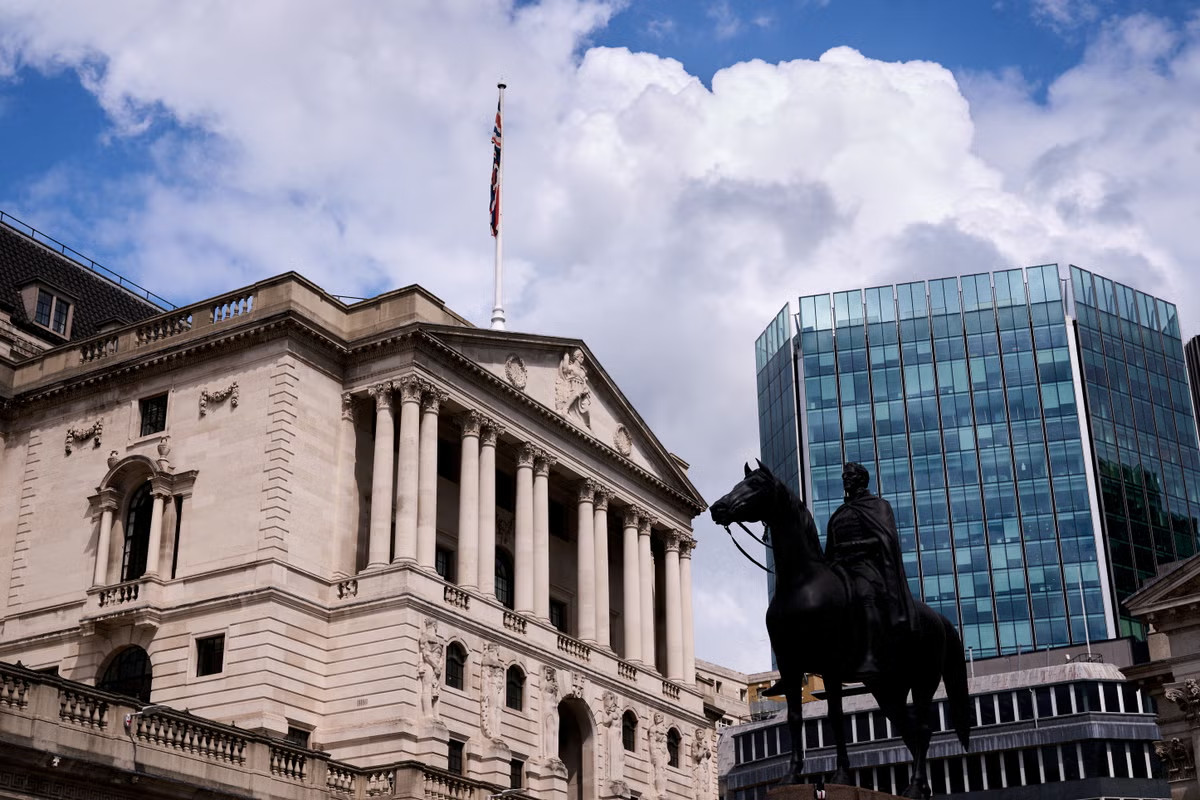
Image: Independent Uk

The Bank of England increased its key interest rate to 4% on Thursday, its first hike in over three years, citing rising inflation linked to the ongoing conflict in the Middle East. The Monetary Policy Committee (MPC) voted 8 to 1 for the 25 basis point increase, with one member advocating for a larger 50 basis point rise. Policymakers now expect U.K. inflation to reach approximately 5% by mid-2027, driven by elevated energy prices stemming from the conflict between the U.S. and Israel and Iran, which has been ongoing for nine months.

Governor Andrew Bailey stated that without progress towards resolving the conflict, risks to energy prices and inflation remain to the upside. He indicated a willingness to consider further rate increases if inflationary pressures persist. Data released earlier this month showed the U.K.’s annual inflation rate jumped to 3.5% in September, largely due to surging motor fuel costs. The U.K., as a net energy importer, is particularly vulnerable to external energy shocks.

Catherine L. Mann, the MPC’s most hawkish member, argued for a more aggressive tightening of monetary policy, citing “non-linear inflation risks” and concerns that the economy may have crossed a threshold into a high inflation-tight labor market. She believes a 50 basis point hike would be ‘good policy’ from a risk management and credibility perspective. The MPC noted that companies have largely absorbed higher energy costs so far, but these buffers are expected to be temporary, with cost pressures eventually passing through to consumers.

Markets had largely anticipated the rate hike, with over a 99% chance priced in, and a one-in-four chance of a further increase in December. The last rate hike occurred in August 2023, making the Bank of England the last major central bank to begin a tightening cycle since the start of the Iran war.

Where they differ

  • The Independent emphasized that all members of the MPC voted for a hike, while CNBC highlighted the 8-1 split and the dissenting member's preference for a larger increase.
  • CNBC included direct quotes from Governor Andrew Bailey regarding the conditions under which further rate increases might be warranted, while The Independent summarized his overall message about potential future hikes.
  • The Independent focused on the signal from Bailey that borrowers are heading for a bigger squeeze, while CNBC highlighted Mann's arguments for a more aggressive tightening of monetary policy.

What is not yet known

  • The long-term impact of the conflict in the Middle East on global energy prices remains uncertain.
  • The extent to which companies will continue to absorb higher energy costs before passing them on to consumers is unclear.

Background

  • The Bank of England’s Monetary Policy Committee (MPC) votes on interest rates to manage U.K. inflation [background knowledge].
  • In August 2023, the Bank of England last raised interest rates, becoming the last major central bank to begin a tightening cycle following the start of the Iran war [Fact Refinery, 2026-11-04].
  • The U.K. is a net importer of energy, making it vulnerable to price shocks stemming from global events [background knowledge].
  • Prior to Thursday’s hike, markets anticipated a nearly 99% chance of a rate increase, and a one-in-four chance of a further increase in December [Fact Refinery, 2026-11-05].
  • The U.S. and Israel conducted military operations against Iran last year, damaging nuclear facilities, and Iran has denied access for UN inspectors [Fact Refinery, 2026-06-23].

Our reading

Our reading is that the Bank of England is prioritizing controlling inflation despite a precarious geopolitical situation. The MPC’s decision, while anticipated, demonstrates a willingness to act aggressively even with the risk of exacerbating economic pressures related to the ongoing conflict. The dissenting vote for a larger hike suggests internal debate about the speed and scale of tightening needed, while the Governor’s comments signal further increases are likely if energy prices remain elevated.

What to watch

  • The U.K.’s inflation rate in December; a continued rise would likely prompt further rate hikes [Office for National Statistics].
  • Progress, or lack thereof, in de-escalating the conflict in the Middle East; any significant developments could impact energy prices and the Bank of England’s future decisions [multiple news outlets].
  • The next meeting of the Monetary Policy Committee, scheduled for December 14th, to see if the MPC follows through on potential further rate increases [Bank of England website].
Was this useful?

Read the original coverage

💬 Comments

📜 Comment Policy