Army to Detonate Iowa Explosives Despite Court Pause, Citing Safety Risk
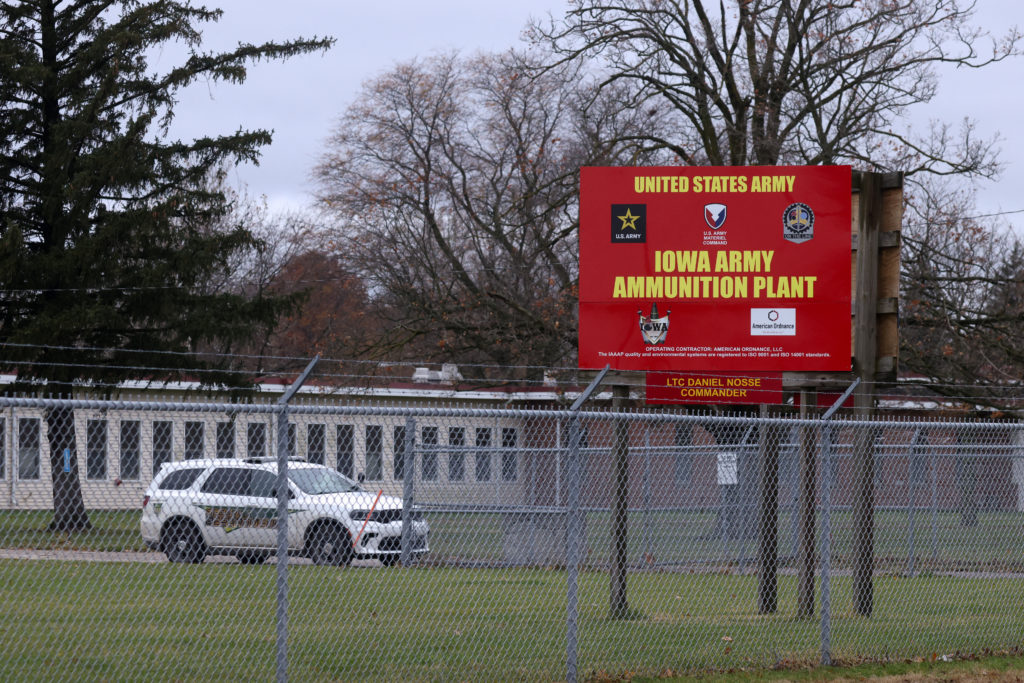
The U.S. Army plans to proceed with the detonation of several tons of unstable explosives at a munitions plant in Middletown, Iowa, on Wednesday, despite a federal court order that temporarily paused the operation. The Army is invoking emergency provisions, arguing that delaying the detonation poses a greater risk of an uncontrolled explosion as temperatures drop and the lead azide deteriorates. The decision follows a series of delays and community outcry over potential health and environmental impacts, specifically the dispersal of lead particles.
The Army initially scheduled the detonations for Friday, then delayed them to Monday before the 8th U.S. Circuit Court of Appeals granted an emergency motion to pause the demolition following a lawsuit from environmental groups. In a court filing Saturday, the Department of the Army stated it would utilize an emergency munitions and explosives exclusion to the Environmental Protection Agency’s permit, asserting it does not need to follow the order due to public safety concerns. Officials have been planning the event since March and maintain they are taking “extreme mitigation measures” to minimize risk, working with the Department of Health and Human Services and the EPA.
Environmental groups criticize the Army’s move as an attempt to circumvent the court order and avoid transparency. They are seeking a review of the EPA’s emergency permit and question whether all alternatives were adequately considered. The Army contends that a controlled detonation is far safer than an uncontrolled explosion, allowing for measures to minimize lead dust dispersal and the risk of unexploded ordnance. The government warns that temperatures below 30 degrees could cause the lead azide crystals to break, increasing the danger. The Army stated it will proceed with the detonation to allow for optimal weather conditions and the implementation of all mitigation measures.
Where they differ
- CBS News and the Straits Times focused on the timeline of delays and the Army’s shifting schedule, detailing the initial plans for Friday, the move to Monday, and finally Wednesday.
- PBS Newshour and the Straits Times highlighted the criticism from environmental groups, emphasizing their concerns about transparency and the Army circumventing the court order.
- The Washington Times emphasized the Army’s rationale of worsening danger due to colder weather as the primary justification for invoking emergency provisions.
- The Straits Times included details about nearby residents being advised to stay indoors, close windows, and protect pets and livestock, a detail less prominent in other reports.
What is not yet known
- The extent to which the Army has addressed the environmental groups' concerns regarding mitigation measures remains unclear.
- The specific details of the “extreme mitigation measures” being implemented were not detailed in the sources.
Background
- The U.S. Army discovered water had evaporated from the stabilizing bath of lead azide at the Iowa Army Ammunition Plant in March, rendering the material highly sensitive [Fact Refinery, 2026-11-20].
- Following these findings, the Army initially scheduled a detonation for Friday, November 20, then delayed it to Monday, November 23, before a court order temporarily paused the operation [Fact Refinery, 2026-11-20].
- Environmental groups filed a lawsuit seeking a review of the EPA’s emergency permit and questioning whether all alternatives were considered [Fact Refinery, 2026-11-20].
- Nearby residents of Middletown were previously advised to stay indoors, close windows, and protect pets and livestock in anticipation of the detonation [Straits Times, as reported in the article].
- Lead azide is a highly sensitive explosive material used in munitions, requiring careful handling and storage [background knowledge].
Our reading
We find the Army’s insistence on proceeding despite the court pause most telling. The invocation of emergency provisions, while framed as a safety measure, appears a deliberate attempt to override legal challenges and expedite a decision the Army has been planning since March. Most likely, the Army will proceed with the detonation on Wednesday, citing the deteriorating condition of the lead azide as justification. A shift in weather conditions, particularly a significant temperature increase, could force another delay, but the Army’s stated rationale suggests a limited window for action. Less likely is a full reversal of the decision, given the Army’s emphasis on the escalating risk of an uncontrolled explosion. The situation highlights a potential conflict between environmental concerns and national security priorities. The dispersal of lead particles, even with mitigation measures, poses a risk to both human health and agricultural land, as acknowledged in prior reports. The Army’s focus on minimizing lead dust dispersal suggests an awareness of these risks, but also a prioritization of containing the immediate hazard over addressing long-term environmental consequences. The environmental groups’ criticism suggests a broader distrust of the Army’s transparency and decision-making process. Their questioning of whether all alternatives were considered indicates a belief that the Army may be prioritizing expediency over thorough investigation of less risky options. It is possible the groups are seeking to establish a precedent for greater oversight of military munitions disposal practices.
What to watch
- Confirmation of the detonation occurring on Wednesday, November 26, despite the court order [CBS News, Straits Times].
- A statement from the EPA regarding its response to the Army’s invocation of the emergency munitions and explosives exclusion [EPA website].
- Reports on the extent of lead particle dispersal following the detonation, and any subsequent health or environmental impacts [local Iowa news outlets].
Read the original coverage
💬 Comments
📜 Comment Policy