Romania hopes to meet eurozone criteria after 2030
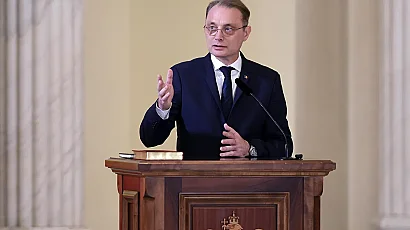
Romania may meet the requirements for joining the eurozone at the beginning of the next decade, Prime Minister Luca Niculescu stated. Currently, the country does not meet any of the four criteria for entering the eurozone and has repeatedly postponed its plans. The government aims to reduce its budget deficit from over 9% of GDP in 2024 to 6.2% this year and below 3% by 2031, although the public debt has already exceeded 60% of GDP and is expected to continue to grow.
Niculescu pointed out that maintaining the fiscal trajectory agreed with the European Commission until 2031 could allow Romania to once again meet the criteria for joining the eurozone. The Jacques Delors Institute recommends in its report that Romania join the eurozone around 2035. The country joined the European Union in 2007, but since then it has postponed its plans to adopt the euro several times due to difficulties in meeting European requirements. Government representatives and the president believe that setting this goal will stimulate the necessary reforms.
Context
• Romania joined the European Union in 2007. [Fact Refinery, 2026-11-23]
• The country has repeatedly postponed its plans to adopt the euro due to difficulties in meeting European requirements. [Fact Refinery, 2026-11-23]
• In 2024, Romania's budget deficit is over 9% of GDP. [Fact Refinery, 2026-11-23]
• Romania's public debt has already exceeded 60% of GDP. [Fact Refinery, 2026-11-23]
Our reading
We believe that the most likely scenario is that Romania will try to meet the eurozone criteria by 2030, but will fail, continuing to postpone the adoption of the euro. Success depends on the government's ability to reduce the budget deficit to below 3% by 2031, which seems ambitious given the growing public debt. It is less likely that Romania will achieve its goals if economic conditions worsen or if the political will to carry out the necessary reforms decreases. Interestingly, the government and the president believe that setting this goal will stimulate reforms. This suggests that the adoption of the euro is viewed more as a political tool for implementing structural changes than as a purely economic decision.
What to watch
- The reduction of the budget deficit to 6.2% this year and below 3% by 2031. [Government of Romania]
- The publication of the next report from the Jacques Delors Institute regarding recommendations for joining the eurozone. [Jacques Delors Institute]
- Data on Romania's public debt to track whether it continues to grow. [National Institute of Statistics of Romania]
Read the original coverage
💬 Comments
📜 Comment Policy