Poland thwarts suspected Russian provocation on the border with Kaliningrad
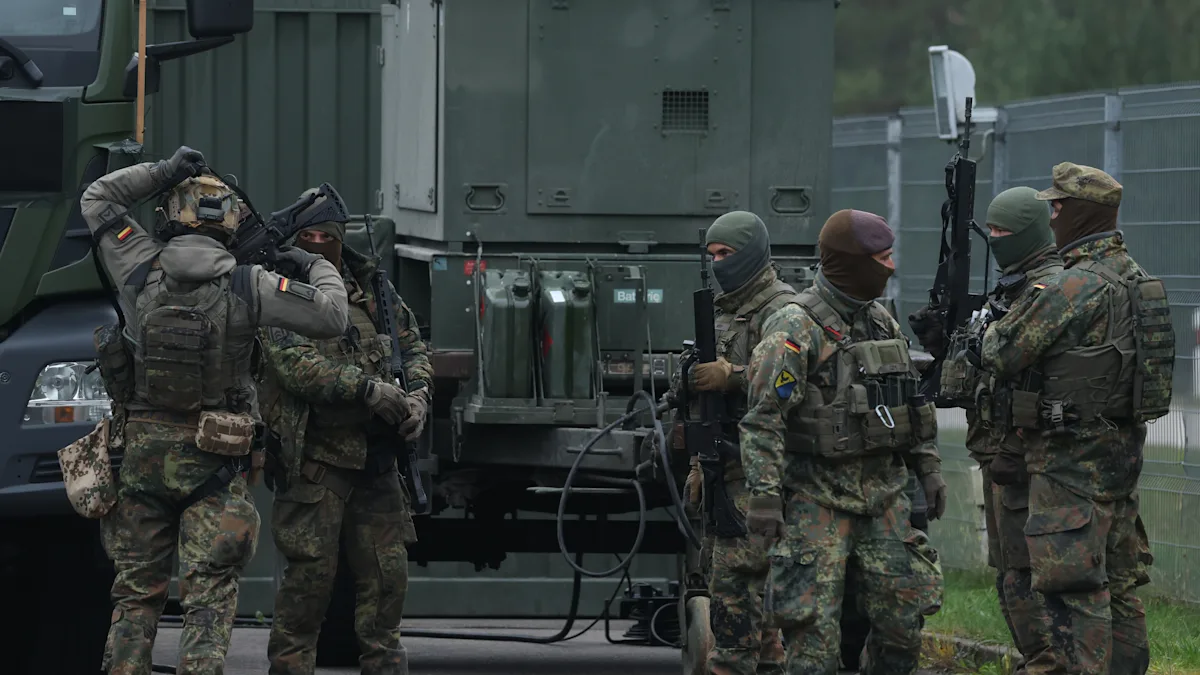
Polish security services have apparently prevented a provocation planned by Russia on the border with the Russian exclave Kaliningrad. According to the Polish newspaper "Rzeczpospolita", Russia planned a sabotage action that was to be presented as a false flag operation in order to hold Poland responsible for the cessation of military support for Ukraine. The operation envisioned that armed persons would cross into Polish territory and be either killed or found with forged Ukrainian IDs. Simultaneously, an attack on a target on Russian territory was planned to justify a political escalation. The Polish government increased security measures at the border at the end of October after being informed of the plans by foreign intelligence services. Intelligence Minister Tomasz Simoniak confirmed a "real threat", but gave no further details. The Russian services are said to have used officers of the GRU military intelligence to coordinate the acts of sabotage. The warnings initially came from foreign intelligence services and were confirmed by findings of the Polish authorities. It remains unclear to what extent the operation was actually to be implemented and which concrete targets were to be attacked.
Where they differ
- "Frontal" and "Spiegel Online" emphasize the danger of escalation and the possible political motivation behind the planned provocation.
- "Welt" focuses on the details of the planned sabotage action and the high number of expected casualties.
- "Tagesschau" and "ntv" highlight Poland's increased security measures at the border and the government's reaction.
- "FR" emphasizes the false flag aspect of the operation and draws parallels to the Gleiwitz incident of 1939.
What is not yet known
- To what extent the operation was actually to be implemented and which concrete targets were to be attacked remains unclear.
- It is not known whether the saboteurs were actually supposed to come from Ukraine or travel from other countries.
- The exact backgrounds and the complete motivation for the planned provocation remain unclear.
- Our assessment
- We assume that the most likely development will be a further increase in tensions on the Polish, Kaliningrad border. Should further evidence of Russian planning emerge, this could lead to a stronger military presence on both sides. A less likely development would be a deescalation achieved through diplomatic efforts, should Russia credibly deny any involvement. Decisive for further development will be whether Poland is able to present further concrete evidence of Russian planning. The planned operation, which according to "Rzeczpospolita" was designed as a false flag operation to undermine Poland's military support for Ukraine, points to a conscious Russian strategy to destabilize regional security. The parallel planning of an attack on Russian territory could serve as a pretext for escalation. The reporting in "Frontal" and "Spiegel Online" underlines the danger of a political instrumentalization of the incident. It remains to be seen how the Russian side will react to the allegations. Internal conflicts within the Russian security services or an underestimation of the Polish defense could have weakened the operation. The motivation behind the planned provocation could also lie in turning public opinion in Poland against further support for Ukraine.
- What to watch for
- An official statement from the Russian government regarding the allegations raised by the Polish government [all sources].
- The development of security measures on the Polish, Kaliningrad border and possible further reinforcements [Tagesschau, ntv].
- The publication of further details by Polish security services that prove the Russian planning [Rzeczpospolita].
मूल कवरेज पढ़ें
💬 टिप्पणियाँ
📜 टिप्पणी नीति