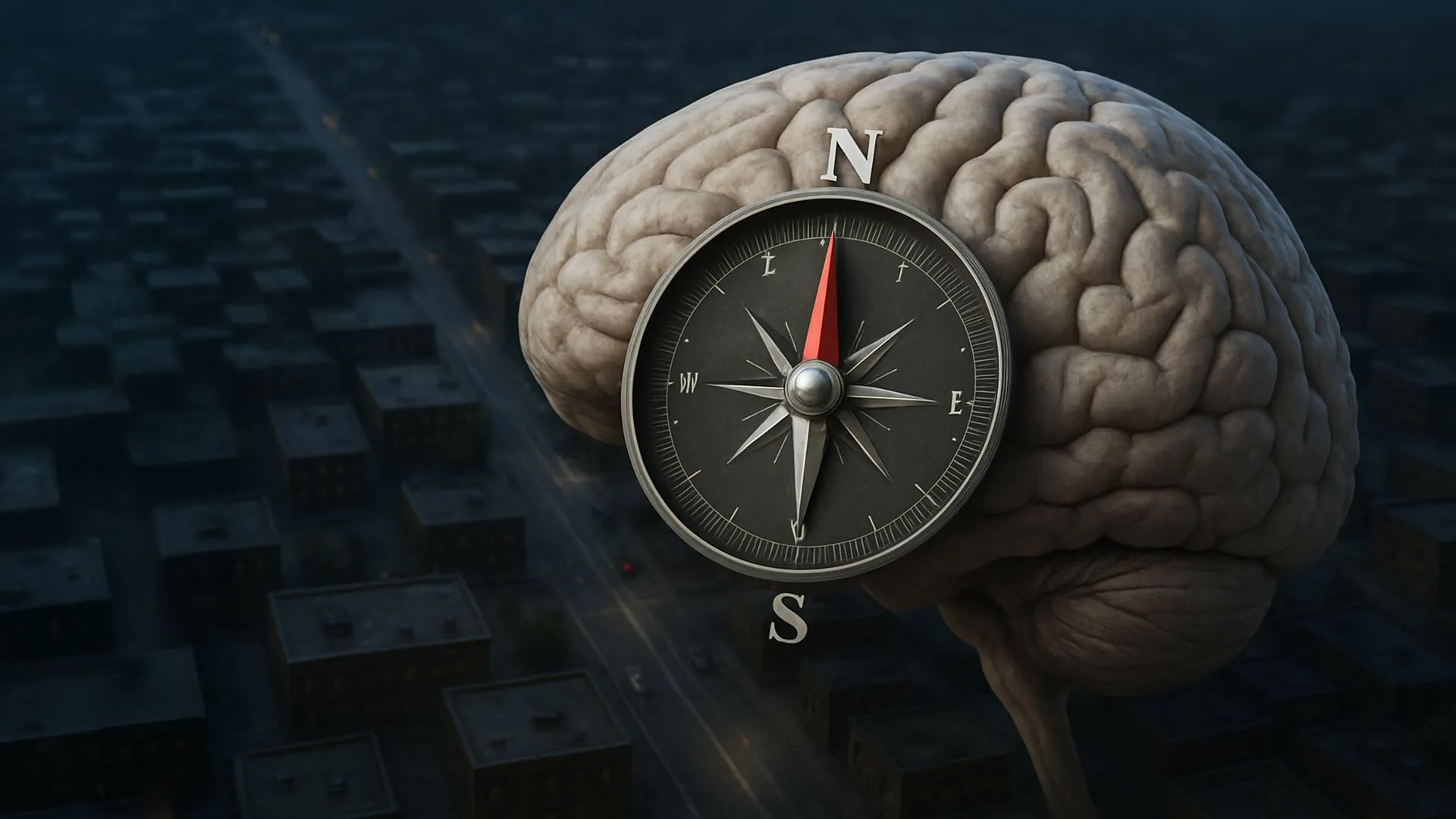
A new study reveals that stress can impair the brain's ability to navigate, impacting grid cells and reliance on landmarks. Researchers used MRI scans to observe how cortisol affects spatial reasoning.
A recent study found that stress may literally scramble the brain’s internal GPS. Researchers discovered that cortisol, a hormone released during stressful situations, significantly worsened participants’ performance in navigating a virtual environment. The research team also observed disruptions in the activity of grid cells – specialized brain cells crucial for understanding one's location in space.
The study revealed that when landmarks were removed from the virtual environment, this navigation system nearly ceased to function. However, another region of the brain appeared to compensate for the loss of spatial awareness. The findings highlight how stress impacts cognitive functions related to spatial orientation and memory.
The researchers found that cortisol made people significantly worse at navigating a virtual environment and disrupted the precise activity of grid cells. This suggests a direct link between hormonal responses to stress and impaired navigational abilities, offering insights into why stressful situations can sometimes lead to disorientation or difficulty finding one's way.
No calificamos la verdad. Eliminamos el sesgo y te mostramos qué perspectivas cubrieron la historia. Tú decides.
Leer la cobertura original
💬 Comentarios
📜 Política de comentarios