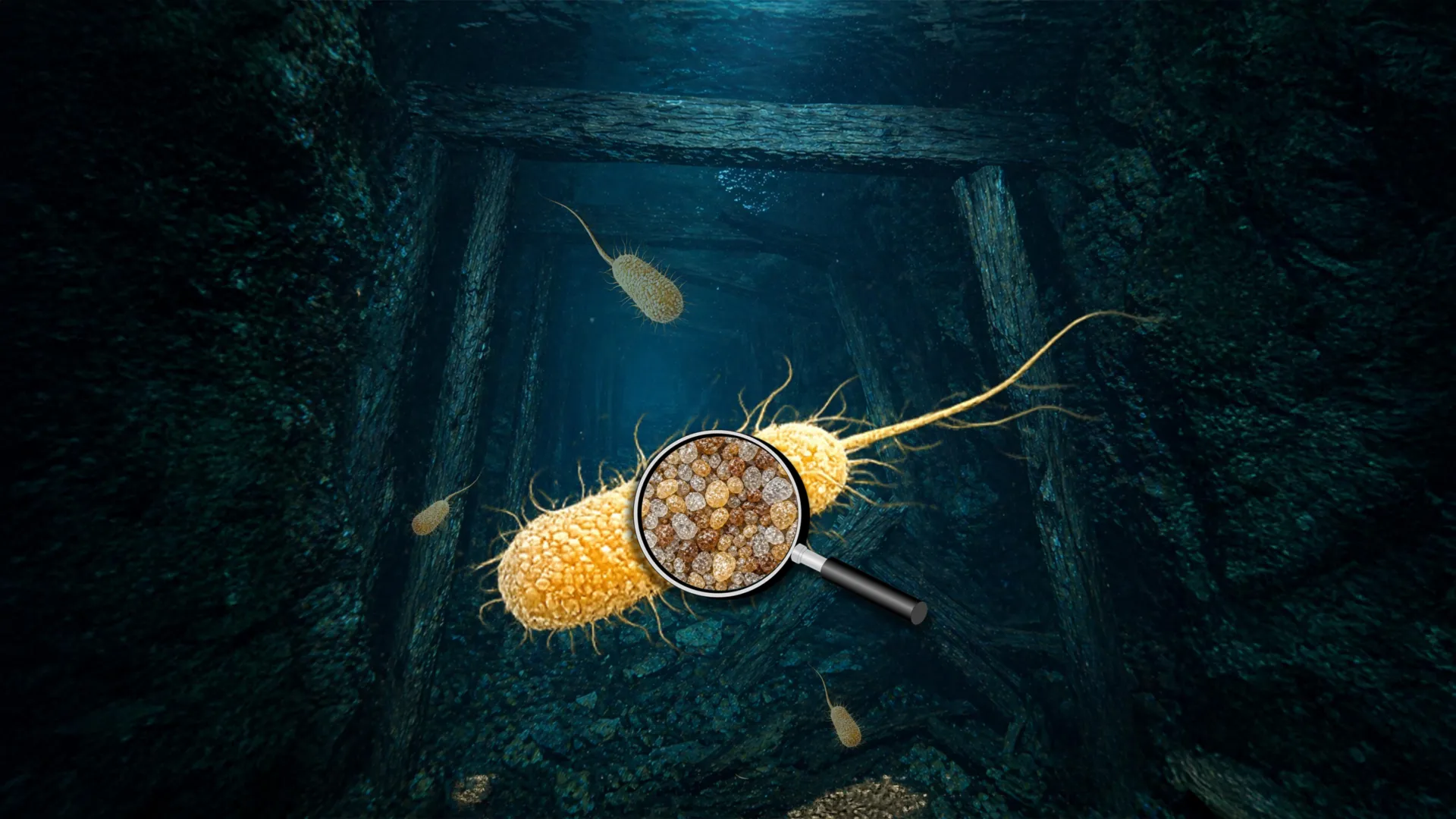
Researchers have discovered bacteria capable of trapping toxic uranium in a stable form deep underground. The discovery offers a potential solution for mitigating the spread of contamination from sources like mines.
A new study reveals that certain microbes, when provided with glycerol, can significantly reduce dissolved uranium levels in contaminated water. Researchers observed that approximately 95% of the dissolved uranium disappeared within 130 days after being exposed to the bacteria and glycerol. This process occurs deep underground, suggesting a natural mechanism for containing this hazardous substance.
The key to this phenomenon lies in the conversion of uranium into an unusually stable compound – one rarely observed before. Scientists believe this stabilization is crucial because it prevents the uranium from spreading further into the environment. The research focused on mine water contaminated with uranium, indicating a potential application for cleaning up legacy pollution from mining operations.
The study highlights the bacteria’s ability to transform the toxic element. While the exact mechanisms are still under investigation, the observed results demonstrate a promising pathway for bioremediation – using biological organisms to address environmental contamination.
No calificamos la verdad. Eliminamos el sesgo y te mostramos qué perspectivas cubrieron la historia. Tú decides.
Leer la cobertura original
💬 Comentarios
📜 Política de comentarios