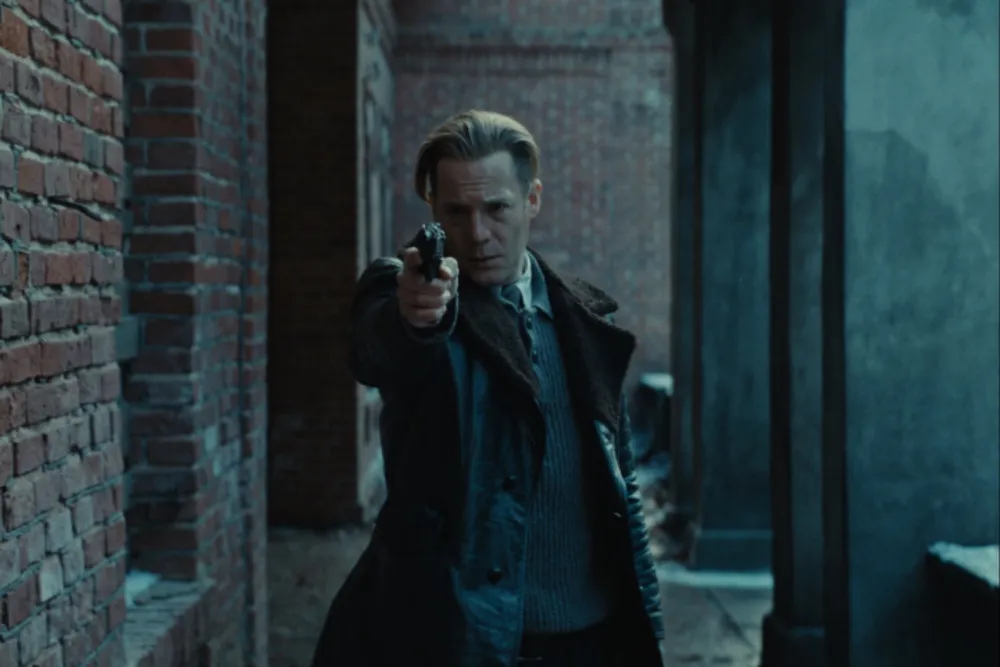
Jan Holoubek’s film “Wild Wild East,” which premiered at TIFF, is no longer perceived as a distant historical drama, but as a reflection of contemporary conflicts. The film follows a German official investigating a disappearance in a Polish village, revealing a web of secrets. Producer Ewa Puszczyńska, known for films like “The Zone of Interest” and “Ida,” describes the project as a genre-bending approach to serious themes.
Holoubek explains that when he first read the script 12 years ago, it felt like a story about the past. “Today, I think it’s about something that can happen again. It already is,” he told Variety. He draws parallels between the film’s themes and current events, specifically mentioning “what’s happening in Europe, with the rise of nationalistic right-wing movements” and the war in Ukraine, where “Russians are repeating the horrors of the Second World War by murdering civilians, kidnapping children and torturing people.” He hopes the film will resonate with younger audiences who may not fully understand the dangers of nationalism.
Puszczyńska notes the team intentionally approached the film as a Western, aiming to “tackle serious issues and then introduce a twist.” She acknowledges the film may draw comparisons to Quentin Tarantino’s “Inglourious Basterds,” but emphasizes that the goal was to present the Second World War in a new way. She recounts initial doubts about whether audiences would follow the film’s shift from conventional cinema, but expressed confidence in director Holoubek’s vision.
The film stars Itay Tiran, Robert Więckiewicz, Joanna Kulig and Magdalena Różczka. Holoubek aims to present a nuanced portrayal of characters, showing both the good and bad sides of Polish, Ukrainian, Jewish, and German individuals. He wants the film to encourage self-reflection, stating, “I want us to look in the mirror and see more than just our good traits.” Puszczyńska shared a personal anecdote about a politically charged taxi ride in Warsaw, highlighting the film’s potential to open eyes and spark dialogue.
Leer la cobertura original
💬 Comentarios
📜 Política de comentarios