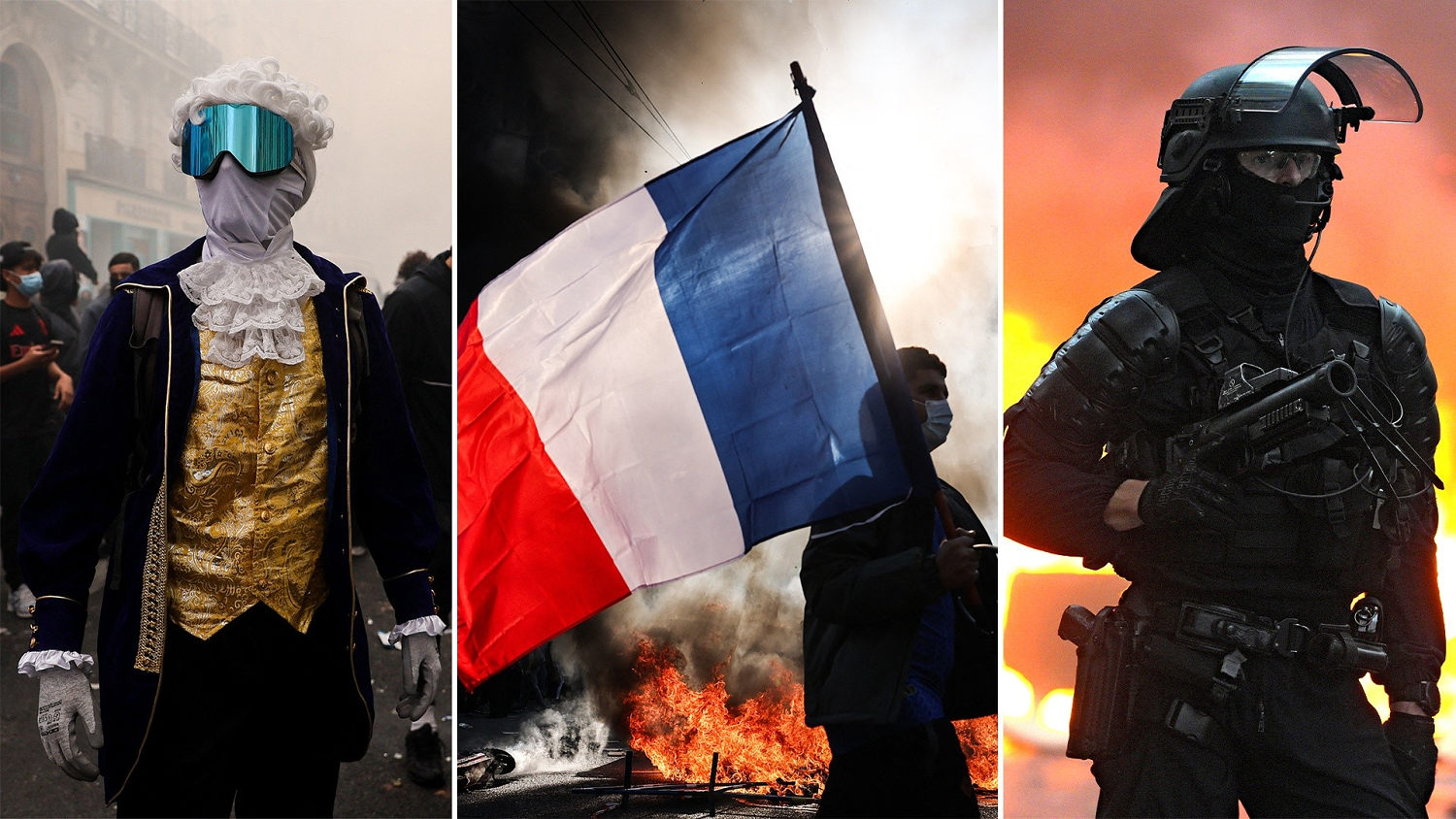
Hundreds of thousands took to the streets across France over the weekend, fueled by rising cost-of-living pressures and concerns over underfunded public services, resulting in widespread rioting and over 1,200 arrests. France’s Interior Minister Laurent Nuñez admitted police “lost control” in some cities, prompting a review of the police response and a vow from President Emmanuel Macron to hold those responsible accountable. The unrest has spread to Italy and Belgium, with reports of looting and clashes with police in several cities.
Demonstrations began with student protests over poorly-funded schools in September and escalated on October 6th with over 250,000 people protesting nationwide. On Saturday, approximately 550,000 people participated in demonstrations, according to the Interior Ministry, while a French trade union estimated the number exceeded 800,000. The protests turned violent, with rioters attacking city halls, shops, and official monuments in cities including Paris, Marseille, and Lyon. In Limoges, a historic town hall was damaged in an arson attack, and a tourist office in Lyon was set ablaze. In Paris, at least 300 businesses were vandalized.
More than 2,000 people have been arrested, and over 600 police officers and firefighters injured. Prime Minister Sébastien Lecornu has granted local mayors the power to enforce partial curfews, and the government has pledged a fund to assist impacted businesses. Macron addressed the nation on Sunday, acknowledging public “anger” and vowing that those who looted would “pay for the damage” and those who sought to undermine the Republic would be held accountable. Nuñez offered his resignation, which Macron refused, citing the need for continued police command. The Interior Ministry is now reviewing planning and intelligence failures. The protests have also spread to Italy and Belgium, with incidents reported in Milan, Brussels, Liège, and Tirana.
Our reading is that the current unrest in France represents a significant escalation of pre-existing tensions regarding cost-of-living concerns and public service funding. The spread of the protests to neighboring countries suggests a broader resonance of these issues, while the government’s response appears to be a balancing act between accountability and maintaining order. The acknowledgment of police failures and the refusal of the Interior Minister’s resignation indicate a desire to project stability despite internal issues.
Read the original coverage
💬 Comments
📜 Comment Policy