Trump to Award Giuliani Presidential Medal of Freedom
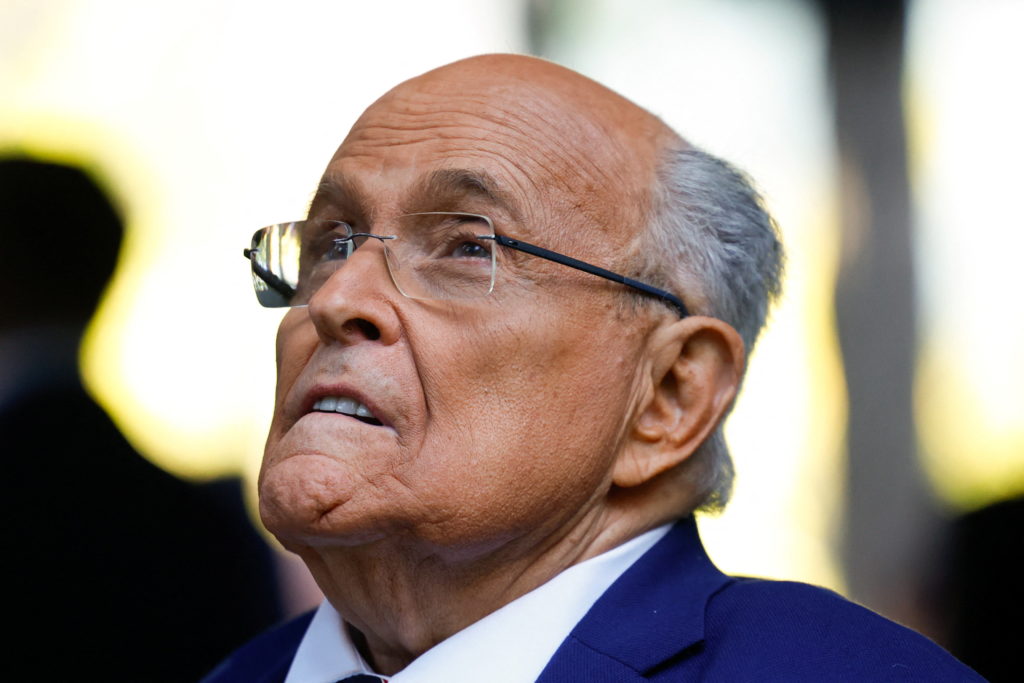
President Donald Trump will award former New York City Mayor Rudy Giuliani the Presidential Medal of Freedom on Tuesday, recognizing his decades of public service. The White House praised Giuliani’s work as a federal prosecutor, mayor, and for his leadership following the September 11th attacks. Giuliani, 82, served as Trump’s personal lawyer during the 2020 election, playing a central role in efforts to overturn the election results. He stated he is “honored and humbled” to receive the award, attributing any success to following the advice of Ronald Reagan to not worry about who receives credit. The award ceremony is scheduled to take place in the Oval Office. Created in 1945, the Presidential Medal of Freedom recognizes significant contributions to U.S. security, national interests, or other endeavors. Trump has awarded the honor to 26 people during his presidency, with Giuliani being the third recipient in his second term.
Giuliani’s tenure as mayor saw a transformation of New York City from a crime-ridden area to one of the safest big cities in the world, fostering economic and cultural growth, according to the White House. As U.S. Attorney, he led efforts to dismantle organized crime. He received the honor after telling conservative commentator Steve Bannon on his podcast that he would be receiving the nation's highest civilian honor at the White House.
While the award recognizes Giuliani’s past achievements, it comes after his prominent role in challenging the 2020 election results, a point not addressed in the White House’s announcement.
Where they differ
- PBS NewsHour and CBS News both directly noted Giuliani’s role in efforts to overturn the 2020 election, while Fox News and the Washington Times did not mention this aspect of his career in their initial reports.
- Fox News highlighted a segment on Fox Nation detailing Giuliani’s work dismantling the mafia in New York, a detail not present in other reports.
- CBS News and the Washington Times included a quote from White House spokesperson Olivia Wales, emphasizing Giuliani's accomplishments, while PBS NewsHour presented the information more neutrally.
- The Washington Times published multiple articles on the same topic, while other outlets provided single reports.
What is not yet known
- The specific criteria Trump used to select Giuliani for the award beyond the stated accomplishments remain unclear.
- The full scope of the ceremony and any planned remarks from Trump or Giuliani are not detailed in the sources.
Background
- Rudy Giuliani served as Mayor of New York City during the September 11th attacks, leading the city’s response [Fact Refinery, 2026-05-07].
- The Presidential Medal of Freedom was created in 1945 to recognize significant contributions to U.S. interests [Fact Refinery, 2026-11-24].
- Donald Trump awarded the Presidential Medal of Freedom to 26 people during his presidency, with Giuliani being the third recipient in his second term [Fact Refinery, 2026-11-24].
- Giuliani acted as Trump’s personal lawyer during the 2020 election, involved in efforts to contest the results [Fact Refinery, 2026-05-07].
- Prior to this award, Giuliani faced legal and financial challenges, including charges related to the 2020 election and a defamation judgment [Fact Refinery, 2026-05-07].
Our reading
We observe a clear pattern in Trump’s use of the Presidential Medal of Freedom: rewarding loyalty, even in the face of controversy. The timing of this award, following Giuliani’s legal difficulties and his role in challenging the 2020 election, suggests a deliberate act of political signaling. Most likely, this is intended to galvanize Trump’s base and further solidify his narrative of a persecuted political figure. Less likely, but possible if the political climate shifts dramatically, is that this award could be seen as an attempt to rehabilitate Giuliani’s public image. A key factor influencing the outcome will be the media’s framing of the event and the extent to which the 2020 election challenges are re-litigated in the public sphere. The award also fits within a broader pattern established in the prior-archive texts: Trump’s willingness to intervene on behalf of allies facing scrutiny, as seen with Jensen Huang and Nvidia. This demonstrates a willingness to use presidential power to benefit individuals who have demonstrated loyalty, potentially blurring the lines between official recognition and personal patronage. The differing coverage across news outlets, some emphasizing Giuliani’s past achievements while others focus on his role in the 2020 election, highlights the deep polarization in the media landscape. This division will likely amplify the existing tensions surrounding the award and further entrench opposing viewpoints.
What to watch
- The full remarks made by Trump and Giuliani during the award ceremony, for any further statements regarding the 2020 election [White House official transcript].
- Any legal challenges to the award itself, based on Giuliani’s recent legal troubles [court records].
- Public reaction to the award, particularly from groups involved in the 2020 election challenges [social media and polling data].
Read the original coverage
💬 Comments
📜 Comment Policy