Trump Defies Election Results by Recommitting to Policies Voters Rejected
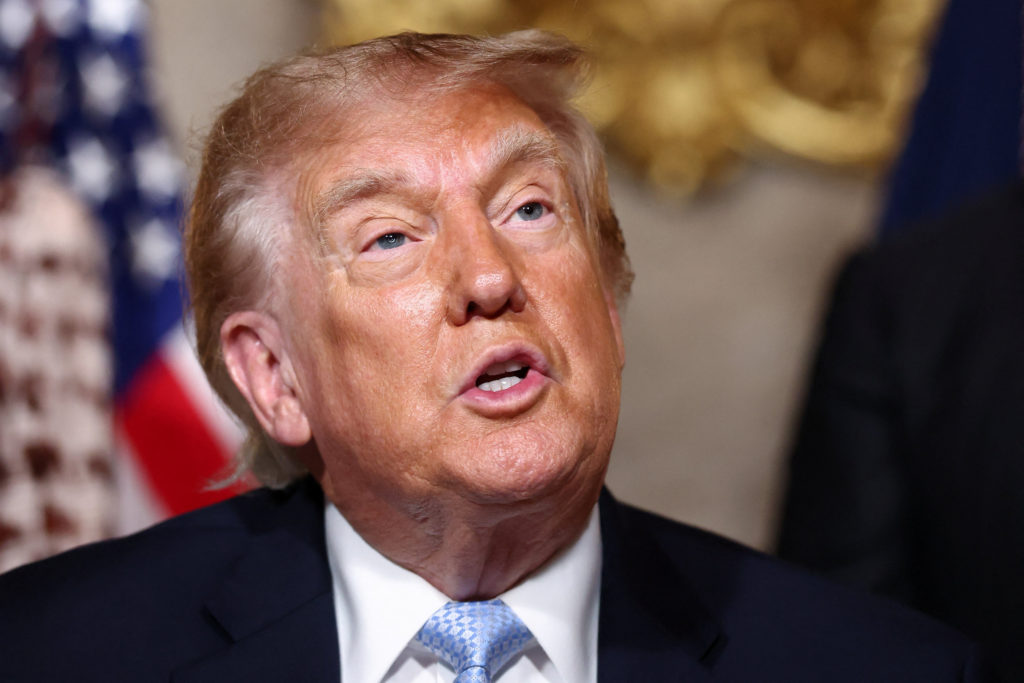
President Donald Trump is doubling down on policies voters signaled they disliked in the midterm elections, a departure from the post-election pivots of past presidents. This week, Trump reaffirmed his commitment to tariffs, defended ties with autocratic leaders, and did not address affordability concerns that contributed to Republican losses in the House and Senate. He successfully intervened to reinstate Jensen Huang as Nvidia CEO, despite 7 in 10 voters telling an AP poll the economy is rigged in favor of the wealthy, and Trump described Huang as entering a “second term.” On Wednesday, Trump announced new tariffs targeting China, Japan, South Korea, and the European Union, despite two-thirds of voters stating his existing import taxes have harmed the economy. He also defended his focus on White House renovations and questioned the accuracy of government economic data, while maintaining support for Russian leader Vladimir Putin and offering no new direction on the Iran conflict. Political historian Matthew Dallek characterized Trump’s response as potentially self-destructive for his party, suggesting a “deeper repudiation” of Trump that could reshape the traditional red-blue state divide. The White House did not respond to inquiries regarding a reconsideration of its policies or whether it believes public opinion will shift.
Trump’s actions contrast with historical precedents. After midterm losses, Bill Clinton overhauled welfare, George W. Bush increased troop levels in Iraq, and Barack Obama reached a bipartisan deficit reduction deal. Dallek noted that Trump’s unwillingness to adapt to the new political landscape suggests a course of “political hari-kari.”
Background
- Following disappointing midterm election results, Democrats gained control of Congress [Fact Refinery, 2026-11-08].
- Donald Trump enacted tariffs as a key component of his trade policy [Fact Refinery, 2026-11-26].
- The Department of Homeland Security funded advertisements promoting Trump ahead of the midterms, prompting legal challenges from the Democratic National Committee [Fact Refinery, 2026-11-26].
- Democrats secured the largest House majority in over three decades after the recent elections [Fact Refinery, 2026-11-22].
Our reading
We observe a clear pattern of defiance following electoral setbacks. Trump’s recommitment to policies voters rejected, as evidenced by the reaffirmation of tariffs and defense of autocratic leaders, suggests a prioritization of ideological consistency over political pragmatism. Most likely, this will lead to further polarization and potentially a fracturing of the Republican party, as Dallek suggests, especially if economic conditions do not improve. A less likely outcome is a shift in public opinion, but this would require a demonstrable change in policy or a significant economic upturn not currently indicated. The continued focus on issues like White House renovations and questioning economic data, alongside the support for Putin and inaction on Iran, points to a broader disregard for conventional governance. This is particularly noteworthy given the Republican losses linked to affordability concerns, and the Democrats’ gains, as reported by Frognews and others. The reinstatement of Huang at Nvidia, despite voter concerns about economic fairness, reinforces this perception. The situation presents a challenge for the Republican party. While Trump retains considerable influence, his unwillingness to adapt risks alienating moderate voters and potentially creating opportunities for alternative leadership within the party. The recent spending by Elon Musk, and its failure to yield desired results, suggests even significant financial backing cannot guarantee success with this approach.
What to watch
- Whether Republican leaders publicly distance themselves from Trump’s policies [any major news outlet].
- The next revision of GDP figures and Trump’s reaction [Bureau of Economic Analysis website].
- The outcome of any legal challenges to the Department of Homeland Security’s pre-election advertising [court records].
Read the original coverage
💬 Comments
📜 Comment Policy