Thanksgiving Storm Disrupts Travel, Knocks Out Power to Over 900,000
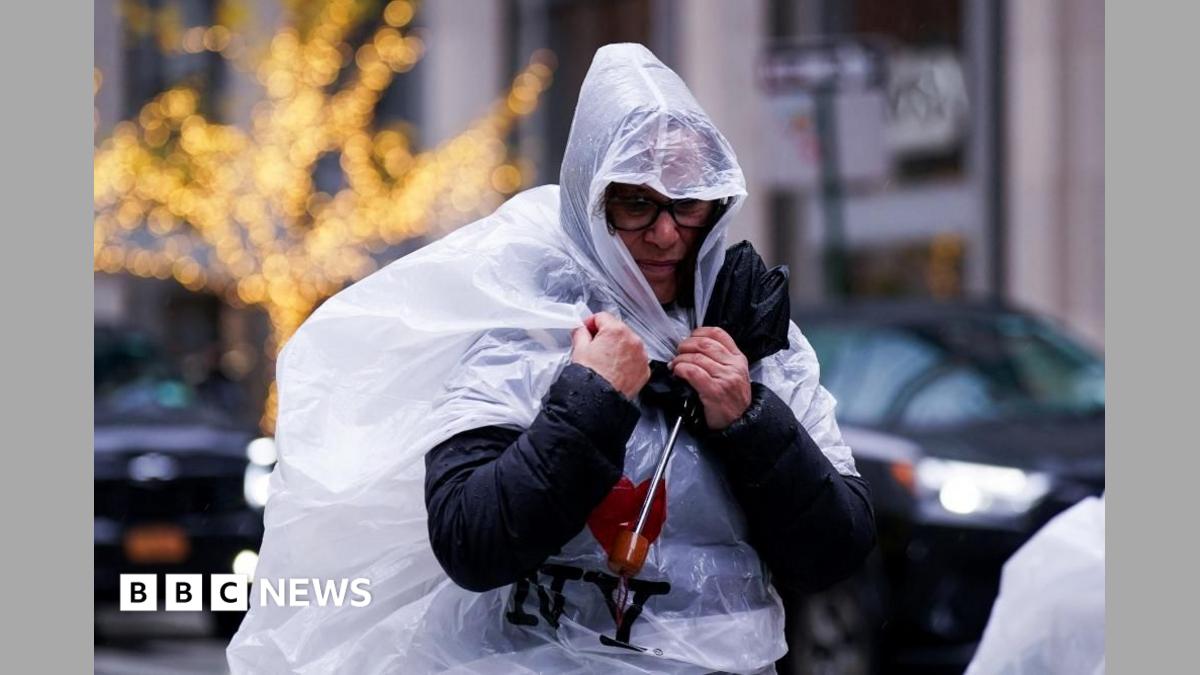
A major storm system is causing widespread disruptions across the US during the Thanksgiving holiday, impacting travel and leaving over 900,000 households without power. More than 400 flights within, into, or out of the US have been cancelled, and another 1,900 have been delayed, affecting over 80 million travelers. Pennsylvania, Maryland, and Virginia are among the hardest-hit states, with power outages reported in those areas, as well as New Jersey and New York. New Jersey Governor Mikie Sherrill and New York Governor Kathy Hochul have both declared states of emergency. In New York City, the Macy’s Thanksgiving Day parade has been postponed to Saturday.
The storm brought damaging winds up to 70 mph and torrential rain to the eastern US, causing major coastal flooding. In Maryland, officials asked nearly two million customers to limit water use due to power disruptions. At Reagan Washington National Airport, tidal waters flooded runways, marking the wettest Thanksgiving on record for Washington DC. Utility companies in Virginia and New Jersey warned that power restoration could take days.
Severe weather is also impacting the West Coast, with the National Weather Service warning of a series of Pacific storms bringing rain, mountain snow, and strong winds. Water levels along the California coastline reached over 8 feet in some areas, prompting advisories to avoid beaches and the cancellation of Amtrak Pacific Surfliner train services. President Donald Trump stated he would consider releasing emergency funds for the East Coast.
Background
- The Macy’s Thanksgiving Day Parade was postponed to Saturday, November 28, due to anticipated high winds and rain, marking the first weather-related delay in its history [Fact Refinery, 2026-11-25].
- City regulations in New York mandate that large balloons cannot fly if sustained winds exceed 23 mph, a rule implemented after a 1997 incident [Fact Refinery, 2026-11-24].
- President Donald Trump awarded Rudy Giuliani the Presidential Medal of Freedom on Tuesday, recognizing his public service [Fact Refinery, 2026-11-24].
- A FedEx cargo plane overran a runway at Miami International Airport Wednesday night, causing flight delays, less than three months after a fatal runway overrun involving an Amazon cargo jet at the same airport [Fact Refinery, 2026-11-26].
Our reading
We begin by assessing the most likely outcome: a gradual restoration of services. The storm’s immediate impact, flight cancellations, power outages, will likely subside over the next few days as utility companies and airlines work to address the disruptions. A key factor will be the speed of power restoration in Pennsylvania, Maryland, Virginia, New Jersey, and New York; sustained outages could significantly prolong travel delays and inconvenience for those celebrating Thanksgiving away from home. A less likely scenario is a prolonged disruption extending into the weekend, triggered by further Pacific storms impacting the West Coast or an unexpected intensification of the existing eastern storm. This would require a significant shift in the weather patterns. The confluence of weather events, the East Coast storm, West Coast king tides, and the recent Miami airport incident, highlights the increasing vulnerability of critical infrastructure to extreme weather. This is particularly relevant given the reported El Niño conditions, which are expected to intensify winter storms. The postponement of the Macy’s parade, a highly visible event, underscores the potential economic impact of such disruptions, even if localized. Considering the political context, the timing of President Trump’s award to Giuliani, coupled with the ongoing legal battles surrounding the 2020 election, suggests a continued emphasis on rewarding loyalty within his base. This could further polarize public opinion and complicate efforts to address broader national challenges, such as infrastructure resilience.
What to watch
- The number of flights cancelled or delayed on Friday, November 27, indicating the extent of remaining travel disruptions [airline tracking websites].
- The progress of power restoration in the hardest-hit states, specifically the number of households still without power by Friday evening [utility company websites].
- Any further statements from President Trump regarding emergency funding for the East Coast, and whether those funds are allocated [White House press briefings].
Read the original coverage
💬 Comments
📜 Comment Policy