School Cellphone Bans Linked to Learning Gains, Though Research Varies
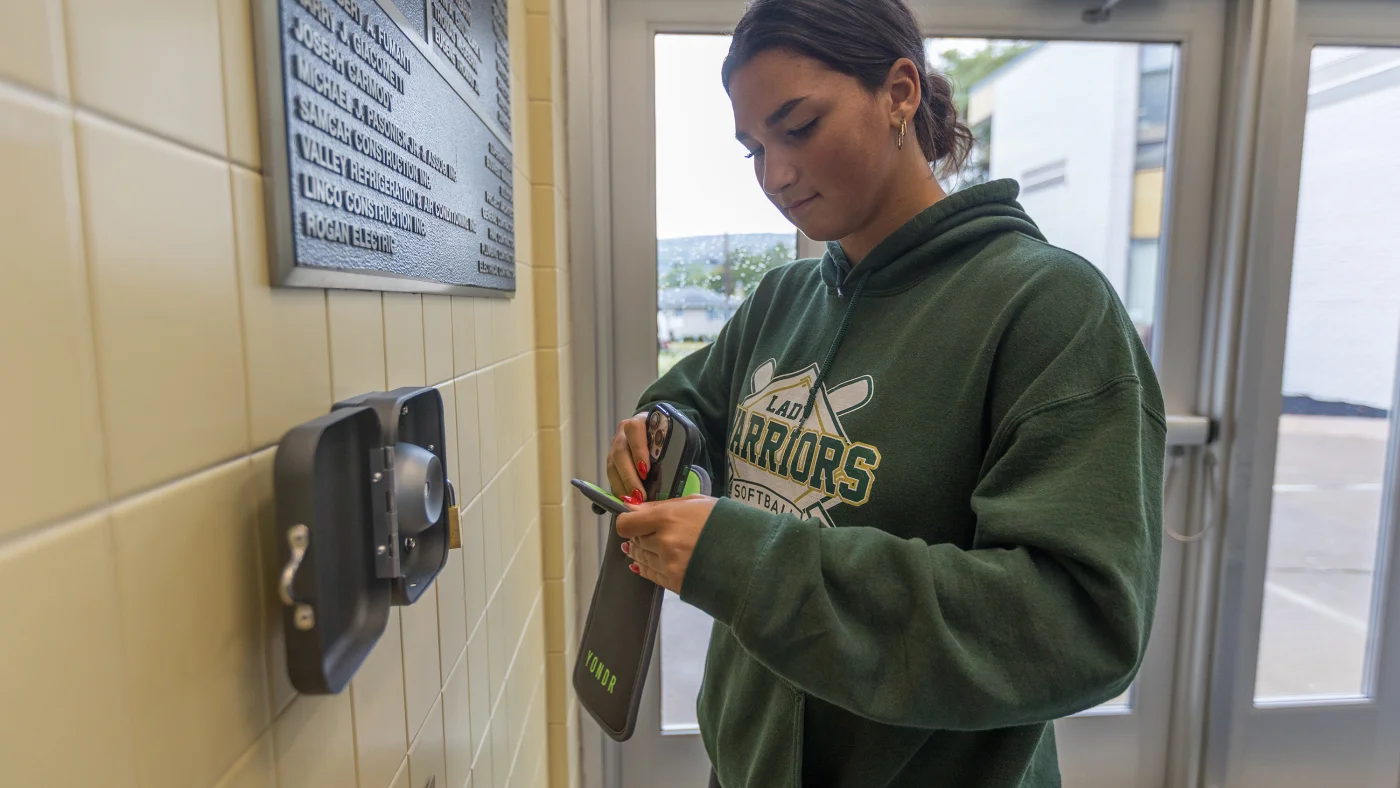
A Harvard University study suggests strict cellphone bans in schools, specifically the use of locked pouches, may help recover some learning lost since 2013, when U.S. students began a period of declining test scores. Researchers found that schools adopting these bans saw gains equivalent to one to two weeks of learning per year, a statistically significant improvement that could accumulate over time. The study analyzed data from over 3 million students across the country. However, a separate study from the University of Michigan found these pouches had “close to zero” impact on student test scores. Both studies focused on schools using Yondr pouches, with over 3,300 schools adopting them between the 2019-20 and 2025-26 school years. Tom Kane of Harvard University, a co-author of the more recent study, stated that around 2013, U.S. students began losing two to three weeks of learning each year, putting eighth graders almost a year behind. Douglas Staiger of Dartmouth College, also a co-author, added that the gains from cellphone bans appeared to continue for up to three years after implementation. Brian Jacob of the University of Michigan, a co-author of the April study, stated that his team found “overall, we didn't find evidence of meaningful achievement gains.” The Harvard-led study has not yet been peer-reviewed, while the University of Michigan study has.
Where they differ
- NPR emphasized the conflicting results of the two studies, highlighting the April study's finding of 'close to zero' impact.
- CBS News presented the Harvard study's findings as a straightforward improvement in learning, without prominently featuring the contradictory results.
- NPR provided specific numbers regarding the amount of learning lost since 2013, while CBS News did not.
What is not yet known
- The long-term effects of cellphone bans beyond three years of implementation remain unclear.
- The reasons for the discrepancy between the two studies’ findings are not fully explained.
Background
- U.S. students began a period of declining test scores around 2013 [Fact Refinery, 2026-11-17].
- Over 3,300 schools adopted Yondr pouches, locking cellphones, between the 2019-20 and 2025-26 school years [Fact Refinery, 2026-11-17].
- The University of Michigan implemented pass/fail grading for first-year students to address student anxiety [Fact Refinery, 2026-08-11].
- Margaret Hamilton, a pioneer in software engineering, developed the guidance software for the Apollo 11 mission [Fact Refinery, 2026-10-08].
Our reading
We are struck by the conflicting results of the two studies. The Harvard study suggests a potential recovery of learning losses, while the University of Michigan study finds virtually no impact. The most likely outcome is that the effect of cellphone bans is highly context-dependent; school culture, teacher implementation, and student demographics likely play a significant role in determining whether a ban yields positive results. A less likely scenario is that one study is fundamentally flawed in its methodology, but this would require a detailed examination of both approaches. If further research consistently demonstrates a negligible effect, the momentum behind these bans may wane. The debate over cellphone bans intersects with broader concerns about student mental health and academic performance. The University of Michigan’s move to pass/fail grading for freshmen, framed as a response to a “mental health crisis”, suggests a growing recognition that traditional academic pressures may be detrimental. This could indicate a shift in educational priorities, prioritizing student wellbeing alongside achievement. The University of Michigan study, finding “close to zero” impact, may be particularly sensitive given the university’s recent policy change to pass/fail grading for first-year students. The internal pressure to demonstrate the effectiveness of alternative approaches to student support could be significant, potentially influencing the interpretation of findings.
What to watch
- Publication of the peer-reviewed version of the Harvard study, to assess the robustness of its findings [Harvard University, date unspecified].
- Further research examining the impact of cellphone bans in diverse school settings, controlling for confounding variables [various research institutions, ongoing].
- Enrollment figures for Yondr pouches in the 2026-27 school year, indicating continued adoption or a decline in interest [Yondr, spring 2027].
Read the original coverage
💬 Comments
📜 Comment Policy