Israeli Airstrike Kills Hamas Internal Security Chief in Gaza
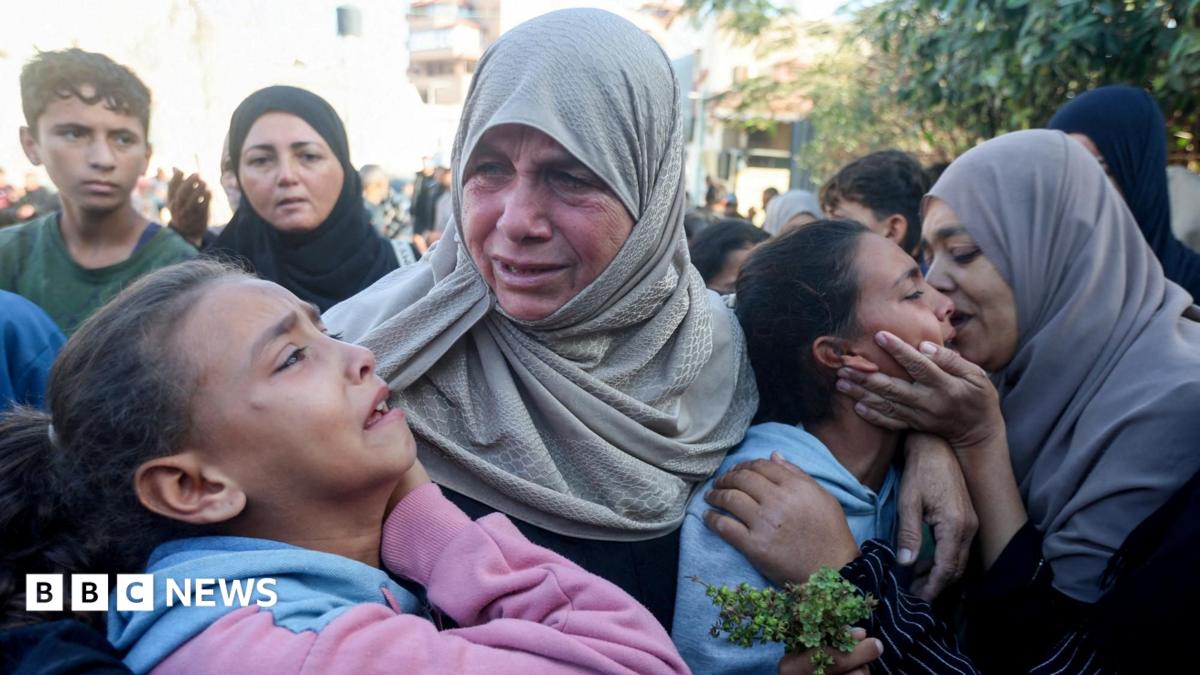
An Israeli airstrike killed Naeem Abu Nahel, head of Hamas’s internal security service in Gaza, on Tuesday. The Israeli military and Prime Minister Benjamin Netanyahu announced Abu Nahel’s “elimination” in a joint operation with Israel’s Shin Bet intelligence agency. The strike occurred in western Gaza City. Simultaneously, six other Palestinians were killed in separate Israeli airstrikes elsewhere in Gaza, three in the Wadi Gaza area and three, including two police officers, at a police station in the al-Mawasi area. The Gaza police condemned the al-Mawasi strike as part of a campaign to destabilize the territory.
Israeli strikes on Gaza occur almost daily despite a US-brokered ceasefire agreement from October 2023. Since that ceasefire, at least 1,679 Palestinians have been killed in Gaza, according to the territory’s Hamas-run health ministry, which the UN considers reliable. Israel reports six soldier fatalities in Gaza over the same period. The current conflict was triggered by the Hamas-led attack on southern Israel on October 7, 2023, which resulted in approximately 1,200 deaths and 251 hostages taken. The health ministry in Gaza reports over 74,740 people have been killed in Israeli attacks since then.
No right-leaning outlet reported this story.
Where they differ
- Middle East Eye specified Abu Nahel’s military rank as Brigadier General, a detail not present in other reports.
- Euronews relied on a security source for initial confirmation of Abu Nahel’s death, while BBC and Middle East Eye reported directly from the Hamas-run interior ministry and the Israeli military.
- BBC provided a more detailed account of the casualties in the separate airstrikes, including the age of the teenage boy killed in Wadi Gaza.
What is not yet known
- The full extent of Hamas’s internal security apparatus and its operations remains unclear.
- The specific justification for targeting Abu Nahel beyond being the head of internal security was not detailed in the sources.
Background
- In October 2023, Hamas launched an attack on southern Israel, resulting in approximately 1,200 deaths and the capture of 251 hostages [Fact Refinery, 2026-10-07].
- Since a US-brokered ceasefire in October 2023, at least 1,679 Palestinians have been killed in Gaza, according to the Hamas-run health ministry, which the UN considers reliable [Fact Refinery, 2026-11-24].
- Israel has been conducting near-daily airstrikes in Gaza despite the ceasefire agreement [Fact Refinery, 2026-11-24].
- In late 2026, the Israeli government, led by Prime Minister Benjamin Netanyahu, was preparing a “very extensive” military operation in the West Bank following the deaths of two soldiers [Fact Refinery, 2026-10-23].
- The UN has recorded significant environmental contamination in Gaza due to Israeli military operations, with 99% of the territory affected [Fact Refinery, 2026-11-23].
Our reading
We assess that the killing of Abu Nahel, head of Hamas’s internal security, is most likely a continuation of Israel’s targeted elimination of Hamas leadership, aiming to disrupt its command structure and capacity for future attacks. A less likely outcome is a significant de-escalation, as the daily strikes suggest a sustained policy rather than a response to a specific immediate threat. A shift in this pattern would require a substantial change in either Israeli political calculations, perhaps a new government following the upcoming elections, or a demonstrably effective diplomatic initiative. The repeated targeting of security officials, coupled with the environmental damage documented by Oxfam and Ceobs, points to a broader strategy beyond immediate security concerns. The long-term consequences of this damage, as highlighted in the report, could contribute to further instability and humanitarian crisis. The fact that the hard-right elements within Israel advocate for even more extreme measures in the West Bank, as reported by Fact Refinery, suggests a potential for escalating conflict there as well. Given the ongoing political turmoil in Israel, with Netanyahu facing scrutiny over the October 7th security failures and trailing in polls, it is possible that these military actions are also intended to bolster his image as a strong leader ahead of the elections. Hamas, while not claiming responsibility for the recent clashes in the West Bank, continues to praise such attacks, indicating a shared interest in undermining Israeli authority.
What to watch
- The results of the Israeli elections and any subsequent shifts in government policy [Israeli election results, various news outlets].
- The publication of the UNEP’s full assessment of environmental damage in Gaza [UNEP website].
- Any indication of a renewed effort at ceasefire negotiations, potentially mediated by a third party such as Bulgaria’s President Radev [Bulgarian Ministry of Foreign Affairs, Frognews].
Read the original coverage
💬 Comments
📜 Comment Policy