Hakeem Jeffries Poised to Become First Black House Speaker
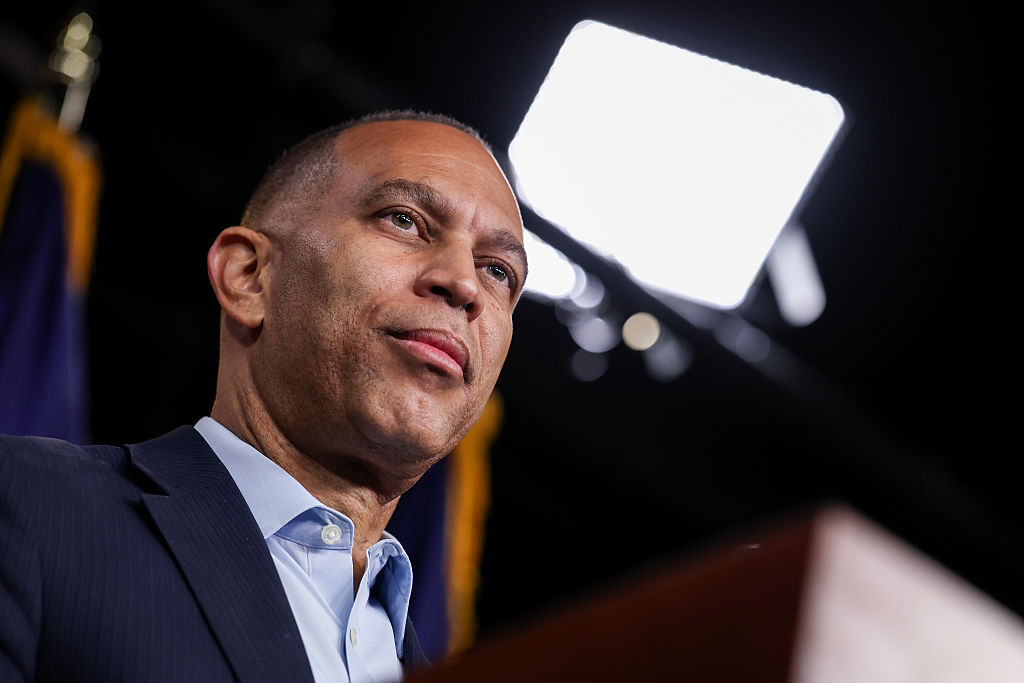
Representative Hakeem Jeffries of New York is on track to become the first Black American to lead the House of Representatives, following Democratic gains in this month’s midterm elections. The House Democrats will hold approximately 259 seats, giving Jeffries a commanding majority and considerable room to maneuver. He faces no declared challenger in Wednesday’s vote for the speaker nomination, needing only a simple majority of House Democrats to secure the position. Representatives Katherine Clark and Pete Aguilar are expected to become majority leader and majority whip, respectively, with Representative Ted Lieu in line to become Democratic caucus chair.
The transition from minority leader to Speaker would place Jeffries at the center of political battles during the final two years of President Trump’s term, allowing Democrats to control the House’s legislative agenda and investigative committees. The party intends to use this authority to scrutinize the Trump Administration and demonstrate governing ability ahead of the 2028 presidential election. However, competing expectations exist within the party regarding the use of its newfound power.
Progressives are pushing for ambitious legislation on healthcare, corporate power, and military assistance to Israel, while moderates prioritize affordability and bipartisan policies. While these divisions are unlikely to threaten Jeffries’s speakership given the size of the Democratic majority, they could influence the agenda he pursues and the compromises he is willing to make. Leading up to Wednesday’s vote, Jeffries and his allies engaged in an intensive campaign to present a united front, securing endorsements from major Democratic factions and meeting privately with lawmakers who had expressed reservations. He was scheduled to meet Tuesday with leaders of the Congressional Progressive Caucus, the New Democrat Coalition, and the Blue Dog Coalition to address their concerns before the vote. Some supporters initially favored nominating Jeffries by acclamation, but he opted for a formal tally.
Background
- Hakeem Jeffries is a Representative from New York and expected to become House Speaker following Democratic gains in the midterm elections [Fact Refinery, 2026-11-18].
- The House Democrats will hold approximately 259 seats, giving Jeffries a commanding majority [Fact Refinery, 2026-11-18].
- Representative Jim Jordan was elected House Republican Leader after midterm losses [Fact Refinery, 2026-11-11].
- Democrats flipped nine Republican-held Senate seats in the 2026 midterm elections, giving them a 56-44 majority [Fact Refinery, 2026-11-18].
- Raising the federal minimum wage to between $15 and $25 by 2030 is a priority for some Democrats, with Hakeem Jeffries identifying it as a key issue [Fact Refinery, 2026-11-17].
Our reading
We begin by assessing the most likely outcome: Jeffries securing the speakership as the article states. A formal tally, despite initial suggestions of acclamation, suggests a desire to demonstrate unity, and the lack of a declared challenger reinforces this. A less likely outcome would be a significant internal revolt within the Democratic party, potentially delaying the vote or forcing concessions on key issues. This would require a substantial number of moderates joining progressives in demanding changes to Jeffries’s agenda. The expanded Democratic control of the House, combined with their Senate majority, creates a window for ambitious legislative efforts. The prior article on the minimum wage suggests a willingness to address economic inequality, while the White House’s caution regarding investigations into the Trump administration, and the Democrats’ stated intent to scrutinize it, highlights a potential for conflict and gridlock. The fact that the White House views oversight as potentially criminal suggests a combative stance, and could lead to protracted legal battles. The Republican side appears fractured. Jim Jordan’s election as Minority Leader, following internal debate, indicates a shift toward a more conservative approach. The prior article notes some Republicans acknowledging the need for change after two years of aligning with Trump’s demands. This internal division could hinder their ability to effectively oppose the Democratic agenda, and may lead to further infighting.
What to watch
- The results of Jeffries’s meetings with the Congressional Progressive Caucus, the New Democrat Coalition, and the Blue Dog Coalition [Fact Refinery, 2026-11-18].
- The timeline for the House Democrats to begin investigations into the Trump administration [Fact Refinery, 2026-11-11].
- Any legislative proposals related to raising the federal minimum wage, and the level of bipartisan support they receive [Fact Refinery, 2026-11-17].
Read the original coverage
💬 Comments
📜 Comment Policy