Gaza Faces Widespread Toxic Contamination Following Israeli Assault, Report Finds
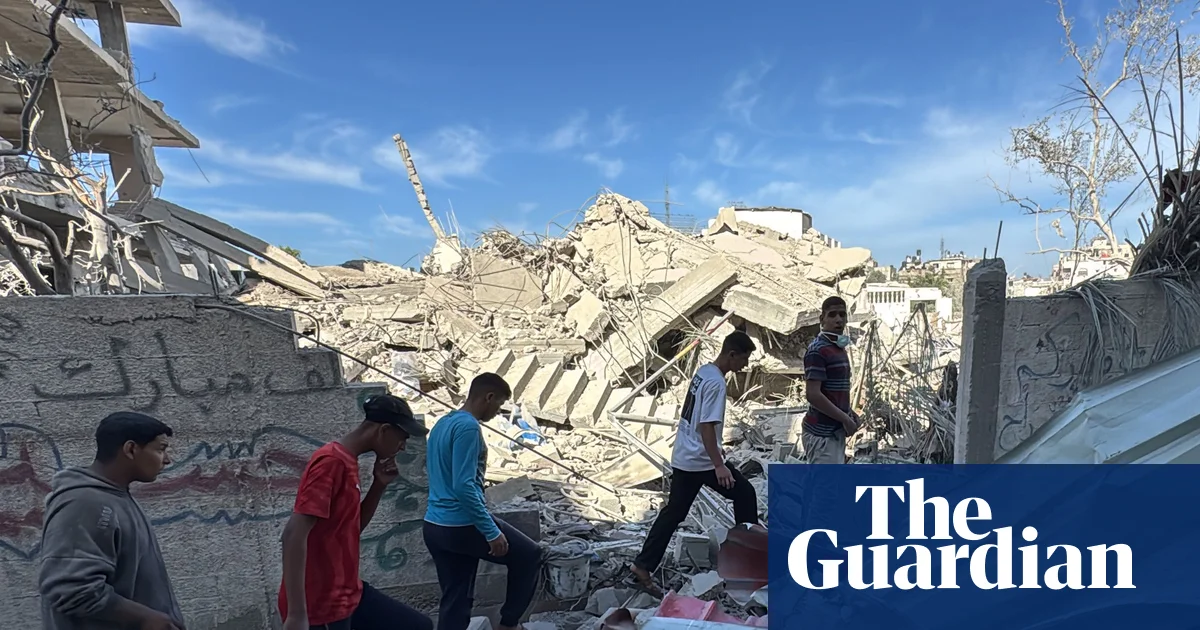
Israel’s military operations in Gaza have created widespread environmental contamination across 99% of the territory, according to a report by Oxfam and the Conflict and Environment Observatory (Ceobs). The contamination, including heavy metals, explosive residues, asbestos, and sewage, threatens the health and survival of Palestinians for generations. Oxfam International’s executive director, Amitabh Behar, stated that Israel’s actions constitute environmental war crimes and breach international law.
The report, utilizing satellite imagery and scientific analysis, details how the destruction of buildings and infrastructure has poisoned the air, soil, water, and food supply. Palestinians are exposed to toxins through multiple pathways, including air inhalation, water consumption, and direct contact with contaminated debris. The UN Environment Programme (UNEP) estimates the extent of environmental damage caused by Israel’s military operations.
The findings align with a 2025 UN independent international commission of inquiry that found Israel committed genocide in Gaza, and a separate investigation by the International Criminal Court (ICC) that has issued a warrant for the arrest of Prime Minister Benjamin Netanyahu for war crimes. Israel rejects the genocide claims as “libellous.”
More than 74,000 Palestinians have been killed and at least 175,000 wounded, with thousands remaining unaccounted for. Over 1,500 Palestinians have been killed since a ceasefire was signed in October 2025. The report highlights the urgent need for clean-up, remediation, and recovery efforts, as well as a full independent investigation to identify and reduce the risks to Palestinian lives. The report notes that the concentrated population density of Gaza exacerbates the risks of exposure and disease.
The report came a day after the conclusion of the 31st Climate Change Conference (COP31), where world leaders failed to reach a consensus on climate change.
Where they differ
- Al Jazeera specifically noted the report's publication date as November 23, 2026, while The Guardian did not.
- Al Jazeera emphasized the figure of 99% territory contamination in its headline and opening, while The Guardian led with the overall environmental devastation.
- Al Jazeera reported over 1,500 Palestinians killed since the ceasefire in October 2025, a detail not present in The Guardian's coverage.
What is not yet known
- The specific details of the clean-up, remediation, and recovery actions required to address the contamination are not outlined.
- The full extent of the long-term health consequences for Palestinians exposed to the toxins remains unquantified.
Background
- The UK imposed sanctions on eight Israeli firms and the activist group Tzav 9 over West Bank settlement expansion, freezing assets and barring individuals from serving as UK company directors [Fact Refinery, 2026-11-17].
- The U.S. has provided $3.3 billion in security assistance to Mexico over 15 years, with limited success in curbing violence and drug trafficking, mirroring failures seen in the “war on terror” [Fact Refinery, 2026-11-23].
- Over 74,000 Palestinians have been killed and at least 175,000 wounded in Gaza, with thousands unaccounted for, and over 1,500 killed since a ceasefire in October 2025 [Al Jazeera, 2026-11-23].
Our reading
We begin with the most likely outcome: continued deterioration of the humanitarian and environmental situation in Gaza. Without a swift and substantial international intervention focused on remediation, the contamination will likely persist for generations, exacerbating existing health crises and hindering any future reconstruction. A less likely scenario involves a negotiated agreement for clean-up efforts, contingent on a broader political settlement, but the current level of distrust and the ongoing ICC warrant for Netanyahu’s arrest make this improbable. The failure at COP31 to reach consensus on climate change suggests a lack of international will to address even broadly acknowledged environmental threats, further reducing the chances of meaningful assistance. The report’s findings connect directly to the UK’s recent sanctions against Israeli firms involved in settlement expansion. The environmental damage in Gaza, coupled with the accusations of war crimes, could strengthen calls for further punitive measures and potentially broaden the scope of sanctions to include companies implicated in the military operations. This aligns with the UK’s stated policy of holding actors accountable for breaches of international humanitarian law. The situation highlights a tension between the stated goals of international actors and the practical realities on the ground. The U.S. experience in Mexico demonstrates the limitations of security-focused approaches, while the lack of progress at COP31 underscores the difficulty of achieving collective action on environmental issues. Israel's rejection of genocide claims, while predictable, further entrenches the divide and complicates any potential for dialogue or accountability.
What to watch
- A vote on a UN resolution calling for an independent investigation into the environmental damage in Gaza [UN website].
- The release of a detailed assessment of the long-term health consequences of the contamination by the UNEP [UNEP website].
- The implementation of the UK’s legislation banning the import of settlement goods [UK Parliament website].
Read the original coverage
💬 Comments
📜 Comment Policy