FinCEN Investigates Cybersecurity Incident, Disrupting Some Financial Crime Reporting
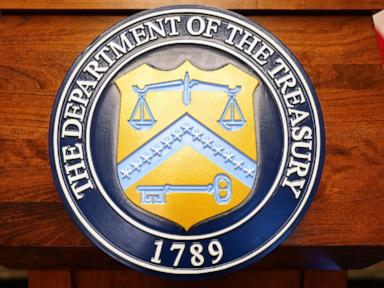
The Financial Crimes Enforcement Network (FinCEN), the Treasury Department’s bureau responsible for combating money laundering and terrorism financing, is investigating a cybersecurity incident involving unauthorized access to a limited subset of its systems. The agency has taken some systems offline as a precaution, temporarily impacting some services, but the Bank Secrecy Act (BSA) E-Filing website remains operational. FinCEN handles sensitive financial transaction data and reports of suspicious activity filed by banks and financial institutions.
The incident comes amid heightened security concerns following a recently reported breach of unclassified information at US spy agencies, including the CIA and Office of the Director of National Security. The Department of Defense, whose National Geospatial-Intelligence Agency was also reportedly impacted by that breach, declined to comment. It is currently unclear whether the FinCEN breach is related to the broader incident.
FinCEN has stated that banks can still file reports about suspicious activity online, and a Financial Institutions Hotline remains unaffected. The agency posted an alert on its site, used by banks and financial institutions to report suspicious activities, detailing the incident and the temporary disruption of some services.
What is not yet known
- The full scope and source of the FinCEN breach remain unknown.
- Whether the FinCEN breach is related to the recent breaches at other US intelligence agencies is currently unclear.
Background
- FinCEN, a bureau of the Treasury Department, combats money laundering and terrorism financing and handles sensitive financial transaction data [Fact Refinery, 2026-10-13].
- Bank of America was fined $1.2 billion by the Treasury Department and FinCEN for violating anti-money laundering and sanctions laws, including failing to report over $5 billion in suspicious transactions [Fact Refinery, 2026-10-13].
- The Treasury Department recently sanctioned a UAE branch of Banque Misr, alleging it processed $1.8 billion for companies potentially linked to Iran’s shadow banking network, as part of “Operation Economic Outcast” [Fact Refinery, 2026-08-28].
- The FBI is currently investigating a breach of its National Crime Information Center database, following other recent cybersecurity incidents affecting US government agencies [Fact Refinery, 2026-11-21].
Our reading
We begin by assessing the most likely outcome: the FinCEN breach is a component of the broader wave of cyberattacks targeting US agencies, though a direct link remains unproven. The timing, following breaches at the CIA, Office of the Director of National Security, and the FBI, suggests a coordinated campaign. If further investigation reveals shared tools, techniques, or targets, this assessment will strengthen. A less likely scenario is that this is an isolated incident, unrelated to the others, perhaps a probing attack rather than a concerted effort to steal data. This would require evidence of a unique attack vector and a lack of overlap with the other breaches. The incident highlights the vulnerability of critical financial infrastructure. Given FinCEN’s role in tracking illicit financial flows, a successful breach could compromise investigations into money laundering, terrorism financing, and sanctions evasion, potentially impacting Operation Economic Outcast and other Treasury initiatives. The fact that the Bank Secrecy Act E-Filing website remains operational is a positive sign, but does not negate the risk to the data already held within compromised systems. The repeated targeting of US government agencies suggests a sophisticated adversary, potentially a nation-state actor. The adversary may be testing the resilience of US cyber defenses, gathering intelligence, or seeking to disrupt critical services. Understanding the motivations and capabilities of the attacker is crucial, but will likely require a prolonged investigation.
What to watch
- A joint statement from the FBI and FinCEN detailing any connection between the FinCEN breach and the other recent incidents [FinCEN website, within one week].
- The release of a preliminary assessment of the scope and source of the FinCEN breach [Treasury Department press releases, within two weeks].
- Any changes in the volume or type of suspicious activity reports filed by banks and financial institutions [FinCEN data releases, quarterly].
Read the original coverage
💬 Comments
📜 Comment Policy