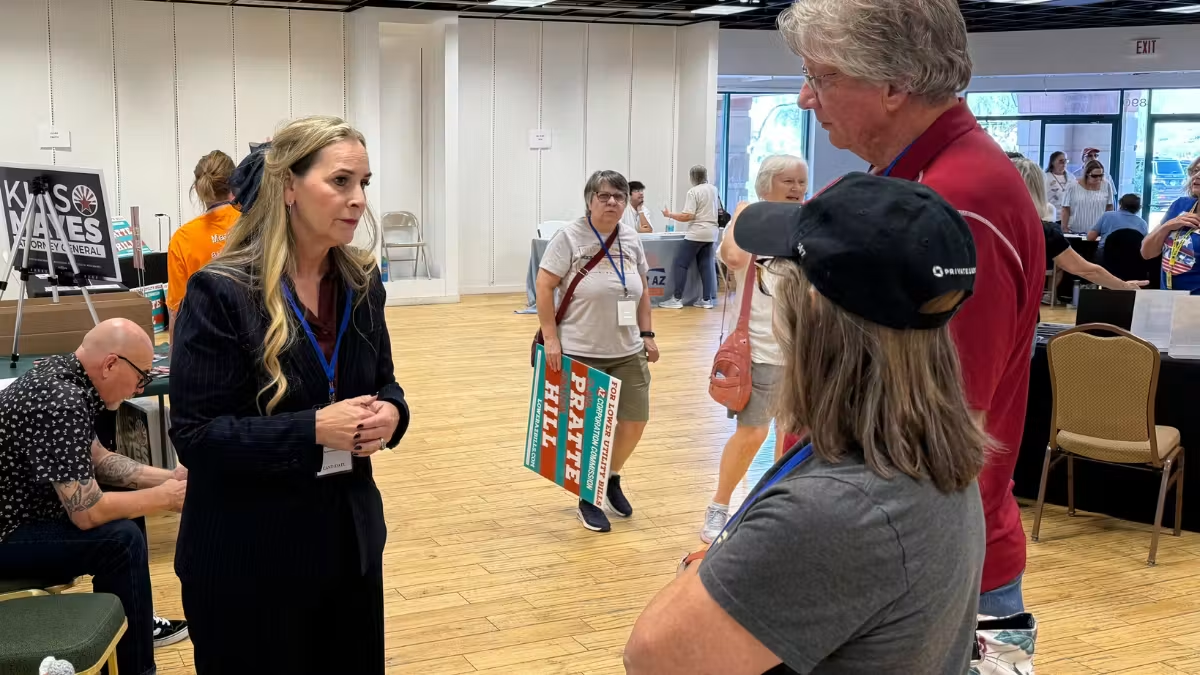
Democratic congressional candidate Bernadette Greene-Placentia reported to the Maricopa County Sheriff’s Office that she was sexually assaulted in mid-August while attempting to repair a campaign sign in Sun City, Arizona. According to a police report provided to HuffPost and detailed by the Phoenix New Times, Greene-Placentia stated she was struck in the head, lost consciousness, and was then assaulted by two men. She reported recalling fragmented memories of the attack, including one assailant saying something resembling “Democratic b*tch, not a very good f*ck,” and a second man ceasing an assault on her leg after she kicked him, stating, “Not even worth it.”
The assault allegedly occurred around 2 a.m. on August 14th. Greene-Placentia delayed reporting the incident for over two weeks, citing embarrassment and a desire to move past the trauma. She told authorities she does not clearly recall the appearance of her attackers, believing them to be white. She also did not seek immediate medical attention or obtain a SANE exam, and did not photograph her injuries. The Maricopa County Sheriff’s Office has confirmed an ongoing investigation but declined further comment.
Greene-Placentia’s campaign stated she chose to share her story to support other survivors, while acknowledging the difficulty of doing so while processing the trauma. The Daily Wire reported that Greene-Placentia was “missing in action” for two days after the alleged attack, exhibiting unusual behavior and experiencing nausea, and that she confided in her husband, campaign manager, and a state representative in the days and weeks following the incident. She reported experiencing vaginal bleeding after the assault, according to the police report.
Our reading is that the reporting on this alleged assault is notably divergent in its emphasis. While all outlets acknowledge the core claim, the Daily Wire focuses on details surrounding Greene-Placentia’s post-incident behavior and statements to confidants, while HuffPost prioritizes the campaign’s framing of the event as a means of supporting other survivors. The differing approaches to quoting the alleged assailant, direct quotation versus paraphrasing, also suggest a difference in editorial judgment regarding the impact of potentially inflammatory language.
Read the original coverage
💬 Comments
📜 Comment Policy