Alberta Voters Consider Independence as Canadian Unity Faces Test
AI-synthesized · Bias removed · Facts only
2 sources: 1 left · 0 center · 1 right
Facts are sacred. Opinion is labelled.
Image: Pbs Newshour
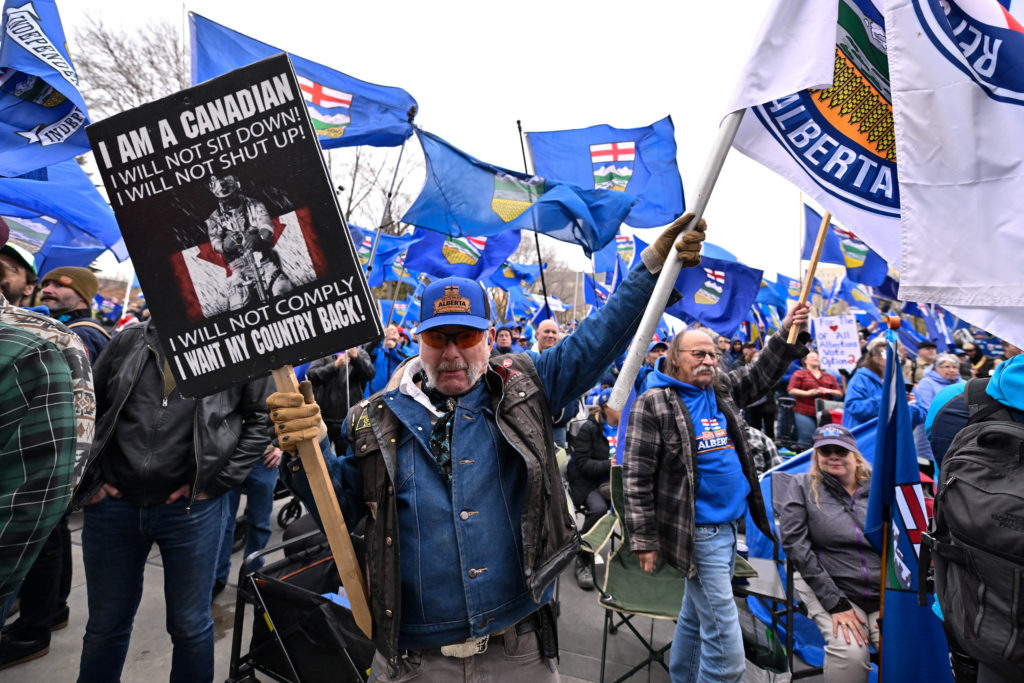
Voters in Canada’s oil-rich Alberta province are deciding on Monday whether to begin a process that could lead to independence. The vote comes as Canada faces economic pressures and, according to the Washington Times, amid concerns about potential threats from the United States, including President Donald Trump’s trade war and proposals to annex Canada. The Washington Times frames the vote as a test of national unity in the context of these external pressures.
Prime Minister Justin Trudeau is working to maintain Canadian unity during the vote. PBS Newshour reports that Trudeau is fighting to keep Canada united as Albertans consider a path to independence. The vote is being watched closely for its implications on the future of Canada and its relationship with the United States. No center-leaning outlet reported this story.
The outcome of the vote will determine whether Alberta moves forward with a formal process to explore independence, potentially reshaping the Canadian federation.
Where they differ
- The Washington Times emphasized the context of US-Canada relations and potential threats from the United States, framing the vote as a response to these pressures.
- PBS Newshour focused on Prime Minister Trudeau’s efforts to maintain Canadian unity, presenting the vote as a challenge to national cohesion.
What is not yet known
- The specific reasons driving the push for independence in Alberta beyond general economic pressures are not detailed.
- The exact process Alberta would undertake if the vote passes is not outlined.
Background
- Mark Carney served as Prime Minister of Canada during the period covered by these articles [Fact Refinery, 2026-09-21].
- Alberta is a province of Canada with significant oil reserves and contributes to Canada’s equalization system [Fact Refinery, 2026-10-19].
- The United States, under President Donald Trump, has imposed import bans on certain Canadian goods as part of an ongoing trade dispute [Fact Refinery, 2026-09-29].
- Elon Musk advocated for the separation of Quebec, Alberta, and Saskatchewan in October 2026 [Fact Refinery, 2026-10-09].
Our reading
Our reading is that the Alberta vote is occurring within a complex web of pressures, both internal and external. The framing from the Washington Times suggests a reactive stance from Alberta, responding to perceived threats from the US, while PBS Newshour highlights the Canadian federal government’s attempt to maintain unity. The lack of coverage from center-leaning outlets, coupled with the emphasis on US-Canada relations, suggests a narrative focused on potential disruption and conflict.
What to watch
- The official results of the Alberta vote on October 19th, to determine if the province will pursue a referendum on independence [Alberta government election website].
- Any statements from Prime Minister Carney or Premier Danielle Smith following the vote, regarding next steps and potential negotiations [Prime Minister of Canada website/Alberta government website].
- Changes in US-Canada trade relations, particularly any further tariff announcements or statements from President Trump [US Trade Representative website].
💬 Comments
📜 Comment Policy