Two American Airlines Planes Clip Wings at Reagan National Airport
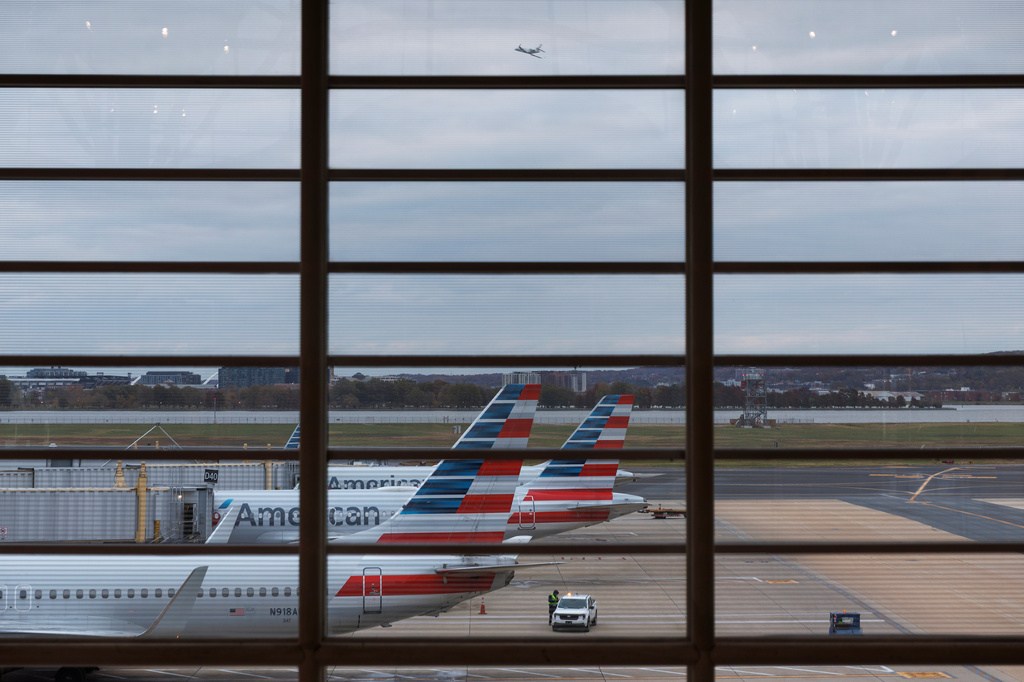
Two American Airlines jets made contact on the tarmac at Ronald Reagan Washington National Airport Friday evening, clipping their wingtips while taxiing for departure. Flight 638, bound for Dallas, struck Flight 2152, headed to Chicago, at approximately 5:10 p.m. local time near Runway 19, according to the Federal Aviation Administration. Both planes were removed from service for inspection, but no injuries were reported to passengers or crew. The Metropolitan Washington Airports Authority’s fire and rescue personnel responded, but the incident did not disrupt other flights. Passengers on both flights were to be placed on new planes for their journeys.
The pilot of Flight 638 informed air traffic controllers the aircraft had crossed a hold-short line, stating, “We are slightly over the hold short line, and unfortunately we swapped paint with the American behind… next to us.” Controllers had instructed the aircraft to hold short of Runway 19, the airport’s longest and busiest runway. An arriving aircraft subsequently aborted its landing following the incident.
The collision follows a series of similar incidents at other airports this month, including a near-miss in Miami involving a Copa Airlines jet and a UPS cargo plane, and another at Los Angeles International Airport where a Delta Air Lines plane clipped the tail of an Air Canada aircraft. In January 2025, an Army Black Hawk helicopter collided in midair with an American Airlines plane approaching Reagan Airport, resulting in the deaths of all 67 people aboard both aircraft.
Where they differ
- The Washington Examiner noted an arriving aircraft aborted its landing following the incident, a detail not mentioned by CBS News.
- CBS News included details about prior incidents at other airports, including a fatal collision in January 2025, while the Washington Examiner focused solely on the Friday incident.
- The Washington Examiner published the pilot’s direct communication with air traffic control, while CBS News did not.
What is not yet known
- The extent of the damage to the aircraft remains unclear.
Background
- In January 2025, a midair collision between an Army Black Hawk helicopter and an American Airlines plane approaching Reagan Airport resulted in 67 fatalities [Fact Refinery, 2026-10-08].
- American Airlines experienced a tire blowout after landing a flight at Chicago O'Hare in October 2026, resulting in passengers deplaning via stairs [Fact Refinery, 2026-10-20].
- The FAA is responsible for investigating aviation incidents and ensuring safety standards are met [background knowledge].
- Reagan Washington National Airport experienced runway flooding during a Thanksgiving storm in late November 2026, disrupting travel [Fact Refinery, 2026-11-27].
- There have been a series of similar airport incidents this month, including near-misses in Miami and Los Angeles [Article].
Our reading
We find the recent cluster of airport incidents noteworthy. The fact that this incident follows near-misses in Miami and Los Angeles, and occurs so close in time to the Army report detailing systemic safety failures following the 2025 collision at Reagan, suggests a potential pattern beyond isolated events. Most likely, this is a temporary increase in incidents due to heightened air traffic combined with potential lapses in adherence to safety protocols. Less likely, but possible, is a more fundamental, widespread issue with air traffic control or maintenance procedures that would require a comprehensive review. A key factor will be the FAA’s investigation into the hold-short line violation; if this proves to be a recurring issue, it would significantly elevate the concern. The concentration of incidents at major airports suggests potential strain on existing infrastructure and personnel. The Thanksgiving holiday disruptions, as reported by Fact Refinery, demonstrate the vulnerability of the air travel system to even moderate weather events. This incident, while not causing injuries, adds to the cumulative stress on the system. The pilot’s communication regarding crossing the hold-short line is a critical detail. It indicates a potential error in judgment or a breakdown in communication with air traffic control. While the article does not provide information about the other aircraft’s actions, understanding their role in the incident will be crucial for determining responsibility.
What to watch
- The FAA’s preliminary report on the cause of the incident, specifically regarding the hold-short line violation [FAA website].
- Any further reports of similar incidents at other airports in the coming weeks [News outlets].
- The extent of the damage to both aircraft and the timeline for their return to service [American Airlines press releases].
Originale Berichterstattung lesen
💬 Kommentare
📜 Kommentar-Richtlinie