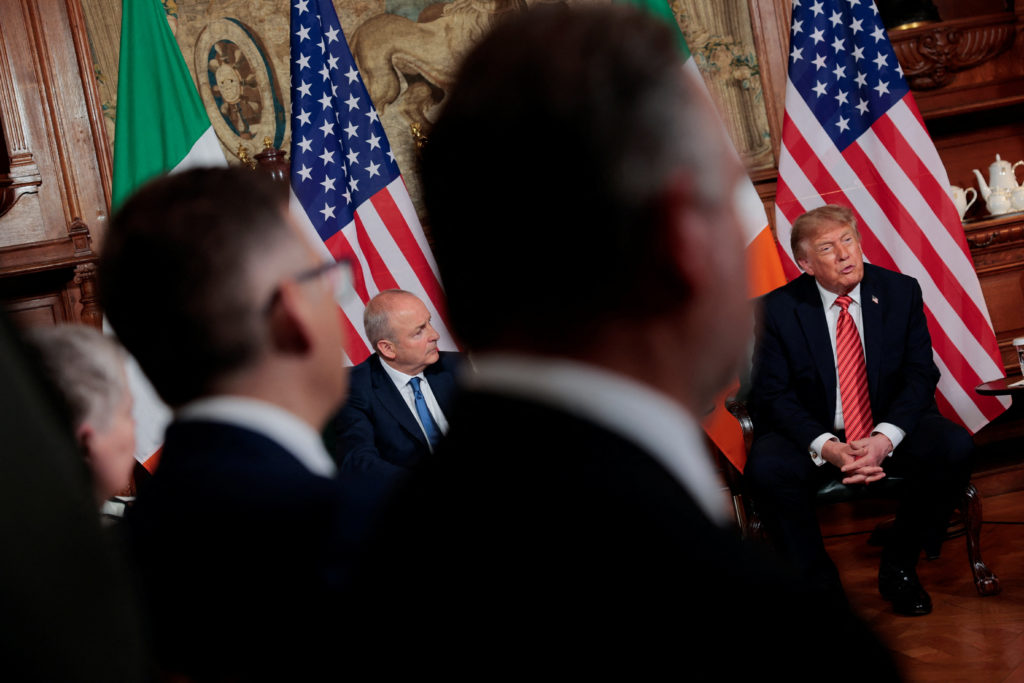
Donald Trump stated he would “love to see” a united Ireland, breaking with decades of US neutrality on the issue and prompting swift responses from both the UK and Irish political leaders. Speaking in Dublin alongside Irish Prime Minister Micheál Martin, Trump said reunification of the Republic of Ireland and Northern Ireland would be “a fantastic thing,” suggesting it could happen now, though acknowledging the UK’s stake in the matter. The United States has historically maintained a neutral position on the issue, particularly since the 1998 Good Friday Agreement, which established a framework for potential reunification through referendums in both Northern Ireland and the Republic of Ireland.
Under the Good Friday Agreement, a border poll can be triggered if the UK government determines a majority in Northern Ireland favors joining the Republic, with a corresponding vote also required in the Republic. UK Prime Minister Andy Burnham has stated a unity referendum is currently “off the table,” a position challenged by the pro-unity party Sinn Fein. Gavin Robinson, leader of the pro-British Democratic Unionist Party, voiced opposition to the idea.
The visit, which included a meeting with Irish President Catherine Connolly and a planned trip to Trump’s golf resort in Doonbeg, is occurring under a large security operation involving approximately 4,000 personnel and a reported cost of 20 million euro to Ireland. Trump also addressed the US war with Iran, claiming it would “end very soon” and lead to lower oil prices, while defending the military operation and asserting Iran was “two weeks away from having a nuclear weapon.” He also expressed optimism about a potential trade deal with Canada. Left-leaning outlets emphasize the departure from long-standing US policy, while right-leaning coverage focuses on Trump’s statement itself, without framing it as a break from precedent.
Originale Berichterstattung lesen
💬 Kommentare
📜 Kommentar-Richtlinie