
Seven months after the first bombs fell on Tehran, it is worth stepping back from the daily noise and asking a simple question: what does the world look like if Donald Trump gets everything he is visibly trying to get? Not the world his critics fear or his supporters promise, but the one that follows from what his administration has actually done since he returned to office in January 2025, most of it in the last nine months. The record is longer than most people realise, and it has a shape.
WHAT HAS BEEN BUILT
On 3 January 2026 US forces took Nicolás Maduro out of Caracas to face charges in New York. Within a week the Energy Secretary said the United States would market Venezuela's oil "indefinitely" and deposit the proceeds in accounts controlled by Washington. On 2 September Chevron committed $7 billion to lift its Venezuelan output from 280,000 to 600,000 barrels a day.
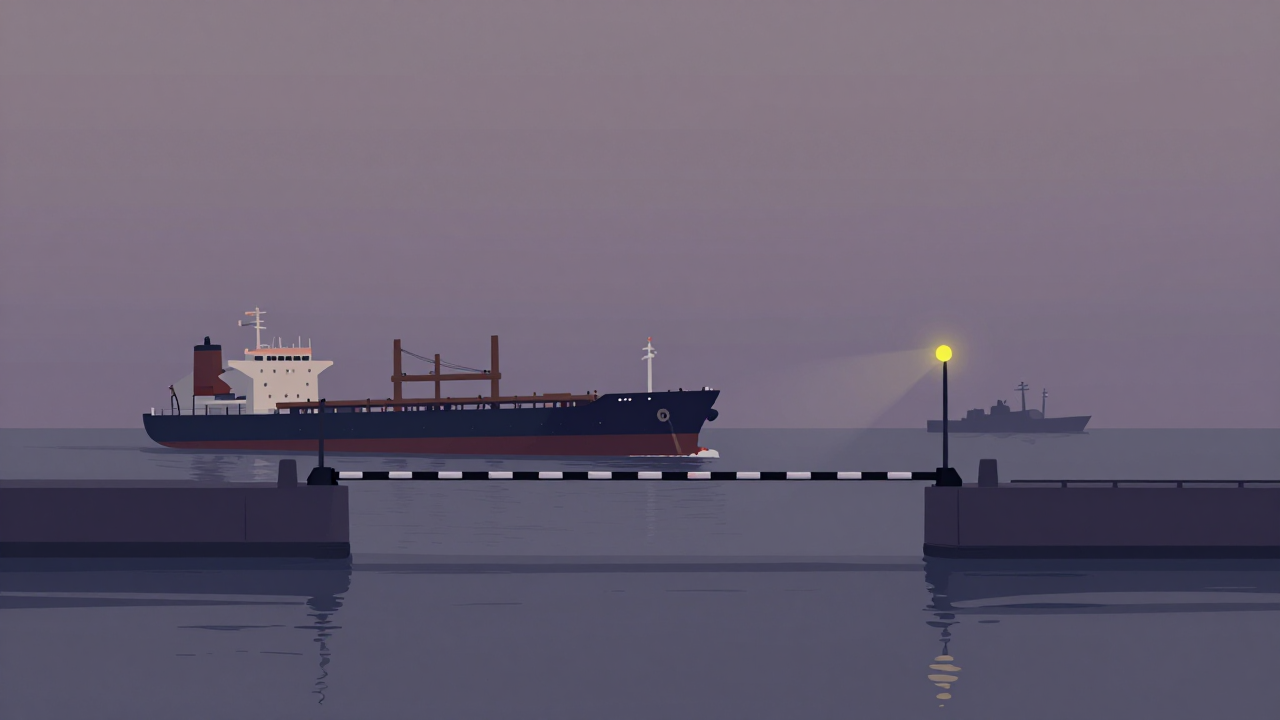
On 28 February the United States and Israel opened Operation Epic Fury with a strike that killed Ali Khamenei. The war ran until 5 May. His son Mojtaba was installed as supreme leader on 9 March; a ceasefire followed on 8 April, a memorandum of understanding on 17 June, and Pakistan-mediated talks in Islamabad since. The Strait of Hormuz has been a war zone for 200 days. Traffic collapsed to single digits in early September, seven transits on 9 September against roughly 85 a day before the war, but it never stopped: the US Navy has cleared mines from the main corridor, escorts tankers through in daylight, and by 23 September oil leaving the Gulf had doubled in a month to about 13 million barrels a day, still short of the pre-war 20 million. The same navy blockades Iranian ports and struck Iranian tankers this month. Iran collects nothing from the strait it "closed". On 26 September Trump rejected Tehran's offer of a seven-day ceasefire and full reopening in exchange for lifting the blockade: "We have total control of the Hormuz Strait, massive amounts of oil are coming out." And on 2 September he had already moved the goal: "I'm not trying to force Iran to the bargaining table... When are the Iranian people going to rise up and fight?" In June he had said he "never cared about regime change".
On 18 September Trump signed the Sanctioning Russia and Iran Act, which sanctions Putin personally and allows tariffs of up to 100 percent on any country that buys Russian oil. The G7 price cap on Russian crude stands at $44.10 and resets every six months. Russia's exports to China rose 31 percent in the first quarter as Gulf supply vanished.
On 20 February the Supreme Court struck down the tariffs imposed under emergency powers, six to three. Within hours the White House reimposed them under Section 122 at 15 percent; when that authority expired on 24 July, a Section 301 regime replaced it the same day: 10 or 12.5 percent on some 60 economies, with no rate cap and no time limit. Three legal defeats, zero days without a tariff.
On 22 July Washington and Riyadh signed a 30-year civil nuclear agreement. The next day Trump declared it "null and void" unless Saudi Arabia joins the Abraham Accords. Kazakhstan joined in November 2025. Syria's president al-Sharaa said on 23 September that a security agreement with Israel was "90 percent" done before Israel pulled back. Lebanon's government has begun disarming Hezbollah south of the Litani; Hezbollah rejected the American framework of 26 June.
And at home, five companies, Amazon, Alphabet, Microsoft, Meta and Oracle, will spend between $775 and $800 billion on capital projects this year, around $450 billion of it on artificial intelligence. That is 2.2 percent of American GDP from five balance sheets. Investment in technology equipment and software has reached 4.4 percent of GDP, the level last seen at the peak of the dot-com boom. Business applications ran at 579,000 in July, double the pace of the 2010s.
THE SHAPE OF IT
Put those pieces on one map and they are not a series of crises. They are a design. Every chokepoint in the world economy gets a toll booth, and Washington holds the key.
- Energy. Venezuela's crude is sold from US accounts. Iran's is blockaded until Tehran accepts terms, or until Tehran has a different government; the Venezuelan escrow is the obvious template for what the terms will be. Russia's is capped, and its buyers now face a 100 percent tariff. Gulf crude moves under American escort through a strait America, not Iran, now polices. US production is a record 13.8 million barrels a day. No president has held this many valves at once.
- Trade. A permanent tariff gate at the US border, with the toll lowered for those who buy American (Japan, South Korea, the $30 billion deal signed with China on 26 September) and raised for those who do not.
- Security. Peace as a subscription. Civil nuclear technology for Riyadh if it normalises with Israel. Reconstruction money for Gaza if Hamas disarms. A security pact for Damascus if Israel keeps its buffer. Sanctions relief for Tehran if Hormuz opens on Washington's terms.
- Technology. The rent. The West sells what cannot be made elsewhere, chips, models, cloud, aircraft, weapons, reactors, and buys cheap labour nowhere, because robots have replaced it. American factories installed more robots than they hired workers in 2025.
In this world the United States does not occupy. It licenses. Allies pay in normalisation, purchases and bases. Rivals pay in tariffs and blockades. Everyone pays at the pump. That is the picture, and the 2026 record says it is being built piece by piece, faster than the commentariat in Brussels or London has admitted.
It is also being built against a Europe that has chosen not to compete. American labour productivity grew 2.4 percent a year between 2018 and 2025; the European Union's grew 0.3 percent. Eighteen months after the Draghi report, its diagnosis is "widely shared" and its delivery is not. The AI Act comes fully into force in 2027; Draghi himself called it "a source of uncertainty". Four in ten European start-ups say they would leave to scale. Nobody bombed Europe out of the race. It regulated itself out.
A licence nobody signs is a blockade with better branding.
WHERE IT IS NOT YET TRUE
Facts are sacred, so here is the other column of the ledger.
Iran is not aligned; it is besieged, under a harder leader than the one who was killed, with its nuclear question unresolved and Israel not even at the negotiating table. The siege is working on the economy. The rial traded at about 2.2 million to the dollar in September, against 958,000 a year earlier; Iranian oil exports have fallen to roughly 260,000 barrels a day from 1.7 million; inflation is near 70 percent, food prices have doubled, youth unemployment is 20 percent. The blockade was reimposed on 14 July and on 19 August Trump formally declared "economic warfare"; on 20 September retirees marched in several cities, and parliament is moving to declare President Pezeshkian "politically incompetent". The New York Post's editorial board concluded on 28 September that "Trump's Iran strategy is working": the ayatollah suffers while the oil flows again. On the numbers, it is right. What the siege has not produced is an alternative. The exiled crown prince Reza Pahlavi announced a "transitional system" on 28 February, met Trump's envoy Witkoff, raised $3 million from the diaspora and was cheered at CPAC in March; Trump's own verdict in January was that he "seems very nice, but I don't know how he'd play within his own country", and the administration has since sidelined him. There is a regime under strain, and there is nobody waiting to replace it whom Washington trusts. Saudi Arabia led an anti-Abraham Accords bloc during the war and still says no normalisation without a Palestinian state; two months after the nuclear deal was made conditional, Riyadh has not moved. Syria stopped at 90 percent. Hezbollah is reported to be rearming. The Gulf states fought on Washington's side because Iranian missiles hit their refineries and desalination plants, and thousands of their people died. That is an alignment of fear, and fear remembers who turned it into a battlefield.
Gaza has had a ceasefire since 11 October 2025, and 1,334 people have been killed in Gaza since. Israel holds 54 percent of the territory, Hamas the rest. Half of one percent of the rubble has been cleared. The Board of Peace, chaired by Trump himself, is not operating on the ground and proposed its first $2.45 billion plan on 23 September.
The "reshoring boom" is not in the data. Manufacturing construction spending is 21 percent below its 2024 peak. The "$20 trillion" of investment Trump cites is $11 trillion even on the White House's own tally, and that tally counts multi-year promises and purchase pledges; actual private investment this year is about $5.4 trillion, roughly $100 billion more than last year. The trillions exist as intent. As concrete, they are one AI cycle and a normal year.
And China's dictatorship, real as it is, has not stopped its engineers. DeepSeek's V4 model runs on Huawei chips, is priced at a fraction of its American rivals, and is moving its training onto domestic silicon by the end of this year. China installs more industrial robots than the rest of the world combined. The technology rent only flows if the monopoly holds, and the monopoly is being contested by the one country that has never needed permission.
Then there is the bill. Brent crude is $107, up 59 percent on a year ago. Diesel set an all-time American record of $6.06 a gallon on 11 September. American households have paid $770 each in extra fuel costs since the war began, $101 billion in total. The Federal Reserve raised rates on 16 September for the first time since 2023. The president's approval stands at 36 percent, the lowest of his second term, five weeks before the midterm elections. He knows it. The Wall Street Journal reports he has told aides he expects to resume bombing Iran after the midterms, "when high gas prices will be less of a political consideration". The price is not an accident of the plan. It is a line item he has decided to pay. Today the generic congressional ballot stands at roughly Democrats +8, the 2018 wave environment; 62 percent of Americans disapprove of the war, 79 percent of Republicans approve of it.
What follows is the editorial view.
The Toll World is not a fantasy, and Europeans who treat it as one are the people being least well served by their newspapers. Most of its booths are standing. The engine that pays for it, the American technology build-out, is the largest private investment programme in history, and it is real money, not a press release. If it works, the world of 2030 has Hormuz transits licensed by a US-Gulf authority, Iranian oil sold under escrow like Venezuela's, American reactors rising outside Riyadh with an Israeli embassy in the same city, tariffs everyone treats as weather, and a US industrial base that is large, automated and employs fewer people than in 2019. Dominant, yes. And the West of that world is not "the West". It is the United States, plus whoever pays.
But the toll is being collected before the roads are built, and the first tenants to feel it are American voters. A toll world is expensive by design; that is what a toll is. Trump has evidently made his calculation: the voters will make him pay in November, and he is making Tehran pay more, because the goal is no longer a deal with the regime but a Tehran without it. The sequence tells the story. In June he signed a memorandum with the regime and said he "never cared about regime change". By September, watching the rial fall, the retirees march and the parliament turn on its own president, he no longer wants the memorandum; he wants the building. A man who was content with an unreliable agreement in June now believes he can remove the other signatory. That is what fragility does to the stronger party: it raises the price it is willing to pay, because the prize looks closer. That is a bet a president can place once. If the regime falls, the map is complete and the midterms are a footnote. If it holds, he has spent a House majority on a strait his own navy already controls. It is fair to ask whether the voters will give him credit anyway; they did in 2024, against every forecast. But the numbers of 2026 are not the numbers of 2024: then the bill was someone else's inflation, now it is his diesel, and the disapproval is his own coalition's independents. A wave of the 2018 size does not turn in five weeks unless Tehran does. The partners are not signing the subscriptions. And the one thing the whole model depends on, that the West alone can make the machines the rest need, is exactly the claim China is testing every quarter.
Trump sees a world in which whoever holds the technology sells intellect to those who are behind, and everyone else has an interest in joining. He may be right. But the world where that works is not the one where oil costs $107 and the Fed is raising rates in an election autumn. The map is real. The mapmaker has decided the price is worth it. The question is whether the people paying it agree, and whether they are asked before or after Tehran falls.
💬 Kommentare
📜 Kommentar-Richtlinie