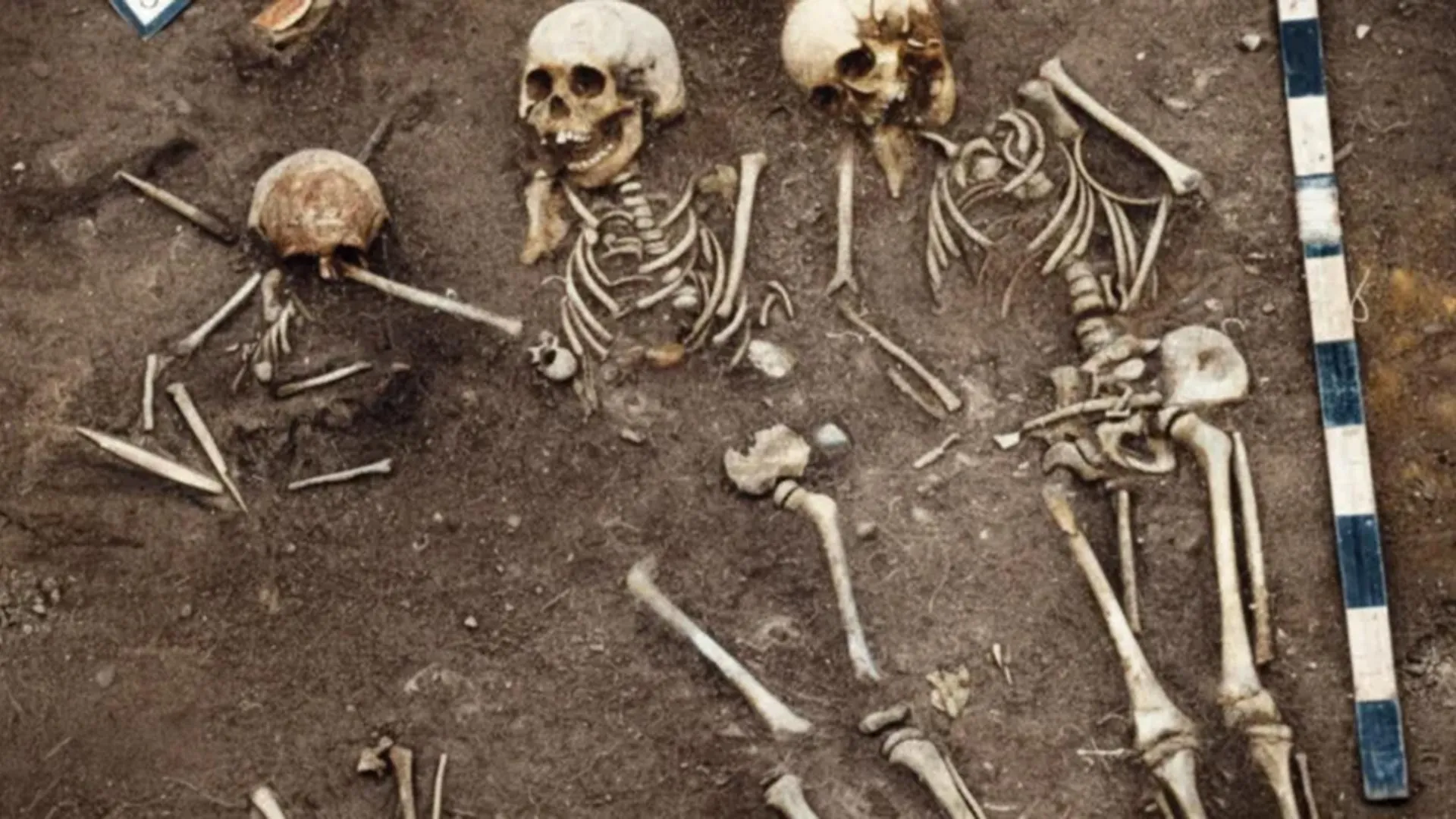
New research published in *Nature* indicates plague was a deadly threat 5,500 years ago, killing people in hunter-gatherer groups in Siberia long before the conditions typically associated with major outbreaks existed. An international research team led by Ruairidh Macleod and Eske Willerslev analyzed ancient DNA from human remains to reconstruct ancient bacterial genomes and identify early forms of the disease.
The team studied remains from four hunter-gatherer burial sites in the Lake Baikal region of East Siberia. Scientists sequenced genetic material preserved in teeth, identifying *Yersinia pestis* – the bacterium that causes plague – in 18 of the 46 individuals tested. This represents a detection rate of nearly 40 percent, a figure even higher than some medieval plague burial sites.
Earlier research suggested ancient strains of *Yersinia pestis* lacked genetic features needed for efficient spread via fleas and rodents, leading to the assumption they were less virulent. However, the new findings challenge this view. “Whether the earliest forms of plague were mild or virulent has been a matter of debate, but our findings demonstrate that these ancient strains were already highly lethal,” says Eske Willerslev, Professor at the University of Copenhagen and the University of Cambridge.
Researchers found an unusually high number of children and young teenagers among the plague victims at the two largest cemeteries. Archaeologists had previously been unable to explain this demographic pattern. Lead author Ruairidh Macleod, now Research Fellow at the University of Oxford, stated, “Based on the plague DNA, the genetic relationships between the victims, the archaeological analysis and the radiocarbon dating, we've built a really clear, complete picture of what happened during these outbreaks.”
Originale Berichterstattung lesen
💬 Kommentare
📜 Kommentar-Richtlinie